Languages
Sunday, November 8, 2026



News and Views from the Global South
Opinion

‘Beggar Thy Neighbour’ Policy Advice
The harmful effects of falling corporate tax rates have been acknowledged in a recent International Monetary Fund (IMF) research paper. This trend, since the early 1980s, has been especially detrimental for developing countries, which rely on direct taxation much more than developed economies.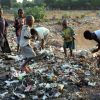
The World Bank Needs to Understand Poverty and What it Actually Costs a Family to Live on
The World Bank claims poverty is decreasing around the world but UN research shows it depends on what you measure. If we are serious about reducing poverty, we need to start by properly identifying it.
Land Degradation Jeopardizes Ability to Feed the World
We have known for over 25 years that poor land use and management are major drivers of climate change, but have never mustered the political will to act.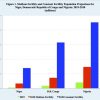
If Fertility Rates Remain Constant
What if current fertility rates of countries remain constant for the rest of the 21st century? Under this assumption, the populations of high fertility countries skyrocket while those of most low fertility countries plummet and world population nearly triples in size by the century’s close.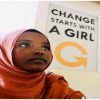
The Nairobi Summit – Towards a Watershed Moment
In 2019 a female scientist created an algorithm that gave the world the first ever images of a black hole. Working with a team of astronomers, physicists, mathematicians and engineers, a young woman led the development of a computer program that in her own words enabled them to “achieve something once thought impossible.”
The Moral Responsibility for Arms Trade
“I don’t want to see a single war millionaire created in the United States as a result of this world disaster.” 1 These were the words of US President Franklin D. Roosevelt on 22 May 1940 when he learned of individuals profiting because of the booming arms trade industry during the Second World War. Seven decades down the line, President Roosevelt’s warning against the rise of the military-industrial complex and war profiteers is more relevant than ever and a telling testimony that for many in safe places war means profit. But, should the pursuit of economic profit be allowed to supplant ethical considerations, especially when weapons often end up in the hands of terrorists, human rights violators and criminal governments?
Domestic Violence and the Role of Education
Trying to teach and inspire youngsters is a daunting task. Many teachers tend to suffer from a harrowing, bad conscience, obliged as they are to follow routines, rules, and regulations set down by their employers while knowing that these are difficult to apply and provide with desired results. Worst is a nagging feeling of inability to reach out to the students. Most teachers want their pupils to be good learners, critically thinking individuals who feel gratified and keen to change things for the better.
Your Life or Your Freedom? The Ultimate Price to Defend the Environment
For the family of indigenous Guatemalan activist Jorge Juc, the announcement last week by US President Donald Trump of an agreement declaring Guatemala a “safe third country” could not be more bitterly ironic.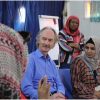
Mediating Peace in a Complex World
“It is all about orchestration”, was Martin Griffiths’, the UN Special Envoy for Yemen, response to the question of what mediation in Yemen looks like today.
Bretton Woods Institutions: Enforcers, Not Saviours?
According to their own internal evaluations, both the World Bank (WB) and the International Monetary Fund (IMF) have huge credibility deficits due to the policy conditionalities and advice they have dispensed to developing countries in recent decades.
On Brutality of Violence Against Women
On a cold night in December 2012, a ghastly crime was committed in New Delhi which stunned the world. Six men dragged helpless Nirbhaya-a 23-year-old female physiotherapy intern- to the back of the bus and raped her one by one. As she kept fighting off her assailants by biting them, one of the attackers inserted a rusted rod in her private part, ripping her genital organs and insides apart. She died a few days later. One of the accused died in police custody in the Tihar Jail. The juvenile was convicted of rape and murder and given the maximum sentence of three years' imprisonment in a reform facility, and subsequently released. The Supreme Court awarded the death penalty but legal complications have prevented its execution.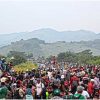
Environmental Migration a Global Challenge
The Atlas of Environmental Migration, which gives examples dating as far back as 45,000 years ago, shows that environmental changes and natural disasters have played a role in how the population is distributed on our planet throughout history.
Communication is Key to Overhauling Safeguarding
The term ‘safeguarding’ has been squarely in the spotlight in recent times and is now used to refer to all areas relating to prevention of and protection against sexual exploitation and abuse, harassment and bullying. Heightened use of the word is a direct result of the abuses that came to light in the last few years, which shook the sector and prompted an overhaul of systems, policies, procedures and entire organisations.
Saudi Arabia Easing Male Guardianship: But More is Needed
It comes as welcome news that authorities in Saudi Arabia have taken important steps towards dismantling the repressive male guardianship system, which treats women in the country as minors.
A Call for Healthy, Blue Oceans in Asia and the Pacific
Leaders at the Group of 20 summit last month agreed on the “Osaka Blue Ocean Vision,” which aims to reduce additional pollution by marine plastic litter to zero by 2050. The UN Economic and Social Commission for Asia and the Pacific (ESCAP) stands ready to support Japan and other countries in the region to ensure healthy and sustainable oceans.
Boom or Bust -Education Will Determine Africa’s Transformation
August 12, marks International Youth Day, and the theme for this year is ‘making education more relevant, equitable and inclusive’, is particularly apt for Africa. Consider this. Every 24 hours around 35,000 African youth are looking for work.
Extreme Weather Events are Just the Tip of Rapidly Melting Icebergs
First August. It is the middle of summer in the northern hemisphere. We are witnessing not only record global warming but global political tensions are also heating up.
Europeans Mobilising for New IMF Head
In the grand European political reshuffle of 2019, it turned out that Christine Lagarde was the answer to the conundrum of who should replace Mario Draghi at the European Central Bank. But her move opens another question. Who succeeds Lagarde at the International Monetary Fund?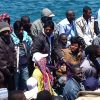
Migration and Human Solidarity
The migrant and refugee crisis has become a serious test for the unity of Europe as a political project. The inflow of destitute migrants and refugees has tested Europe’s political unity to an unprecedented extent. With a long-term solution to the migrant and refugee crisis nowhere in sight, the adverse impact of the current situation has the potential to unfold further and to give rise to a broader crisis with long-term implications, affecting Europe and the MENA region alike.
Tackling Inequality: A Focus on Cities can Improve Upward Economic Mobility
Tackling inequality in the 21st century requires us to understand and address barriers to upward mobility that segments of people face within countries. In a world with high and increasing levels of urbanization, the conversation on challenges to mobility must start with cities.
Social Norms & Women’s Access to Financial Services
How do financial services providers (FSPs) shape gender norms that restrict or expand women’s access to financial services? In more ways than you might think, and there are good reasons why FSPs should be aware of this.« Previous Page — Next Page »





The views expressed in these articles are those of the authors and do not necessarily represent the views of, and should not be attributed to, IPS-Inter Press Service

The Week with IPS

NEXT STOP - SDGs
Tracking global progress towards a sustainable world
Tracking global progress towards a sustainable world


