Languages
Sunday, November 8, 2026



News and Views from the Global South
Opinion

Does God Hate Women? A Bangladeshi Murder Case
On 6 April, nineteen-year-old Nusrat Jahan Rafi was by a fellow student brought to the roof of their school. She told Nusrat that a friend of hers was beaten up there. Unknown to Nusrat, Moni who was four months pregnant at the time, had earlier bought burqas and gloves for three of the men who were awaiting them on the roof. Another girl, Umma, was already there beckoning Nusrat to come up. However, when Nusrat entered the roof Umma threw her down and tied her legs. The burqa-dressed men surrounded the defenseless Nusrat, demanding her to withdraw accusations of sexual harassment against the schools´headmaster. When Nusrat refused to give in, one of the men held her head down, while another poured kerosene over her and set her on fire.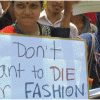
Putting Water at the Heart of Sustainable Fashion
The Copenhagen Fashion Summit celebrated its tenth anniversary last week. The summit, which is often referred to as the Davos of fashion, is a key date in the fashion diary for those businesses with a pioneering vision to highlight issues and create solutions for a more sustainable industry.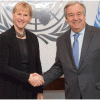
Growing Authoritarianism, Social Inequalities Often a Prelude to Conflict
I want to talk about peacebuilding and inclusive peace. My main point is that peace begins in the minds of people, and people, communities, societies must be allowed to participate in peace for it to be sustainable. Peace means a lot more than just the absence of war.
Women Human Rights Defenders Face Greater Risks Because of their Gender
Does the name Ihsan Al Fagiri ring a bell? How about Heba Omer or Adeela Al Zaebaq? It’s likely that these names, among countless others, are not known to the average news consumer. But their tireless and dangerous work, however, has made news headlines as protests led to historic political change in Sudan.
Citizenship & Growth: Inclusive Citizenship Laws Tend to Foster Economic Development
The notion of citizenship has evolved over time. Historically, allegiance was typically to an ethnic group or a feudal lord. With the birth of the nation-state in the 19th century came the need to distinguish between those who belonged to the state and those who didn’t, and therefore to create a legal distinction between nationals and foreigners.
Unlocking the Power of Women
This June, thousands will flock to Vancouver for a global dialogue on how to accelerate progress for girls and women under the banner of power, progress and change.
Global Hunger Is Threatening Families Because of Climate Change
There is barely a corner of human life that will not be affected by climate change, and some of its impacts are already being felt. Consider this, 821 million people are now hungry and over 150 million children stunted, putting the hunger eradication goal, SDG 2, at risk. Today 15 May, is the United Nations International Day of Families and the theme for this year is, ‘Families and Climate Action’.
Devastating Epidemic of Crime & Insecurity in Latin America & Caribbean
Development is a very uneven process, accompanied by heterogeneity in outcomes across sectors, across regions and across income groups. Such process, Albert Hirschman elegantly established about 60 years ago, constantly generates tensions and demands for redistribution of resources and power. In this sense, conflict is inherent to development.
Bulgaria’s Press Navigates Harassment & Threats in Pursuit of Stories
Crammed in the small studio of TVN, a regional station in Ruse, north eastern Bulgaria, journalists share stories about their colleague, Viktoria Marinova. Barely six months ago, Marinova was raped and murdered not far from the station, while jogging on the banks of the Danube.
Privatization Solution Worse than Problem
Privatization has not provided the miracle cure for the problems (especially inefficiencies) associated with the public sector. The public interest has rarely been well served by private interests taking over from the public sector. Growing concern over the mixed consequences of privatization has spawned research worldwide.
Urgent Action Vital to Stop Twin Crises of Nature’s Destruction & Climate Change
The Intergovernmental Platform on Biodiversity and Ecosystem Services’ report on the global state of biodiversity is shocking but not entirely surprising. The question is, how much more evidence and repeated warnings will it take for governments, companies and financial institutions to wake up to the urgency and act?
America First as a Threat to Mulitlateralism
On 25 April, Joseph Biden announced his candidacy for the US presidency, declaring that his decision was based on fears of Trump being re-elected:
The Age of the Internet Calls for Younger Leaders
Days before Algeria’s 82-year-old strongman president Abdelaziz Bouteflika was ousted from power, the country made one last ditch attempt to keep control: it shut down the internet.
An Urgent Need to Advance Peace
Let us be blunt: the world is in crisis. Peace, human rights, our planetary ecosystem, and our systems of conflict management and global governance are under enormous strain.
From Sanctioning Iran to War?
With the recent military moves announced uncharacteristically by the White House first, the world is witnessing with grim fascination what could turn out to be the early moves towards a war against Iran. How plausible is this scenario and what is likely to happen geopolitically if and when the US belligerence leads to an actual military confrontation with Iran?
Campaign to Whitewash Saudi Arabia’s Image Does Little for Women in the Kingdom
Amid a high-profile public relations campaign to convince the world just how much the Kingdom of Saudi Arabia is modernising – highlighted in last year’s lifting of the ban on women driving – Saudi authorities continue their relentless persecution of women human rights defenders.
US Withdrawal From Iran Nuclear Deal: One Year On
On 8 May last year, US President Donald J. Trump announced that the United States would pull out of the Joint Comprehensive Plan of Action (JCPOA), which sets limits on Iran’s nuclear programme to ensure that it cannot produce nuclear weapons.
Leaving No One Behind: Young People’s Participation at UN
Walking down 44th street towards UNICEF House was a poignant moment for me: having sought out resources, gone through strenuous immigration processes and having had my assumptions unraveled with the realities of New York City (NYC). This was it.
Neoliberal Reforms Strengthening Monopoly Power and Abuses
Over the last four decades, growing concentration of market power in the hands of oligopolies, if not monopolies, has been greatly enabled by ostensibly neo-liberal reforms, worsening wealth concentration and gross inequalities in the world.
Building a More Energy-Efficient Neighbourhood in Dubai
Dubai is an Emirate in the United Arab Emirates (UAE) with a population of about 3 million. The discovery of oil in the 1960’s transformed Dubai from a sleepy port town to a global metropolis. The recent shift to address environmental sustainability in Dubai draws attention to energy issues in the city.
UN Chief’s Reprehensible Bankrolling of Violence in Burundi
Last week the Washington Post published a scathing critique by the executive director of Human Rights Watch, titled “Why the U.N. Chief’s Silence on Human Rights is Deeply Troubling.” Kenneth Roth argued that Secretary-General António Guterres “is becoming defined by his silence on human rights—even as serious rights abuses proliferate.”« Previous Page — Next Page »





The views expressed in these articles are those of the authors and do not necessarily represent the views of, and should not be attributed to, IPS-Inter Press Service

The Week with IPS

NEXT STOP - SDGs
Tracking global progress towards a sustainable world
Tracking global progress towards a sustainable world
