Languages
Sunday, September 6, 2026



News and Views from the Global South
Opinion

A Unified Oceanic Commitment to Tsunami Preparedness
On a quiet July morning in Severo-Kurilsk, a coastal town in the East of the Russian Federation, the sea began to retreat unnaturally fast. Within minutes, tsunami sirens blared and 2,700 residents evacuated to higher ground. Waves up to five meters inundated the port and fish factory, but no lives were lost. The town’s survival reflected years of investment in early warning systems, community drills, and resilient infrastructure. The 2025 Kamchatka tsunami demonstrated what preparedness can achieve when science, governance, and community action align.
As COP30 Nears, We Need All Effective Climate Solutions
A new global study has challenged a key assumption in climate planning: that the planet’s geological “carbon vault” is vast enough to hold all the carbon dioxide (CO₂) we might one day choose to bury underground after we remove it from the atmosphere. It isn’t.
Financing Tropical Forests now is a COP30 Solution that’s Already Working
As the world prepares for COP30 in Belém, all eyes are on Brazil’s proposed Tropical Forests Forever Facility (TFFF)—a bold plan to reward countries for keeping forests standing. It represents a vital part of the long-term vision we need for global forest protection.
Food Systems Are the Missing Link in Social Development
Food has always been political. It decides whether families thrive or fall into poverty, whether young people see a future of opportunity or despair, whether communities feel included or pushed aside. Food is also a basic human right – one recognized in international law but too often unrealized in practice. Guaranteeing that right requires viewing food not as a form of emergency relief, but as the cornerstone of sustainable social development.
From Slogans to Systems: Five Practical Steps for Turning Social Development Commitments into Action at Doha and Beyond
Thirty years ago, world leaders gathered in Copenhagen and made a promise: people would be at the center of development. This November, Heads of State and Government will meet again in Doha, Qatar, for the Second World Summit for Social Development or WSSD2.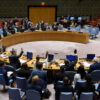
A Power Imbalance Frozen in Time: The Case for Security Council Reform
In June 2025, the international community celebrated the 80th anniversary of the signing of the United Nations Charter. On October 24, we celebrated UN Day, commemorating its ratification. This is an opportune moment to reflect on how far we have come, and the ground we have yet to traverse.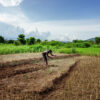
Indigenous Communities Are the Frontlines of Climate Action—It’s Time COP Listened
I had hoped to attend this year’s Conference of the Parties (COP) in person, to stand alongside fellow Indigenous leaders and advocate for the rights of our communities.
Data Centre Investments Bad Deals
Opposition to data centres (DCs) has been rapidly spreading internationally due to their fast-growing resource demands. DCs have been proliferating quickly, driven by the popularity of artificial intelligence (AI).
The Time for a Decade of Island Resilience is Now
As biodiversity loss including ocean degradation, pollution and climate change threaten our planet, islands, and particularly global small island nations, often don't get the spotlight they deserve. Often labeled as vulnerable, the world’s small island nations are in fact powerful beacons of resilience.
Eyes in the Sky: How Satellites Are Helping to Reduce Emissions from Livestock
Thousands of years ago, we looked to the stars for guidance — constellations like Taurus and the Pleiades signalled the changing of the seasons and the best times to plant, harvest and move animals.
The Dangers of Green Mining
Even amidst the regressive resistance of the current U.S. administration, the world is shifting toward a green energy future. As governments pledge to phase out fossil fuels, companies tout electric vehicles, and financiers pour billions into solar, wind and batteries, it seems the necessary transition from fossil fuels to clean energy is finally picking up pace.
When Taliban Shut Down the Internet, Women Lost their Lifeline to Aid, Education & Each Other
When the Taliban recently cut off the Internet and phone networks across Afghanistan, millions of women and girls were silenced. For those with connectivity, the blackout severed their last link to the outside world – a fragile connection that had kept education, work, and hope alive.
Foreign Agent Laws: The Latest Authoritarian Weapon Against Civil Society
When thousands of Georgians filled the streets of Tbilisi in 2023 to protest against their government’s proposed ‘foreign agents’ law, they understood what their leaders were trying to do: this wasn’t about transparency or accountability; it was about silencing dissent. Though the government was forced to withdraw the legislation, it returned with renewed determination in 2024, passing a renamed version despite even bigger protests. The law has effectively frozen Georgia’s hopes of joining the European Union.
Explaining Strong Credit Growth in Brazil Despite High Policy Rates
At 15 percent, Brazil’s monetary policy interest rate (called Selic) is one of the highest among major economies. Yet in 2024, bank credit grew by 11.5 percent and corporate bond issuance rose by 30 percent.
Women’s Leadership at the Heart of Disaster Risk Reduction
Climate and environmental challenges are hitting harder and more often, reshaping people’s lives around the world. While disasters touch everyone, their impacts are not felt equally. The most marginalized, especially women and girls, are too often the first to suffer and the last to recover.
Connecting the Dots: Policy Shifts, Realities and Lessons
The Asia-Pacific region has long served as a springboard for transforming socio-economic implementation gaps into development opportunities. With the 2030 deadline for the Sustainable Development Goals fast approaching, policymakers are stepping up efforts to translate policy announcements into tangible impacts.
A Hungry World Knows No Borders
When crops fail, people move not by choice, but by necessity. As families are displaced by droughts and failed harvests, the pressures do not always stop at national boundaries. In short, hunger has become one of the most powerful forces shaping our century.
The Inescapable Reality the Israelis Must Face
The ceasefire agreement and the release of Israeli hostages and Palestinian prisoners are only the first steps on the long and treacherous road that could end the calamitous, decades-long Israeli-Palestinian conflict. In my recent article, “A Rare Alignment:The World Stands Ready, Are the Palestinians?”
From Burundi to Washington: Recognizing the Warning Signs
I moved to the United States in 2012 with great reluctance. I wasn’t sure why I should uproot myself to a country thousands of miles away from my hometown. The move reminded me of a childhood I hadn’t fully embraced—growing up in faraway countries like Russia and China, making constant adjustments, encountering racism, forging and losing friendships along the way. I had promised myself I would not impose the same cycle on my children.
It’s Time to Unbury the IMF’s Hidden Gold
Countries across the Global South face an accelerating climate crisis, tepid growth, and unsustainable levels of debt. Yet hopes of finding support at the International Monetary Fund’s (IMF) Annual Meetings in Washington are dim. The IMF is tightening its purse strings — even as it leaves untouched a vast treasure of more than 3,000 tons of gold that offers a prime opportunity to stabilize the global economy.
World Bank and Other MDBs Need to Tackle Rich Country GHG Emissions to Support Development
The World Bank and other multilateral development banks recently have begun reconsidering their self-imposed restrictions on financing fossil fuel projects. This change is being prompted in part by the new U.S. administration and is also supported by developing country experts. Yet, the reality remains that greenhouse gas emissions (GHG) from fossil fuels, and specifically the climate change they induce, can severely undermine multilateral development bank projects and overall developing country growth prospects.« Previous Page — Next Page »


The views expressed in these articles are those of the authors and do not necessarily represent the views of, and should not be attributed to, IPS-Inter Press Service

The Week with IPS

NEXT STOP - SDGs
Tracking global progress towards a sustainable world
Tracking global progress towards a sustainable world
