Languages
Sunday, September 13, 2026



News and Views from the Global South
Opinion

South Asian Cities Faced Relentless, Record-Breaking Heatwaves Last Year
From the blistering heat of Delhi’s streets to Colombo’s humid corners, workers in the informal economy are silently enduring the toll of labour on their bodies and livelihoods.
Life Below Water Goes Deep: Our Planet’s Greatest Untold Story
As David Attenborough reflects in his new documentary Ocean, “After living for nearly 100 years on this planet, I now understand the most important place on Earth is not on land, but at sea". We wholeheartedly agree - and urge governments convening at the 3rd United Nations Ocean Conference (UNOC3) in France next month to remember that life below water goes deep.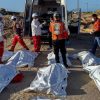
If This Isn’t Genocide, What Is?
For over a year, I refused to ascribe Israel's war against Hamas and the reign of horror it is inflicting on the Palestinians in Gaza as genocide, but now I feel shaken to the core by what I am witnessing. If what I see is not genocide, then I do not know what is.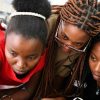
Africa in Control of Its Digital Future: Mobilising Domestic Resources & Strategic Partnerships
As political, financial and social leaders met on 27 May 2025 in Abidjan, Republic of Côte d’Ivoire, for the Annual Meetings of the African Development Bank (AfDB), the continent stands at a crucial turning point. Digitalisation can be the engine of inclusive and resilient development, but only if approached with local leadership and strategic vision.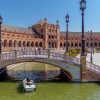
Can Money Change the World?
While headlines often focus on crises, inequality, or instability, they rarely highlight one of the most powerful tools for transformation: development finance. Can money change the world? Yes—if mobilized with strategic vision, sustainability, and equity.
The 2025 World Social Summit Must Not Be a Missed Opportunity
Rumors circulating at UN Headquarters suggest there is little appetite for ambition at the Second World Summit for Social Development, set to take place in Doha on 4-6 November 2025. Diplomats and insiders whisper of “summit fatigue” after a packed calendar of global gatherings—the 2023 SDG Summit, the 2024 Summit of the Future, and the upcoming June 2025 Fourth International Conference on Financing for Development. Compounding this fatigue is the chilling rise of anti-rights rhetoric and political resistance from some governments, casting a shadow over multilateral efforts. For some, just getting any multilateral agreement is good enough. As a result, the Zero Draft of the Social Summit Political Declaration lacks the ambition required to confront the multiple social crises our world faces.
Unmasking Harm Reduction: Youth Demand Action on Tobacco Industry’s New Tactics
The World Health Organization (WHO) for this year’s World No Tobacco Day (May 31) has chosen the theme, “Unmasking the Appeal”, to reveal the tactics employed by the tobacco and nicotine industries to make their harmful products enticing, particularly to young people.
Hide the Numbers, Control the Message
In the past, Shakespeare famously wrote in his play Henry VI that the first step for those seeking power was to “kill off the lawyers”. Today, the first step taken by those seeking power is to hide the numbers and control the message.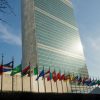
The UN Faces a Different Kind of Crisis — a Slow Erosion of Trust, Legitimacy, & Effectiveness
In 1945, with cities in ruins and hope stretched thin, 50 nations gathered in San Francisco and reached for a better world. From the ashes of fascism, genocide, and world war, they forged a charter — a binding declaration that peace, justice, and human dignity must be protected through international cooperation.
Romania’s Electoral Crisis: A Warning Shot for Democracy in the Digital Age
On 6 December 2024, Romania’s Constitutional Court made an unprecedented decision: with just two days to go before a presidential runoff expected to bring a far-right, Russia-sympathising candidate to power, the court took the extraordinary step of annulling the election due to evidence of massive Russian interference. It was the first time an EU member state has cancelled an election over social media disinformation. It may not be the last.
As Climate Change Threatens, Maldives Is No Island Paradise
Every year, thousands of couples choose to spend their honeymoon in the Maldives. Tucked in the Indian Ocean, this tropical atoll nation consistently ranks among the world’s most desirable destinations for newlyweds. But beyond the crystal-clear waters and pristine, white-sand beaches, local communities are facing a far harsher reality: a growing water crisis driven by climate change. While tourists sip cocktails in overwater bungalows, some neighboring islands are literally running out of fresh water.
South-South Cooperation: An Engine for Transformational Change in Achieving the 2030 Agenda
With just five years to 2030, the world stands at a pivotal juncture. The collective promises of our 2030 Agenda for Sustainable Development – to end poverty, protect the planet, and ensure prosperity for all – remain urgent and vital. Yet, progress is uneven, and in many areas, we risk falling short.
Islands are Solutions: the Case for Island-Ocean Coalitions
As the world confronts escalating climate impacts, biodiversity loss, and ocean degradation, islands stand as critical test cases—not just as sites of vulnerability, but as living laboratories of resilience, restoration, and innovation. Too often, they are framed as victims of global circumstances, awaiting salvation from external forces.
Economic Growth is the Wrong Metric for Our Time
As the United States lurches toward isolationism and authoritarianism, its political problems are now bleeding into pocketbook anxieties that Trump's policies will torpedo economic growth, both domestically and globally.
In Harmony with Nature: A Dryland Perspective on Development and Biodiversity
Nowhere is this more apparent than in the world’s drylands. Covering 41% of the Earth’s land surface, these regions are home to over two billion people and support 50% of the world’s livestock and 44% of its cultivated systems (UNCCD). Far from being marginal, drylands are central to global food security, biodiversity, and climate resilience.
How Computational Biology Is Zoning in on the Future of Agriculture
When pioneering agronomist and father of the “Green Revolution” Norman Borlaug set out to breed a disease-resistant, high-yielding variety of wheat, he spent years laboriously planting and pollinating different specimens by hand. He manually catalogued every outcome until he landed on the variety that would transform farming and avert famine. The result was even greater than expected: it is estimated that he saved more than a billion people worldwide from starvation.
The #ChurchToo Movement: A Wake-Up Call for the Modern Church
I was researching the role of the church in addressing contemporary issues such as gender-based violence, climate change, and social justice when I came across the #ChurchToo movement—and I got really excited. Not because the stories were easy to read (they weren’t), but because this movement was a bold, necessary conversation that faith communities could no longer ignore.
A New Pope at a Pivotal Moment: Civil Society’s Hopes for Leo XIV
The new pope, the latest in a line dating back almost 2,000 years, was quickly subjected to a very modern phenomenon: no sooner had Pope Leo XIV delivered his first address than people started trawling his social media history for clues about his views. In the context of an ongoing culture war, the fact that far-right grievance entrepreneurs were quick to decry the new pope as ‘woke’ seemed reason enough for progressives to welcome him. But for civil society and the global human rights community, it’s how Leo acts that matters.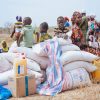
The True Cost of America’s Retreat: How USAID Cuts Threaten Millions of Lives
In January 2025, President Trump signed an executive order that upended humanitarian efforts globally, leaving millions of vulnerable people without lifesaving services. The administration's decision to slash American international aid by 83% is creating daily tragedies in the world's most fragile regions.
UN Reform – Once Again?
The UN is going through another exercise in reforming itself under immense pressure from the US, its main funder. This time US President Donald Trump has expressed himself much more forcefully and seems determined to pare down US contributions and demand further curtailing of UN expenses, while some other donors, reluctant to show their own hands, are quietly cheering on the US.
The Country with the Lowest Fertility?
Many countries around the world have a fertility rate below the replacement level of 2.1 births per woman, but one country stands out with its exceptionally low fertility rate.« Previous Page — Next Page »


The views expressed in these articles are those of the authors and do not necessarily represent the views of, and should not be attributed to, IPS-Inter Press Service

The Week with IPS

NEXT STOP - SDGs
Tracking global progress towards a sustainable world
Tracking global progress towards a sustainable world
