Languages
Thursday, November 5, 2026



News and Views from the Global South
Opinion

Hide the Numbers, Control the Message
In the past, Shakespeare famously wrote in his play Henry VI that the first step for those seeking power was to “kill off the lawyers”. Today, the first step taken by those seeking power is to hide the numbers and control the message.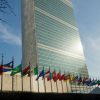
The UN Faces a Different Kind of Crisis — a Slow Erosion of Trust, Legitimacy, & Effectiveness
In 1945, with cities in ruins and hope stretched thin, 50 nations gathered in San Francisco and reached for a better world. From the ashes of fascism, genocide, and world war, they forged a charter — a binding declaration that peace, justice, and human dignity must be protected through international cooperation.
Romania’s Electoral Crisis: A Warning Shot for Democracy in the Digital Age
On 6 December 2024, Romania’s Constitutional Court made an unprecedented decision: with just two days to go before a presidential runoff expected to bring a far-right, Russia-sympathising candidate to power, the court took the extraordinary step of annulling the election due to evidence of massive Russian interference. It was the first time an EU member state has cancelled an election over social media disinformation. It may not be the last.
As Climate Change Threatens, Maldives Is No Island Paradise
Every year, thousands of couples choose to spend their honeymoon in the Maldives. Tucked in the Indian Ocean, this tropical atoll nation consistently ranks among the world’s most desirable destinations for newlyweds. But beyond the crystal-clear waters and pristine, white-sand beaches, local communities are facing a far harsher reality: a growing water crisis driven by climate change. While tourists sip cocktails in overwater bungalows, some neighboring islands are literally running out of fresh water.
South-South Cooperation: An Engine for Transformational Change in Achieving the 2030 Agenda
With just five years to 2030, the world stands at a pivotal juncture. The collective promises of our 2030 Agenda for Sustainable Development – to end poverty, protect the planet, and ensure prosperity for all – remain urgent and vital. Yet, progress is uneven, and in many areas, we risk falling short.
Islands are Solutions: the Case for Island-Ocean Coalitions
As the world confronts escalating climate impacts, biodiversity loss, and ocean degradation, islands stand as critical test cases—not just as sites of vulnerability, but as living laboratories of resilience, restoration, and innovation. Too often, they are framed as victims of global circumstances, awaiting salvation from external forces.
Economic Growth is the Wrong Metric for Our Time
As the United States lurches toward isolationism and authoritarianism, its political problems are now bleeding into pocketbook anxieties that Trump's policies will torpedo economic growth, both domestically and globally.
In Harmony with Nature: A Dryland Perspective on Development and Biodiversity
Nowhere is this more apparent than in the world’s drylands. Covering 41% of the Earth’s land surface, these regions are home to over two billion people and support 50% of the world’s livestock and 44% of its cultivated systems (UNCCD). Far from being marginal, drylands are central to global food security, biodiversity, and climate resilience.
How Computational Biology Is Zoning in on the Future of Agriculture
When pioneering agronomist and father of the “Green Revolution” Norman Borlaug set out to breed a disease-resistant, high-yielding variety of wheat, he spent years laboriously planting and pollinating different specimens by hand. He manually catalogued every outcome until he landed on the variety that would transform farming and avert famine. The result was even greater than expected: it is estimated that he saved more than a billion people worldwide from starvation.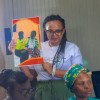
The #ChurchToo Movement: A Wake-Up Call for the Modern Church
I was researching the role of the church in addressing contemporary issues such as gender-based violence, climate change, and social justice when I came across the #ChurchToo movement—and I got really excited. Not because the stories were easy to read (they weren’t), but because this movement was a bold, necessary conversation that faith communities could no longer ignore.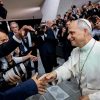
A New Pope at a Pivotal Moment: Civil Society’s Hopes for Leo XIV
The new pope, the latest in a line dating back almost 2,000 years, was quickly subjected to a very modern phenomenon: no sooner had Pope Leo XIV delivered his first address than people started trawling his social media history for clues about his views. In the context of an ongoing culture war, the fact that far-right grievance entrepreneurs were quick to decry the new pope as ‘woke’ seemed reason enough for progressives to welcome him. But for civil society and the global human rights community, it’s how Leo acts that matters.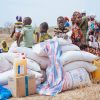
The True Cost of America’s Retreat: How USAID Cuts Threaten Millions of Lives
In January 2025, President Trump signed an executive order that upended humanitarian efforts globally, leaving millions of vulnerable people without lifesaving services. The administration's decision to slash American international aid by 83% is creating daily tragedies in the world's most fragile regions.
UN Reform – Once Again?
The UN is going through another exercise in reforming itself under immense pressure from the US, its main funder. This time US President Donald Trump has expressed himself much more forcefully and seems determined to pare down US contributions and demand further curtailing of UN expenses, while some other donors, reluctant to show their own hands, are quietly cheering on the US.
The Country with the Lowest Fertility?
Many countries around the world have a fertility rate below the replacement level of 2.1 births per woman, but one country stands out with its exceptionally low fertility rate.
UN Ocean Conference Must Inspire Global Ambition
The United Nations Ocean Conference (UNOC) takes place every three years and in just a few weeks, the international community will gather in Nice, France, at a time when the International Science Council has called for the world to address the new reality of a disrupted Earth system.
A Revolution in the Working Culture at the UN
How would the UN80 Initiative, designed to mark the 80th Anniversary of the United Nations, turned out to be, if Kamala Harris had won the American presidential election in November last year?
Will Europe Wage Peace?
With President Trump’s efforts to end the Ukraine war, Europeans are now mainly responsible for prolonging it. Despite lame protestations of peace, Europe seems committed to fighting ‘to the last Ukrainian’.
Seafood Without Transparency is a Recipe for Disaster
Seafood is a staple in my house – fish tacos, paella, sushi. But no matter how good it tastes, I can’t help but wonder: was my fish caught responsibly? Or did something go horribly wrong before it ever reached my plate?
How Should the United Nations Respond to Its Funding Crisis?
The United Nations has been called many things in its time:
A Shift in the Sands: The Reshaping of Global Influence in the Gulf
The Gulf's most powerful weapon isn't a military, a United Nations (UN) Security Council seat, or a legacy of global diplomacy. Choosing multilateralism and mega-projects over militaries and old-world diplomacy, they are tipping the scale without firing a single shot. Their approach is more modern, where money, alliances, and an active vision for the future are the weapon of choice.
From Grief to Action: Demands for Democratic Renewal in the Balkans
Three catastrophic events in the Balkans have sparked powerful movements for systemic change. A train collision that killed 57 people in Greece, a nightclub fire that claimed 59 young lives in North Macedonia and a collapsed railway station roof that left 15 dead in Serbia have ignited sustained anti-corruption protests in all three countries. These weren’t random tragedies but the culmination of systemic failure – neglected safety regulations, illegally issued permits and compromised oversight – with corruption the common denominator.« Previous Page — Next Page »





The views expressed in these articles are those of the authors and do not necessarily represent the views of, and should not be attributed to, IPS-Inter Press Service

The Week with IPS

NEXT STOP - SDGs
Tracking global progress towards a sustainable world
Tracking global progress towards a sustainable world
