Languages
Thursday, November 5, 2026



News and Views from the Global South
Opinion
Asia-Pacific Region Moves into a Resilient Future with International Cooperation
As the United Nations celebrates its 80th anniversary, one message from the UN Charter remains particularly relevant: promoting cooperative solutions to international economic, social, health, and related problems.
Mask Off – Recapping the 2025 World Bank Land Conference
Last week, at its annual Land Conference in Washington D.C., (May 5-8), the World Bank showed allegiance to the new US administration by dropping the pretense of promoting land reform for climate action and confirming that its land agenda is about boosting corporate profits.
Bye-Bye Marriage, Hello Cohabitation
Until the middle of the 20th century, marriage between men and women was the societal norm among countries, and the cohabitation of couples was uncommon and stigmatized. In the subsequent decades, however, that situation changed significantly worldwide.
A Salt Sermon That Could Kill: When Faith Leaders Preach Misinformation
In Nigeria, salt is deeply woven into the fabric of food and culture. It brings out flavor, preserves ingredients, and enhances tradition. But recently, salt has become the centerpiece of dangerous misinformation promoted by one of Nigeria’s most powerful spiritual leaders.
A Natural Disaster that Has Affected More People Worldwide Than Any Other
Here’s a question: Over the past 40 years, what natural disaster has affected more people around the globe than any other?
The Indus Water Treaty Suspension: A Wake-Up Call for Asia–Pacific Unity ?
On April 23, India suspended the Indus Water Treaty (IWT), a 65-year-old agreement that had been a rare symbol of cooperation between India and Pakistan despite decades of hostility. The suspension came a day after militants attacked civilians in Jammu and Kashmir, a disputed region, killing 26 people, most of them Indian tourists. India accused Pakistan of supporting “cross-border terrorism” and responded by halting the treaty. Pakistan denied involvement in the attack and called India’s move an “act of war.”

Transitioning to a Circular Economy: The Future We Cannot Afford to Delay
From environmental degradation to biodiversity loss and mounting waste, we are facing the dire consequences of a reckless economic model that extracts, consumes, and discards. But there is an urgent alternative—one that is not just possible, but essential.
Rights with No Age Limit: Hopes for a Convention on the Rights of Older People
The world’s population is ageing. Global life expectancy has leapt to 73.3 years, up from under 65 in 1995. Around the world, there are now 1.1 billion people aged 60-plus, expected to rise to 1.4 billion by 2030 and 2.1 billion by 2050. This demographic shift is a triumph, reflecting public health successes, medical advances and better nutrition. But it brings human rights challenges.
From Pledges to Action: EU Ocean Leadership on the Line
If one so wished, it would be entirely possible to spend a lifetime travelling from one international environmental conference to the next, without ever returning home. But the relentless pace of these meetings does not always translate into equally rapid action.
UN Needs to Protect its Vital, Yet Underfunded, Human Rights Work
Major-power cutbacks and delayed payments amidst conflict and insecurity are testing the very principles and frameworks upon which the international human rights infrastructure was built nearly 80 years ago.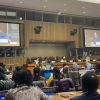
Speaking Out for SRHR: Why Lived Experiences Must Shape Policy and Practice
Just a month ago, I found myself in a hospital, anxiously waiting for my son to be attended to. As we sat quietly in one of the waiting rooms, an emergency case was wheeled in — a young woman, barely out of her teens. Her face contorted in visible pain. Her dress was soaked with blood, which had begun to pool beneath the wheelchair and trickle onto the floor.
New Forms of Power-Sharing are Needed to Uphold Rights of Indigenous Peoples
A UN groundbreaking report published in 1982 laid the legal ground for defining the inalienable rights of Indigenous Peoples. The document, written by José Martínez Cobo, a United Nations Special Rapporteur, analyzed the complex discrimination patterns faced by Indigenous Peoples.
Life and Death in the United States: A Costly Anomaly
On the crucial matters of life and death, the United States is a costly anomaly. Simply stated, women and men in the US pay more for health but get less life.
Third LDC Future Forum Concludes with Ambitious Plans to Build Resilience in Least Developed Countries
The 3rd LDC Future Forum, held from April 1-3, 2025, in Zambia, brought together global leaders, policymakers, and experts to address the urgent need for resilience in the world’s 44 Least Developed Countries (LDCs).
Trump Accord Sows Discord in US Empire
US President Donald Trump has deliberately sown discord worldwide in attempting to remake the world to serve supposed American interests better. He will not cede influence, let alone power and control, to other nations, let alone people.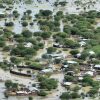
Uncertainty Looms for Kenya Following Tense IMF/World Bank Spring Meetings
Reflecting on this year’s IMF/World Bank Spring Meetings, one word lingers in my mind: uncertainty. The shifting global geopolitical landscape loomed large—none more so than the US administration’s initial threat to withdraw from the Bretton Woods institutions.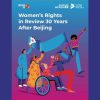
A Feminist Future for the UN: Why the Next Secretary-General Must Champion Civil Society
Climate change is threatening to engulf small island states such as Maldives and the Marshall Islands. Gender apartheid is still practiced in theocratic states such as Afghanistan and Saudi Arabia. War crimes and genocide are taking place in the Occupied Palestinian Territories and Sudan.
The Vietnam and Gaza Wars Shattered Young Illusions About US Leaders
Eight years before the U.S.-backed regime in South Vietnam collapsed, I stood with high school friends at Manhattan’s Penn Station on the night of April 15, 1967, waiting for a train back to Washington after attending the era’s largest antiwar protest so far.
To Save Our Planet, We Must Protect Its Defenders
The most powerful court in Latin America and the Caribbean, the Inter-American Court of Human Rights, is preparing to clarify the obligations of States in relation to climate change. In its upcoming Advisory Opinion, the Court must articulate ambitious standards for respecting and protecting the human rights of environmental defenders in the context of the climate crisis.
Press Freedom Is Being Buried but How Many Really Know or Care?
Pressures on the press are piling up. Like an avalanche gaining speed yet unnoticed by most people in the valley below, freedom of the press is being relentlessly trampled over - despite the valiant efforts of a few.
Trump’s First 100 Days Portend Long-Lasting Damage to Press Freedom
Press freedom is no longer a given in the United States 100 days into President Donald Trump’s second term as journalists and newsrooms face mounting pressures that threaten their ability to report freely and the public’s right to know.« Previous Page — Next Page »





The views expressed in these articles are those of the authors and do not necessarily represent the views of, and should not be attributed to, IPS-Inter Press Service

The Week with IPS

NEXT STOP - SDGs
Tracking global progress towards a sustainable world
Tracking global progress towards a sustainable world
