Languages
Sunday, September 20, 2026



News and Views from the Global South
Opinion

It Is Time to Save The Deep Sea
This week’s United Nations General Assembly marks nearly 20 years since the body first resolved to restrict bottom trawling on the world’s seamounts, submarine mountains that rise thousands of feet above the sea floor and comprise some of the most biologically rich marine ecosystems on the planet.
Cultivating a Culture of Peace
The longing for peace transcends time, geography and religion. Based on justice, human rights and universal values outlined in the UN Charter, a culture of peace brings us all together in our common agenda for humanity. We can only co-exist by aligning ourselves with such a world order.
Summit of the Future: On the Need for Civil Society to Make Its Voice Count at the UN
In a context of shrinking civic space that threatens civil society participation in an increasing number of countries and all the way to some UN processes, world leaders will gather to discuss the “multilateralism we want” at the Summit of the Future at the United Nations headquarters in New York.
What does Russia Trade with Africa?
After two symbolic African leaders' summits, Russia's trading is steadily increasing but significantly in exports of military weapons and equipment. According to Kremlin reports, Russian President Vladimir Putin said the trade turnover between Russia and African countries had increased by almost 35% in the first half of 2023 despite international sanctions.
UN’s Summit of the Future to Forge a New Path for Humanity
A major event at UN Headquarters – Summit of the Future scheduled for September 22-23-- is being billed as a once in a generation opportunity for the international community to grapple with important questions, and forge a new path, for the benefit of all.
Where Has Poverty Gone?
Political polarization, the climate emergency, organized crime, migration, and low economic growth currently dominate the public debate in Latin America and the Caribbean (LAC), and rightly so. However, there is a significant structural challenge to human development and democracy itself that, along with inequalities, lies at the root of these crises: poverty.
To Kill the Future, Zero the Past
Today’s weapons are capable of wiping out entire swaths of humanity, demolishing remaining shreds of culture along with them. News coverage of the one-sided Gaza campaign make it plain that’s exactly what’s happening. Destroying the past destroys the future too. The world must band together to make sure these atrocities stop.
We Stand with the Girls and Women of Afghanistan
Today, we stand with solemn hearts as the world marks this week the three-year ban on girls’ secondary education in Afghanistan. Today and every day, we must stand up for the millions of Afghan girls and women living under the yoke of gender-apartheid: systematized and institutionalized oppression, exclusion, and marginalization based exclusively on their gender. However, standing in solemnity for their suffering is not enough. We must act to remove the oppression and injustice. Against all odds, we must continue to deliver results to provide the girls access to an education well beyond grade sixth.
Odious Debts: What Can Bangladesh Learn from Ecuador?
Bangladesh’s White Paper committee will review foreign loan deals signed by the fallen kleptocratic regime. We recommend that it identifies and declares the loans or portions of loans that did not benefit the nation as unpayable, because they were siphoned off the country by corrupt politically powerful elites, or worse used to buy deadly weapons and surveillance equipment to oppress people. Such loans are “odious” – they stink and are detestable.
Building Inclusive Smart Cities: Bridging the Gender Gap
When the Beijing Declaration was adopted in 1995, it called for the removal of systematic and structure barriers that prevent women and girls from enjoying their human rights across social, economic, political and environmental domains. Over the last decade, the proportion of population with access to the internet has increased from 36 per cent in in 2013 to 67 percent today.
Leaders Can Rise to the Summit, Together
As heads of state and government fly into New York for the United Nations General Assembly and the Summit of the Future (September 22-30), 2.3 billion mothers, fathers, and children are unsure where their next meal will come from. Millions face the terror of brutal, protracted armed conflicts that make no distinction between civilians and soldiers.
How Much is Too Much for Mount Everest? Isn’t it Time For Sagarmatha to Rest
"That’s Mt. Everest!" I overheard this from a trekking guide to his trekkers team. I stopped and asked him—which one! He was not our guide, but I approached. He pointed a finger and showed me Mt. Everest and I cried—I don't know why. I was overwhelmed and humbled to finally witness the world's tallest mountain—it was not from the base camp but from Thyangboche while returning.
25TH Anniversary Message to the UN: Prioritize the Culture of Peace in its Leadership Agenda
This opinion piece is being published exactly on the date when twenty-five years ago today the UN took its most forward-looking stride in ensuring a peaceful planet for all of us since the signing of the Charter of the United Nations in 1945.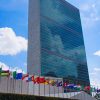
A UN 2.0 Needs Robust People’s Civil Society Participation
A cascade of crises endangers our world. Wars conducted without rules, governance devoid of democratic principles, surge in discrimination against women and excluded groups, accelerating climate change, greed-induced environmental degradation and unconscionable economic deprivation in an age of excess are threatening to roll back decades of human progress made by the international community.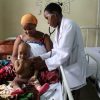
Incorporate Genetics, Social Support and Place of Residence into Public Health Campaigns
A recent study published in Journal Communications Medicine explores how people from different income levels and urban or rural backgrounds view the factors that influence health across eight countries: Brazil, China, Germany, Egypt, India, Indonesia, Nigeria, and the United States. It found that those with higher incomes are more likely to think genetics are the most important factor for health, while those with lower incomes value social support more. In contrast, urban residents prioritize healthcare, while those in non-urban areas place more importance on social support. This information can influence public health messaging.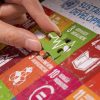
A Better Tomorrow with South-South Cooperation
The annual United Nations Day for South-South Cooperation, commemorated annually on September 12, serves as a powerful reminder of the spirit of solidarity and cooperation that transcends geographic borders — a spirit that is crucial for securing a better and thriving future for all. In a world facing cross-cutting challenges, the importance of this South-South solidarity cannot be overstated.
The Global South in the New Cold War
Marginalised and dominated economically by the Global North, developing countries must urgently cooperate to better strive for their shared interests in achieving world peace and sustainable development.
Women Lead Record Number of Central Banks, but More Progress is Needed
Women are leading more central banks than ever before, thanks to appointments in the past year, but recent gains still leave the share of female governors far short of parity.
How Much Damage Can Be Done by a Few? The Tragedy in Gaza, Part 2
Hungarian-Swedish microbiologist George Klein, who in 1944 escaped from a train destined to Auschwitz, once wrote that his father jokingly used to say that he had caused World War I. While working as a medical doctor in Bosnia he had cured a young boy called Gavrilo Princip from a deadly disease. As an adult Gavrilo shot and killed Archduke Franz Ferdinand, presumptive heir to the throne of Austria-Hungary, whose death became the immediate cause of World War I. Can a single person, knowingly or unknowingly, change the course of history? We talk about “Putin’s war” and “Trump’s USA”. Are individuals so important? Lev Tolstoy wrote in War and Peace that it was absurd to attribute historical events to acts of individuals. The French revolution could quite easily have produced another person like Napoleon. He insisted that the French emperor knew as little of what was happening in the battle of Borodino as the meanest soldier serving under him.
60 Years After Lyndon Johnson’s “Daisy Ad,” the Silence on Nuclear War Is Dangerous
One evening in early September 1964, a frightening commercial jolted 50 million Americans who were partway through watching “Monday Night at the Movies” on NBC. The ad began with an adorable three-year-old girl counting petals as she pulled them from a daisy. Then came a man’s somber voiceover, counting down from ten to zero. Then an ominous roar and a mushroom cloud from a nuclear bomb explosion.
Partnership-building: A Sustainable Tool for African Non-profit Organisations
In the landscape of African nonprofit organisations and indeed the world over, sustainability remains a cornerstone for enduring impact. However, continued funding is a pivotal aspect of sustainability.« Previous Page — Next Page »


The views expressed in these articles are those of the authors and do not necessarily represent the views of, and should not be attributed to, IPS-Inter Press Service

The Week with IPS

NEXT STOP - SDGs
Tracking global progress towards a sustainable world
Tracking global progress towards a sustainable world
