Languages
Saturday, November 7, 2026



News and Views from the Global South
Opinion

How the Geneva Consensus Declaration Threatens International Cooperation and Development
Last week, UN member states adopted the Pact of the Future – and its two annexes: the Global Digital Compact and the Declaration for Future Generations. These action-oriented documents are envisaged to counter emerging threats to development and acceleration of progress on Agenda 2030. Nonetheless, there remains little political prioritization of reproductive justice on this agenda.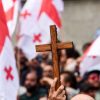
Georgia’s Dangerous Anti-LGBTQI+ Law
Georgia’s ruling party has put LGBTQI+ people firmly in the firing line ahead of next month’s election. On 17 September, parliament gave final approval to a highly discriminatory law that empowers the authorities to censor books and films with LGBTQI+ content, stop discussion of LGBTQI+ issues in schools, ban people from flying rainbow flags and prevent Pride events. The law excludes LGBTQI+ people from adopting children, bans gender affirmation surgery and refuses to recognise same-sex marriages of Georgians conducted abroad.
It’s Time for Rich Polluters to Pay for the Climate Crisis They Created
The world is standing at a critical juncture. Climate change is not just a future threat—it’s here, and it’s already devastating lives. From record-breaking heat waves to floods and landslides, the planet is sending us clear signals that we cannot afford to ignore.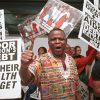
Easing Africa’s Debt Burdens: a Fresh Approach, Based on an Old Idea
The statistics are stark: 54 governments, of which 25 are African, are spending at least 10% of their revenues on servicing their debts; 48 countries, home to 3.3 billion people, are spending more on debt service than on health or education.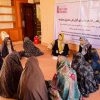
Cultivating a Culture of Peace
As global peace hits its lowest point since the Second World War, the International Day of Peace on September 21 offered a critical moment to reflect on and strengthen our peacebuilding efforts.
Tripling Renewables Powered by State-Owned Power Companies and Utilities
The climate community, meeting this week once again on the margins of the UN General Assembly, is continuing to explore ways to triple the world’s installed renewable generation capacity by 2030, a target agreed at last year’s COP 28 international climate negotiations. Much of this discussion has been about mobilizing finance and otherwise getting the private sector, with its massive resources and competence, to step up to the challenge … and what government policies and incentives are needed to spur more investment.
The UN Needs a Summit for the Present
The Summit of the Future has now ended, but the real and present world is still on fire. As the General Assembly, an annual ritual where dozens of heads of state descend on New York, kicks off, key questions about the role and future of the United Nations, a body that was created to maintain international peace and security almost 80 years ago, remain unanswered.
Carbon Emissions from AI and Crypto are Surging– and Tax Policy Can Help
What do crypto assets and artificial intelligence have in common? Both are power hungry. Because of the electricity used by high-powered equipment to “mine” crypto assets, one Bitcoin transaction requires roughly the same amount of electricity as the average person in Ghana or Pakistan consumes in three years. ChatGPT queries require 10 times more electricity than a Google search, due to the electricity consumed by AI data centers.
Net Zero by 2050 Delays Needed Urgent Climate Action
Net zero emissions by 2050 prioritise mitigation for climate stabilisation. Pledges to achieve this still distant target have grown but inadvertently delay urgently needed climate action in the near term.
It Is Time to Save The Deep Sea
This week’s United Nations General Assembly marks nearly 20 years since the body first resolved to restrict bottom trawling on the world’s seamounts, submarine mountains that rise thousands of feet above the sea floor and comprise some of the most biologically rich marine ecosystems on the planet.
Cultivating a Culture of Peace
The longing for peace transcends time, geography and religion. Based on justice, human rights and universal values outlined in the UN Charter, a culture of peace brings us all together in our common agenda for humanity. We can only co-exist by aligning ourselves with such a world order.
Summit of the Future: On the Need for Civil Society to Make Its Voice Count at the UN
In a context of shrinking civic space that threatens civil society participation in an increasing number of countries and all the way to some UN processes, world leaders will gather to discuss the “multilateralism we want” at the Summit of the Future at the United Nations headquarters in New York.
What does Russia Trade with Africa?
After two symbolic African leaders' summits, Russia's trading is steadily increasing but significantly in exports of military weapons and equipment. According to Kremlin reports, Russian President Vladimir Putin said the trade turnover between Russia and African countries had increased by almost 35% in the first half of 2023 despite international sanctions.
UN’s Summit of the Future to Forge a New Path for Humanity
A major event at UN Headquarters – Summit of the Future scheduled for September 22-23-- is being billed as a once in a generation opportunity for the international community to grapple with important questions, and forge a new path, for the benefit of all.
Where Has Poverty Gone?
Political polarization, the climate emergency, organized crime, migration, and low economic growth currently dominate the public debate in Latin America and the Caribbean (LAC), and rightly so. However, there is a significant structural challenge to human development and democracy itself that, along with inequalities, lies at the root of these crises: poverty.
To Kill the Future, Zero the Past
Today’s weapons are capable of wiping out entire swaths of humanity, demolishing remaining shreds of culture along with them. News coverage of the one-sided Gaza campaign make it plain that’s exactly what’s happening. Destroying the past destroys the future too. The world must band together to make sure these atrocities stop.
We Stand with the Girls and Women of Afghanistan
Today, we stand with solemn hearts as the world marks this week the three-year ban on girls’ secondary education in Afghanistan. Today and every day, we must stand up for the millions of Afghan girls and women living under the yoke of gender-apartheid: systematized and institutionalized oppression, exclusion, and marginalization based exclusively on their gender. However, standing in solemnity for their suffering is not enough. We must act to remove the oppression and injustice. Against all odds, we must continue to deliver results to provide the girls access to an education well beyond grade sixth.
Odious Debts: What Can Bangladesh Learn from Ecuador?
Bangladesh’s White Paper committee will review foreign loan deals signed by the fallen kleptocratic regime. We recommend that it identifies and declares the loans or portions of loans that did not benefit the nation as unpayable, because they were siphoned off the country by corrupt politically powerful elites, or worse used to buy deadly weapons and surveillance equipment to oppress people. Such loans are “odious” – they stink and are detestable.
Building Inclusive Smart Cities: Bridging the Gender Gap
When the Beijing Declaration was adopted in 1995, it called for the removal of systematic and structure barriers that prevent women and girls from enjoying their human rights across social, economic, political and environmental domains. Over the last decade, the proportion of population with access to the internet has increased from 36 per cent in in 2013 to 67 percent today.
Leaders Can Rise to the Summit, Together
As heads of state and government fly into New York for the United Nations General Assembly and the Summit of the Future (September 22-30), 2.3 billion mothers, fathers, and children are unsure where their next meal will come from. Millions face the terror of brutal, protracted armed conflicts that make no distinction between civilians and soldiers.
How Much is Too Much for Mount Everest? Isn’t it Time For Sagarmatha to Rest
"That’s Mt. Everest!" I overheard this from a trekking guide to his trekkers team. I stopped and asked him—which one! He was not our guide, but I approached. He pointed a finger and showed me Mt. Everest and I cried—I don't know why. I was overwhelmed and humbled to finally witness the world's tallest mountain—it was not from the base camp but from Thyangboche while returning.« Previous Page — Next Page »





The views expressed in these articles are those of the authors and do not necessarily represent the views of, and should not be attributed to, IPS-Inter Press Service

The Week with IPS

NEXT STOP - SDGs
Tracking global progress towards a sustainable world
Tracking global progress towards a sustainable world
