Languages
Saturday, November 7, 2026



News and Views from the Global South
Opinion

25TH Anniversary Message to the UN: Prioritize the Culture of Peace in its Leadership Agenda
This opinion piece is being published exactly on the date when twenty-five years ago today the UN took its most forward-looking stride in ensuring a peaceful planet for all of us since the signing of the Charter of the United Nations in 1945.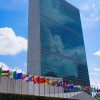
A UN 2.0 Needs Robust People’s Civil Society Participation
A cascade of crises endangers our world. Wars conducted without rules, governance devoid of democratic principles, surge in discrimination against women and excluded groups, accelerating climate change, greed-induced environmental degradation and unconscionable economic deprivation in an age of excess are threatening to roll back decades of human progress made by the international community.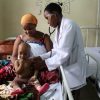
Incorporate Genetics, Social Support and Place of Residence into Public Health Campaigns
A recent study published in Journal Communications Medicine explores how people from different income levels and urban or rural backgrounds view the factors that influence health across eight countries: Brazil, China, Germany, Egypt, India, Indonesia, Nigeria, and the United States. It found that those with higher incomes are more likely to think genetics are the most important factor for health, while those with lower incomes value social support more. In contrast, urban residents prioritize healthcare, while those in non-urban areas place more importance on social support. This information can influence public health messaging.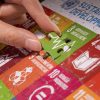
A Better Tomorrow with South-South Cooperation
The annual United Nations Day for South-South Cooperation, commemorated annually on September 12, serves as a powerful reminder of the spirit of solidarity and cooperation that transcends geographic borders — a spirit that is crucial for securing a better and thriving future for all. In a world facing cross-cutting challenges, the importance of this South-South solidarity cannot be overstated.
The Global South in the New Cold War
Marginalised and dominated economically by the Global North, developing countries must urgently cooperate to better strive for their shared interests in achieving world peace and sustainable development.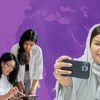
Women Lead Record Number of Central Banks, but More Progress is Needed
Women are leading more central banks than ever before, thanks to appointments in the past year, but recent gains still leave the share of female governors far short of parity.
How Much Damage Can Be Done by a Few? The Tragedy in Gaza, Part 2
Hungarian-Swedish microbiologist George Klein, who in 1944 escaped from a train destined to Auschwitz, once wrote that his father jokingly used to say that he had caused World War I. While working as a medical doctor in Bosnia he had cured a young boy called Gavrilo Princip from a deadly disease. As an adult Gavrilo shot and killed Archduke Franz Ferdinand, presumptive heir to the throne of Austria-Hungary, whose death became the immediate cause of World War I. Can a single person, knowingly or unknowingly, change the course of history? We talk about “Putin’s war” and “Trump’s USA”. Are individuals so important? Lev Tolstoy wrote in War and Peace that it was absurd to attribute historical events to acts of individuals. The French revolution could quite easily have produced another person like Napoleon. He insisted that the French emperor knew as little of what was happening in the battle of Borodino as the meanest soldier serving under him.
60 Years After Lyndon Johnson’s “Daisy Ad,” the Silence on Nuclear War Is Dangerous
One evening in early September 1964, a frightening commercial jolted 50 million Americans who were partway through watching “Monday Night at the Movies” on NBC. The ad began with an adorable three-year-old girl counting petals as she pulled them from a daisy. Then came a man’s somber voiceover, counting down from ten to zero. Then an ominous roar and a mushroom cloud from a nuclear bomb explosion.
Partnership-building: A Sustainable Tool for African Non-profit Organisations
In the landscape of African nonprofit organisations and indeed the world over, sustainability remains a cornerstone for enduring impact. However, continued funding is a pivotal aspect of sustainability.
Nigeria: Protecting the Vulnerable on the Path to Progress
Returning to Nigeria after five years, I was struck by the changes - both the challenges and the opportunities. To better understand these dynamics, I have been undertaking visits to states across Nigeria.
Africa’s Strong Case for Reforms of UN Security Council Led by Sierra Leone Presidency
At most international forums, including the annual UN General Assembly high-level debate, Sierra Leonean President Julius Maada Bio consistently highlights the injustices of the global system, particularly Africa’s absence in the permanent category and underrepresentation in the non-permanent category of the United Nations Security Council (UNSC).
Knowledge is Power. Gaza War Supporters Don’t Want Students to Have Both
With nearly 18 million students on U.S. college campuses this fall, defenders of the war on Gaza don’t want to hear any backtalk. Silence is complicity, and that’s the way Israel’s allies like it.
The Time to End Nuclear Tests is Now
Today, the General Assembly convenes – for the fifteenth consecutive occasion – to observe the International Day Against Nuclear Tests, which is commemorated annually on 29 August.
Recovering stolen assets: No weakening of resolve
The White Paper on the state of Bangladesh’s economy will include a review of “smuggled money”, according to the head of the committee, Debapriya Bhattacharya, entrusted to prepare the White Paper.
Preventing a Measles Outbreak—the Shared Responsibility of Vaccination
Measles infections are surging right now, with epidemiologists reporting that the number of large or disruptive outbreaks has tripled over the past three years. It is one of the most infectious diseases that we know. The virus spreads through respiratory droplets; when an infected person coughs or sneezes, it can linger in the air for up to two hours and infect 10 others who are not immune.
Food Security in Latin America and the Caribbean: Progress, Challenges and the Commitment to Move Forward
The latest publication of the State of Food Security and Nutrition in the World 2024 (SOFI) report launched last July in the framework of the G20 meeting in Rio de Janeiro provides a detailed overview of progress and setbacks in the fight against hunger.
UN Expert Says Impunity for Israel Must End as ‘Genocidal Violence’ Spreads to West Bank
An independent United Nations expert has warned that "Israel's genocidal violence risks leaking out of Gaza and into the occupied Palestinian territory as a whole" as Western governments, corporations, and other institutions keep up their support for the Israeli military, which stands accused of grave war crimes in the Gaza Strip and West Bank.
Tackling Climate Change Will Be a Pyrrhic Victory If We Lose Sight of the Poor
Last July, we were confronted with alarming statistics: 733 million people experienced hunger in 2023, equivalent to one in eleven people globally. In Africa it was even higher, with one in five people going hungry. Climate change is a significant driver of this crisis.
Israel’s Goal: Smashing Palestinian Legitimacy
Most people think that Israel’s main goal in Gaza is to recover the hostages seized by HAMAS on October 7, 2023 with an announced follow-up mission to eliminate HAMAS as a threat. If you thought that, you would be wrong. Substantial evidence reveals a different strategic aim—destroying every shred of Palestinian legitimacy as a nation.
New Zealand: Māori Rights in the Firing Line
A New Zealand bill that would roll back Indigenous rights is unlikely to pass – but it’s emblematic of a growing climate of hostility from governing politicians. A recent survey shows that almost half of New Zealanders believe racial tensions have worsened under the right-wing government in power since December 2023.
A Sustainable Future within Reach: The Promise of Digital Transformation
The development paradigm has shifted to ‘digital by default’ as a norm, reshaping societies and economies. As a hub for digitally driven innovations, Asia and the Pacific is well positioned to leverage the transformative potential of digital technologies to accelerate progress towards the Sustainable Development Goals.« Previous Page — Next Page »





The views expressed in these articles are those of the authors and do not necessarily represent the views of, and should not be attributed to, IPS-Inter Press Service

The Week with IPS

NEXT STOP - SDGs
Tracking global progress towards a sustainable world
Tracking global progress towards a sustainable world
