Languages
Tuesday, September 29, 2026



News and Views from the Global South
Opinion

Revolutionist Returnees: Fulfilling Dreams, Finding Freedom
In 1977, a record-breaking mini-series carved its place in the milestone of US history. Based on Alex Haley’s Pulitzer Prize-winning novel, Roots: The Saga of an American Family, the small-screen adaptation exposed the atrocities of the transatlantic slave trade and its impact on generations thereafter.
Is Anti-Woke a Grass-Root Movement?
“Woke” was for a century, especially among black people in the US, an inspirational concept. However, almost overnight it turned into a pejorative. Like using the term “politically correct” as an insult, calling someone “woke” came to imply that the referred person’s views are excessively ridiculous, or even despicable. Being “anti-woke” has become an indication that you do not belong to an assumed group of “do-gooders”, who at the expense of right-minded “ordinary” citizens assert the demands of interest groups, which declare themselves to be discriminated against due to their ethnicity/race, gender, sexual preference, and/or physical or psychological disabilities.
Embodying the Spirit of the Dragon
The Year of the Dragon is upon us. UN Secretary-General António Guterres said in his message for this Lunar New Year, “The dragon symbolizes energy, wisdom, protection and good luck. We need these qualities to rise to today’s global challenges.”
White House Still Denies Mideast Turmoil Linked to Gaza
The Biden administration continues to deny any connections between the war in Gaza and the ongoing conflicts involving U.S. forces in Iraq, Syria, and Yemen.
Neocolonial ISDS, Abused, Biased, Costly, and Grossly Unfair
Investor-State Dispute Settlement (ISDS) provisions in international trade and investment agreements – long abused by opportunists with means – are slowly being rejected by cautious governments.
Female Genital Mutilation and Cutting in Asia Remain a Neglected Problem
Significant advances have been made in Africa towards ending female genital mutilation/cutting (FGM/C). Unfortunately, the same cannot be said for Asia, where FGM/C occurs in at least ten countries, but governments across the region are failing to take effective action. Women’s rights organizations are calling for states to introduce much-needed laws to criminalize FGM, provide national data on the extent and nature of the practice, and adequately fund efforts to tackle this regionally neglected problem.
Girls Just Want to Have Funds!
In the bustling financial hub of Singapore, Rhea See, an early-stage fund manager, leads an accelerator platform dedicated to empowering women in technology.
Unlocking India’s Potential with AI
India is on the brink of a transformation that could change its economic and social future. Before the end of this decade, more Indians will use AI every day than in any other country in the world. What’s more, people in advanced economies will be surprised by the ways the country will use AI.
The West’s Addiction to War Must End in Gaza
Two months ago, an opinion piece I wrote, "The Cries of Gaza Reach Afghanistan," was published with the hope of reminding American and other Western leaders of how quickly wars ON terror descend into wars OF terror because of their disproportionate impact on civilians and the unpredictability once unleashed.
Inclusive & Sustainable Businesses Set New Pathways for Sri Lanka
Selyn, a women-led handloom business, offers flexible employment and valuable income opportunities to about 1,000 women artisans and persons from marginalized groups in rural Sri Lanka. Selyn develops and exports high-value craft products in global markets.
How Soil Microbes Could save the World
The 500 per cent increase in global agricultural productivity over the past 60 years has largely been made possible by the scientific advances of the “Green Revolution” – from the ability to breed higher yielding varieties to improvements in farm inputs, especially fertiliser.
Myanmar’s Military Catastrophe: Three Years and Counting
The military must have expected an easier ride. Three years ago, it ousted Myanmar’s democratically elected government. But the coup has been met with fierce resistance, unleashing a bloody conflict with no end in sight.
The Spectre of Migration: A conversation with Hammoud Gallego
Karl Marx’s Manifesto of the Communist Party begins with the now worn-out phrase: “A spectre is haunting Europe – the spectre of communism. All the powers of old Europe have entered into a holy alliance to exorcise this spectre”. Nowadays the word “communism” could easily be substituted by “migration”. All over Europe, politicians claim that Europe is being destroyed by migrants. In country after country, ghosts of yesterday are awakened. Parliaments include xenophobic politicians who might be considered as inheritors of demagogs who once dragged Europeans into hate and bloodbaths.
Genocide Convention @75: A Call for its Application as a ‘Living Force in World Society’
It was a notion which haunted him well before the Second World War – from the history books his mother would read him, to the following of the 1921 trial of young Armenian Soghomon Teilerian.
Prospects for Commonwealth Countries, Addressing Gaps and Shaping Expectations for COP29
The 28th Conference of Parties (COP28) to the United Nations Framework Convention on Climate Change (UNFCCC) marked a pivotal moment in the global efforts to combat climate change. Held in Dubai, United Arab Emirates (UAE) with the participation of delegates from around the world, COP28 showcased a commitment to drive genuine strides in climate action, bringing optimism and progress to the forefront. Here we explore the implications of COP28 outcomes for small and other vulnerable Commonwealth countries and identify the gaps that still need attention. Additionally, it will discuss concrete expectations for COP29, focusing on critical discussions held at COP28.
Onerous Debt Making Poorest Poorer
Contractionary economic trends since 2008 and ‘geopolitical’ conflicts subverting international cooperation have worsened world conditions, especially in the poorest countries, mainly in Africa, leaving their poor worse off.
How Asia Can Unlock $800 Billion of Climate Financing
Countries in the Asia-Pacific region face a shortfall of at least $800 billion in climate financing. With public finances depleted by the pandemic, policymakers must unlock the vast potential of private capital to join the fight more effectively against global warming.
Building a More Resilient Work Force to Meet Challenges of Tomorrow
Quadrupling in size since 1950, the working age population in Asia and the Pacific now accounts for 67.2 per cent of the total population in the region and is set to peak at 3.3 billion by the mid-2030s.
Should We Attribute All Climate-Related Disasters Only to Global Warming?
The Republic of Mauritius, an island nation, experienced its latest flash floods since the last bad one in 2013. These floods resulted in the loss of lives and hefty bills for car insurers with over 3000 cars have been damaged.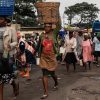
How to Ease Rising External Debt-Service Pressures in Low-Income Countries
As 2024 starts, the good news is that there haven’t been any notable requests by a low-income country for comprehensive debt relief since Ghana’s, more than a year ago. Despite this, vulnerabilities remain, with high debt servicing costs a growing challenge for low-income countries.
Serbia’s Suspicious Election
Serbia’s December 2023 elections saw the ruling party retain power – but amid a great deal of controversy. Civil society has cried foul about irregularities in the parliamentary election, but particularly the municipal election in the capital, Belgrade. In recent times Belgrade has been a hotbed of anti-government protests. That’s one of the reasons it’s suspicious that the ruling Serbian Progressive Party (SNS) came first in the city election.« Previous Page — Next Page »


The views expressed in these articles are those of the authors and do not necessarily represent the views of, and should not be attributed to, IPS-Inter Press Service

The Week with IPS

NEXT STOP - SDGs
Tracking global progress towards a sustainable world
Tracking global progress towards a sustainable world
