Languages
Monday, September 21, 2026



News and Views from the Global South

Activist Shareholders Slam Brazilian Mining Giant
Representatives of social movements and communities affected by Brazilian mining company Vale's operations have bought shares in the company, to make their voices heard.
Land, But No Paradise, for Brazil Massacre Survivors
The order came from the office of the governor of the northern Brazilian state of Pará, Almir Gabriel, at 5:00 PM on Apr. 17, 1996: clear route PA-150, the epicentre of social protests for land reform, at any cost.
The Brazilian State of Pará, Where Land is Power
Toiling beneath a blazing sun in the humid heat of the Amazon, Waldemar dos Santos, 60, tends the community garden he shares with other landless peasant farmers in the Brazilian state of Pará, as they wait for agrarian reform to provide them with the opportunity for a better life.
Incomplete Justice in Killings of Amazon Activists
Peasants and human rights defenders in Brazil are indignant over the acquittal of the man accused of ordering the May 2011 murders of two prominent Amazon activists, José Cláudio Ribeiro da Silva and his wife Maria do Espírito Santo.
New Brazilian Research Centre Focuses on Health Risks of Smoking
Brazil has taken another step to combat the harmful habit of smoking with the creation of the Centre for Studies on Tobacco and Health (CETAB).
Q&A: Brazil’s School Meals Teach Good Eating Habits
Providing school meals for 45 million children is a remarkable achievement for Brazil. But the programme faces specific difficulties, as well as the generic problems plaguing any national plan in this vast country of more than 192 million people.
Indigenous Community Takes Forest Law into Own Hands
An indigenous community in Brazil has decided to single-handedly take action against illegal loggers who are moving into their territory in search of highly valued timber.
Q&A: “Chile’s 21st Century Democracy Arose From the Dictatorship”
The legacy of Chile's 1973-1990 dictatorship, which left some 3,000 people dead and “disappeared”, remains alive in the country's society and political system, says journalist and writer Mauricio Weibel.
More Killings in Brazil Than in Some War-Torn Countries
Human rights activists in Brazil mobilised Wednesday to draw attention to the fact that half a million people have been murdered in this South American country in the past 10 years.
Q&A: “Latin America Could Eradicate Hunger by 2025”
The hunger suffered by 49 million people in Latin America could be eradicated by 2025, according to Spanish agricultural engineer Ricardo Rapallo.
Q&A: Food Production Accounts for 29 Percent of Greenhouse Gases
Food production, including agriculture, represent 29 percent of the greenhouse gases that are causing global warming, say scientists with the Consultative Group on International Agricultural Research (CGIAR).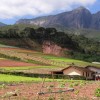
Beating Rural Poverty in South America
The development of agriculture through the adoption of technological innovations will help Latin America leave behind its status as the most unequal region in the world, and will especially benefit the Southern Cone, one of the planet’s largest food reserves.
Breast Milk Banks, From Brazil to the World
Cíntia Rose Regis, 23, not only breastfeeds her 16-month-old daughter Zelda but has also been donating 600 ml a week of breast milk to a mothers’ milk bank in Brazil over the last year.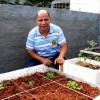
Urban Agriculture Sprouts in Brazil’s Favelas
You do not need to live in the countryside to grow vegetables, as hundreds of thousands of people involved in urban agriculture from Havana to Buenos Aires know very well. Now they are being joined by residents of Rio de Janeiro’s “favelas”.
Q&A: “Pacification of Favelas Not a Real Public Policy Yet”
The “pacification” of the favelas in this Brazilian city, aimed at driving out armed groups and fighting drug trafficking, has not yet become a fully effective public policy, says Eliana Sousa Silva, who has lived in one of Rio’s shantytowns for nearly 30 years.
Palestinians Find Refuge Across the Atlantic
Issam Ali Hassan spent more than four years in an isolated desert camp in Jordan before he was taken in by Brazil. The son of Palestinians had been living as a refugee in Baghdad when he had to escape after the United States invaded Iraq in 2003.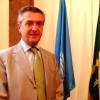
Q&A: Brazil Invited to Join U.N. Palestinian Refugee Agency
The policy of pacification of Rio de Janeiro’s violent favelas, or shantytowns, could serve as a model in some respects in Palestinian refugee camps, says Filippo Grandi, commissioner-general of the United Nations Relief and Works Agency (UNRWA) for Palestine refugees, in this interview with IPS.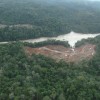
Hydropower Dam to Flood Sacred Amazon Indigenous Site
The Sete Quedas or “seven waterfalls” on the Teles Pires River, which runs through the Amazon rainforest states of Mato Grosso and Pará in central Brazil, are a spiritual oasis venerated by several indigenous groups.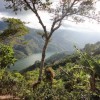
Climate-Smart Agriculture to Reduce Vulnerability*
Agroforestry is gaining ground as a tool for climate change adaptation and mitigation in Central America, a region where global warming could generate losses equivalent to 19 percent of gross domestic product.
Amazon Countries Want Concrete Sustainable Development Goals*
The countries of the Amazon river basin are pursuing definite goals for the region, such as zero deforestation by 2020, even though the Rio+20 conference's outcome document does not include "sustainable development goals".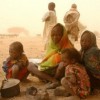
Climate Refugees – Today’s New Reality*
The continued exodus of Somalis to Kenya and Ethiopia has fuelled the debate on a new issue of global concern: climate refugees, driven from their homes and across borders by extreme weather events.« Previous Page — Next Page »


The Week with IPS

NEXT STOP - SDGs
Tracking global progress towards a sustainable world
Tracking global progress towards a sustainable world
