Languages
Thursday, September 17, 2026



News and Views from the Global South
Ecobreves – ARGENTINA: Activists Applaud Limit on Fish Exports
The Argentine government’s decision to limit exports of sábalo (Prochilodus lineatus), the main commercial fish species in the Paraná River, has been applauded by the PROTEGER Foundation, a non-governmental conservation organization.Ecobreves – CENTRAL AMERICA: Transborder Plan for the Gulf of Fonseca
Honduras, El Salvador and Nicaragua are preparing to implement a transborder development plan for the Gulf of Fonseca, an inlet of the Pacific Ocean shared by the three countries, with the goals of reducing natural disaster risks and more effectively managing natural resource use.Ecobreves – BRAZIL: Climate Change Threatens Amphibians of the Cerrado
Agriculture-driven deforestation, climate change and poor conservation policies are threatening the survival of amphibians in the Cerrado, a vast savanna region in central Brazil, according to a study conducted by the non-governmental organization Pequi - Research and Conservation in the Cerrado.BRAZIL: Water Mega-Project for the Thirsty Agreste
The development of one part of Brazil's semiarid Northeast, the Agreste region in the state of Pernambuco, could begin with the construction of canals that will bring in water diverted from the São Francisco River.JAPAN: New Radiation Limits Demanded for Children
The threat of radioactive contamination faced particularly by children after the Mar. 11 nuclear disaster in Japan has touched the heart of the Japanese public, and become a major political and social issue.BOLIVIA: General Strike Protests Crackdown on Native March
Bolivia's main trade union declared a 24-hour general strike Wednesday to protest Sunday's police crackdown on indigenous demonstrators who were protesting the construction of a road through a pristine rainforest preserve.GENERATION WITHOUT A FUTURE
"The world will be saved, if it can be, by the unsubmissive." Andre Gide
Change the System to Save the Planet
Why introduce the concept of the “green economy” instead of continuing to support sustainable development, which has the advantage of emphasizing social concerns? asks French writer Hervé Kempf in this interview.Ecobreves – VENEZUELA: Protest Against Coal Mine
Hundreds of local residents who live near the Fila Maestra coal mine, located 300 kilometers east of Caracas, staged roadblocks on the highway between the Venezuelan capital and tourism destinations in the northeastern Caribbean region as a protest against the mine’s impacts.Ecobreves – BRAZIL: Biogas Can Replace Fossil Fuels in Iron and Steel Mills
Biogas can be used in place of natural gas and coal in iron and steel mills, significantly reducing polluting emissions and wastes, thanks to a technique developed by professors at the Federal University of Minas Gerais and the Federal University of Ouro Preto.Ecobreves – HONDURAS: State Forest Institution Weakened
The functions of the Honduran Forest Conservation Institute (ICF) are increasingly being taken over by the Armed Forces, which is weakening the capacity of this state institution responsible for protecting the country’s forests, say environmentalists.U.N. Meetings Push for Nuclear Safeguards and Test Bans
History is strewn with proof of the destructive capabilities of nuclear weapons and power, yet science is also replete with evidence that nuclear power has many advantages.Iranian President Offers Nukes Compromise to U.S.
Iranian President Mahmoud Ahmadinejad said Thursday that Iran would be willing to halt production of enriched uranium that is close to weapons grade if the United States sells Iran fuel for a reactor that produces medical isotopes.MIDDLE EAST: FAREWELL TO DICTATORSHIPS AND THE DEATH PENALTY
The approval by the UN General Assembly in December 2007 of the Resolution for a Universal Moratorium against Capital Punishment was a fundamental step forward not only for the anti-death penalty campaign but also for the affirmation of the rule of law and of those natural rights historically won and often written into national law but not always respected.CLIMATE CHANGE-BRAZIL: Farmers “Have Good Reason to Worry”
Bananas are harvested where apples used to grow; cassava, a traditional crop, is disappearing from the Northeast; and the southeast is losing the fragrance of good coffee. This is the science fiction of a new distribution of crops in Brazil, South America's agricultural powerhouse.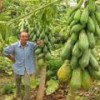
Every Raindrop Counts
Techniques for making optimal use of the scarce rainfall in northeastern Brazil are aimed at a shift in focus from fighting drought to learning to coexist with the semiarid climate.
The Dangerously High Cost of Amazon Beef
A delicious 500-gram Amazonian beef steak produced with 7,000 grams of carbon dioxide and 7,000 liters of water, mixed with belched methane, is the ideal recipe for climate change.Ecobreves – MEXICO: Pemex Violates Clean Fuel Regulations
Mexico’s state-owned oil company Pemex is not meeting its obligation to produce clean fuels, a fact which has serious health, environmental, economic and commercial consequences, says a study conducted by three non-governmental organizations.Ecobreves – ARGENTINA: Geothermal Power Plant on Glacier Rejected
At the request of neighboring communities, an Argentine court has ruled against the proposed construction of a geothermal power plant in the western province of Neuquén.Ecobreves – BRAZIL: Amazon Drought Was the Worst In a Century
The drought that hit the Amazon region last year was the most severe in a century, concluded a study by the National Institute for Space Research (INPE), confirming the suppositions of many scientists.Ecobreves – HONDURAS: School Kids Raise Family Gardens
Students from around 100 schools in Tegucigalpa are raising crops in community gardens as part of the Friends of the Environment project, aimed at raising awareness about the role of children in protecting nature.« Previous Page — Next Page »


The Week with IPS

NEXT STOP - SDGs
Tracking global progress towards a sustainable world
Tracking global progress towards a sustainable world
