Languages
Friday, September 18, 2026



News and Views from the Global South
U.S.: Iraq Intelligence Failures Cast Shadow Over Iran Assessment
As the George W. Bush administration built the case for war with Iraq in the early 2000s, press accounts picked up bits of leaked intelligence that described a weapons of mass destruction threat from then president Saddam Hussein. But once the U.S. military entered Iraq, they found nothing.WHEN MEDICINE BECOMES POISON: PHARMACEUTICALS IN THE WATER SUPPLY
As water grows scarcer and scarcer, the pressure to recycle it grows more intense, and though this makes good ecological sense, there is an unfortunate drawback: the drinking water system worldwide is polluted with pharmaceuticals.TURKEY: FURTHER THAN EVER FROM JOINING THE EU
The apparently eternal problem of Turkey's entry into the European Union seems even further from resolution. Istanbul, its largest city, is sending mixed signals. The call to prayer from the minarets mixes with the roar of rush hour traffic. The hawking and bargaining in the monumental grand bazaar is thoroughly infiltrated by Western "civilisation".
Environmental Innovators Create Virtuous Circles
Three environmental innovation projects demonstrate the capacity of Latin American researchers to develop solid virtuous circles.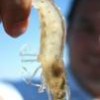
Shrimp Farm Certification: Environmental Guarantee or Greenwashing?
Efforts to establish standards for "responsible" shrimp farming are moving forward amid controversy.Ecobreves – BRAZIL: Molecule That Converts Carbon Discovered
A molecule that converts carbon into substances used in the chemical industry has been discovered at Paulista State University in Brazil. This scientific finding can contribute both to the economy and to the mitigation of global warming.Ecobreves – VENEZUELA: Trees Versus Housing
The construction of apartment buildings on vacant lots in the centre of Venezuelan cities like Caracas is having an impact on the trees that have surrounded these lots for many years.Ecobreves – HONDURAS: Armed Forces Reforest 11,000 Hectares
The “green battalions” made up by more than 1,000 members of the Honduran Armed Forces have planted 11,404 hectares of forests in the last five years.WHAT LIES AHEAD FOR LIBYA?
According to NATO, the final chapter of Gaddafi's Libya is being written now. The scenario is very similar to the final chapter for Yugoslavia -Milosevic- for Afghanistan -Mullah Omar- Iraq -Saddam Hussein- and for the "War on Terror" -bin Laden: eliminate The Bad Guy. In the future chapters of this neo-crusade, orthodox Christians will also be targeted, just as they were in the crusades from 1095-1291.IRENE, THE UNITED STATES, AND THE CARIBBEAN
Anyone who discusses international affairs with Americans quickly becomes aware of a fundamental change in syntax without which they find it impossible to converse. The subject of every sentence has to be the United States. If China, India, or Germany, for example, are the focus, the attention of the American interlocutor will waver -unless, perhaps the subject is Israel. The US is the only possible subject of discussion for Americans,with the obvious exception of the cultural elites and US citizens doing business around the world.Ecobreves – HONDURAS: NGO to Protect Endangered Hummingbird
The non-governmental Association for Research for Environmental and Socioeconomic Development has been tasked by the Honduran government with ensuring the protection of the Honduran Emerald (Amazilia luciae), a species of hummingbird unique to northern Honduras.Ecobreves – ARGENTINA: Activists Challenge Land Management Plan
Environmental organizations in Argentina are demanding that the land management plan adopted by the northeastern province of Corrientes be declared unconstitutional, because it threatens native forests.Ecobreves – MEXICO: The Search for Biofuel Sources
Mexico’s National Institute for Forestry, Agricultural and Livestock Research (INIFAP) is studying different plant species for potential biofuel production.
Highway Through Rainforest Will Have Both Environmental and Cultural Impacts
The pristine rainforests of the Isiboro Sécure Indigenous Territory and National Park are threatened with destruction by a planned new highway.
Mighty Maya Cities in Petén Succumbed to Environmental Crisis
The example of the Mayas in Petén, who destroyed the soil and forests through intensive agriculture and a love of opulence, should lead us to reflect on the consequences of excessive consumption, says archeologist Richard Hansen in this interview.Ecobreves – BRAZIL: Assessing the Impacts of Global Warming on Marine Life
The Brazilian non-governmental organization Proyecto Coral Vivo (Live Coral Project) is carrying out a research program called Marine Mesocosms to study the impacts of global warming on sea life.
Haiti: 'Abandoned Like Stray Dogs'
Hundreds of thousands of people displaced by the 2010 Haitian earthquake continue to endure horrific conditions in makeshift camps with little hope of improvement in sight, as revealed by this investigative report to which Tierramérica was given exclusive access.Ecobreves – VENEZUELA: Oil Upgrading Plant Blamed for Health Problems
Soot from the coke and sulfur produced as byproducts of crude oil upgrading at the Jose industrial complex, in the eastern Venezuelan municipality of Peñalver, is polluting the air and affecting the health of humans, animals and plants in the surrounding areas, say local NGOs.Ecobreves – BRAZIL: Forests Near Sugar Cane Fields Boost Carbon Capture
Preserving forests located in the midst of sugar cane plantations helps reduce the greenhouse gas emissions generated by these monoculture plantations, according to a team of researchers at the University of São Paulo, Brazil.Ecobreves – HONDURAS: First Graduates in Environmental Risk Management
The first 68 specialists in natural disaster risk management, prevention and recovery have graduated from the public National University of Honduras, as part of efforts to build capacity in order to reduce the vulnerability of this Central American nation.GHANA: Struggle to Prevent Import of Counterfeit Drugs
Counterfeit medicines have flooded the market in Ghana and have even made their way into government hospitals as the country’s drug regulator struggles to control the importation of drugs.« Previous Page — Next Page »


The Week with IPS

NEXT STOP - SDGs
Tracking global progress towards a sustainable world
Tracking global progress towards a sustainable world
