Languages
Tuesday, September 29, 2026



News and Views from the Global South

Combating Poverty With ‘Poor Economics’
French economist Esther Duflo thinks poverty can be alleviated or even eradicated with the right policies. All it takes is for politicians to "translate research into action," implementing programmes that have been shown to work.MALAWI: Putting Knowledge Into Practice in Childbirth
Post-partum haemorrhage is the leading cause of maternal mortality worldwide, according to the World Health Organisation. A decade of applying research to midwifery practice in one Malawi district demonstrates that PPH is quite easy to prevent.KENYA: Sustainable Energy in the Heart of the Slums
Talk about foul foundations: the Katwekera Tosha Bio Centre is built on the stuff that goes into toilets. This community centre in the Nairobi slum of Kibera goes well beyond solving sanitation problems - it is a model for green energy, a meeting place for locals, and turning a profit for its operators.Ecobreves – HONDURAS: Eco-Friendly Comic Strip Launched
A beaver and a drop of water are the “heroes” in a new comic strip that recounts their adventures in protecting the environment, to be published in Honduran newspapers.
Trees on Shaky Ground in Texaco’s Rainforest
Texaco’s “clean-up” of the toxic oil waste pits in the Ecuadorian rainforest consisted of filling them with sticks, tires, tanks and scrub and then covering it all up with soil.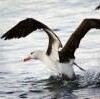
Cutting-Edge Model of Coastal Protection
A non-governmental organisation has been tasked with managing a system comprising all of Argentina’s marine-coastal protected areas.Ecobreves – BRAZIL: Water Shortages Threaten 3,059 Municipalities
According to a report on urban water supply released Mar. 22, 55 percent of Brazil’s municipalities could face water shortages by 2015.Ecobreves – VENEZUELA: Bat Protection Measures Planned
Venezuelan researchers and authorities have created a working group to develop initiatives for the protection of the country’s 165 species of bats, whose populations are threatened by the degradation of their natural habitats.TWO CRISES CAUSED BY HUMANS: JAPAN AND LIBYA
Japan lies on and near known tectonic fault lines, but the earthquake of March 11, magnitude 9 on the Richter scale, was the strongest in recent Japanese history, 1000 times more powerful than the magnitude 7 earthquake in Haiti last year which killed more than 250,000 people. Earth tremors in Japan are not unexpected, but we still cannot predict the precise moment and location they will strike. Some animals seem to know, but with short warning time.
Water Management Transcends “Public or Private” Debate
A fund financed with public and private resources seeks to create a participatory and transparent water management model in Quito.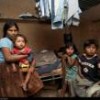
Cochabamba Still Thirsting for Water
In the Bolivian city of Cochabamba, scene of the 2000 “Water War”, both privatisation and public administration have failed to adequately provide citizens with this vital resource.Ecobreves – ARGENTINA: Shutdown of Embalse Nuclear Plant Urged
The Foundation for the Defence of the Environment in Argentina has challenged the decision of the government of the central province of Córdoba to continue operating the Embalse nuclear power plant without conducting an environmental impact assessment or public hearing.Ecobreves – BRAZIL: Banana Peels Can Filter Heavy Metals
Water contaminated with potentially toxic metals can be purified using banana peels as a filter, according to a study from the São Paulo State University (UNESP) in Botucatú, 230 kilometres from the city of São Paulo.Ecobreves – HONDURAS: Flood Risk Targeted in 10 Vulnerable Municipalities
The Honduran government has begun infrastructure work to reduce the risk of overflowing rivers and flooding in 10 highly vulnerable municipalities.Ecobreves – MEXICO: Birdwatching Tourism Potential Untapped
Mexico is failing to take advantage of the significant potential of ecotourism geared to birdwatching, says a report released by two environmental organisations on Mar. 15.HOW SAFE IS NUCLEAR POWER?
We all can only feel deep sympathy and compassion for the victims of the terrible catastrophe that befell Japan on 11 March 2011. One of the world's largest earthquakes ever of magnitude 9, a 10-meter tsunami that flattened many coastal areas, freezing weather for the survivors sleeping in the open, shortages of food and water, and a series of explosions and fires at the six nuclear power plants in Fukushima, with the danger of a meltdown that would release huge amounts of radioactivity.WORLD SOCIAL FORUM – WINNING THE BATTLE OF IDEAS
Paradoxically, just as history is proving the World Social Forum right in many of its predictions and analyses, the major media, those "shapers of public opinion", are not increasing but in fact sharply decreasing their coverage of it. This silent treatment is a clear obstacle to the expansion of the WSF and a cause of real concern for many of its innumerable organisers and participants.COMMODITY PRICE VOLATILITY ACCELERATES
Commodity producers are again reaping the benefits of high growth, particularly from high-demand importers, like China, and are increasingly formalising their integration into global commodity value chains. There is a growing recognition that, properly managed, resource rents can provide an important tool in the fight against poverty.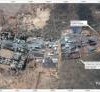
Satellite Technology to Help the Displaced in Libya
Satellite images are being utilized to determine the scope of the displaced persons crisis in Libya.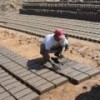
The Brick-Making Industry Confronts Its Climate Impacts
Artisanal brick-makers from seven Latin American countries are beginning to test ways to reduce the industry's health and climate impacts.Ecobreves – HONDURAS: A Boost for Community Gardens
The Honduran capital's city government is setting up organic community gardens to improve food security in low-income neighborhoods, given the forecasts for local food shortages resulting from climate change and deforestation.« Previous Page — Next Page »


The Week with IPS

NEXT STOP - SDGs
Tracking global progress towards a sustainable world
Tracking global progress towards a sustainable world
