Languages
Saturday, September 19, 2026



News and Views from the Global South
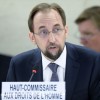
Cash-Strapped Human Rights Office at Breaking Point, Says New Chief
After six weeks in office, the new U.N. High Commissioner for Human Rights (UNHCHR) Zeid Ra'ad al-Hussein of Jordan launched a blistering attack on member states for insufficient funding, thereby forcing operations in his office to the breaking point "in a world that seems to be lurching from crisis to ever-more dangerous crisis."
Curbing Biodiversity Loss Needs Giant Leap Forward
When political leaders from climate-threatened Small Island Developing States (SIDS) addressed the U.N. General Assembly last month, there was one recurring theme: the urgent need to protect the high seas and preserve the world's marine biodiversity.
Cycle of Death, Destruction and Rebuilding Continues in Gaza
When the international pledging conference to rebuild a devastated Gaza ended in Cairo over the weekend - the third such conference in less than six years - the lingering question among donors was: is this the last of it or are there more assaults to come?
2015 a Make-or-Break Year for Nuclear Disarmament
U.N. Secretary-General Ban Ki-moon last month singled out what he described as "one of the greatest ironies of modern science": while humans are searching for life on other planets, the world's nuclear powers are retaining and modernising their weapons to destroy life on planet earth.Zero Nuclear Weapons: A Never-Ending Journey Ahead
When the United Nations commemorated its first ever "international day for the total elimination of nuclear weapons," the lingering question in the minds of most anti-nuclear activists was: are we anywhere closer to abolishing the deadly weapons or are we moving further and further away from their complete destruction?
Obama Blasts Brutality and Bullying, but Not by Israel
When U.S. President Barack Obama addressed the U.N. General Assembly Wednesday, he was outspoken in his criticism of Russia for bullying Ukraine, Syria for its brutality towards its own people, and terrorists of all political stripes for the death and destruction plaguing Iraq, Syria, Yemen and Somalia.
Climate-Smart Agriculture is Corporate Green-Washing, Warn NGOs
On the sidelines of the U.N.'s heavily hyped Climate Summit, the newly-launched Global Alliance for Climate-Smart Agriculture announced plans to protect some 500 million farmers worldwide from climate change and "help achieve sustainable and equitable increases in agricultural productivity and incomes."
U.N. High-Level Summits Ignore World’s Political Crises
As the 69th session of the General Assembly took off with the usual political pageantry, the United Nations will be hosting as many as seven "high-level meetings", "summits" and "special sessions" compressed into a single week - the largest number in living memory.
U.N. Urged to Reaffirm Reproductive Rights in Post-2015 Agenda
The U.N.'s post-2015 development agenda has been described as the most far-reaching and comprehensive development-related endeavour ever undertaken by the world body.
Is Newly-Renovated U.N. Readying For Balkanisation of World?
When world political leaders arrive next week for the annual ritual of addressing the United Nations, they will be speaking inside a newly renovated General Assembly hall - part of a hefty 2.1-billion-dollar, seven-year refurbishing project - with an extended seating capacity for 204 member states, 11 more than the current 193.
U.N. Climate Summit: Staged Parade or Reality Show?
The much-ballyhooed one-day Climate Summit next week is being hyped as one of the major political-environmental events at the United Nations this year.
U.S. Bypasses Security Council on Impending Invasion of Syria
The U.N. Security Council (UNSC), the only international body empowered to declare war and peace, continues to remain a silent witness to the widespread devastation and killings worldwide, including in Palestine, Syria, Iraq, Libya, Yemen and Ukraine.
Mideast Nuclear Weapons-Free Zone Remains in Limbo
After four long years of protracted negotiations, a proposal for a nuclear weapons-free zone (NWFZ) in the strife-torn Middle East remains in limbo - and perhaps virtually dead.
Developing Nations Set to Hit Back at New York City Banks
The Group of 77, the largest single coalition of developing countries, is hitting back at New York City banks that arbitrarily cancelled the accounts of more than 70 overseas diplomatic missions, leaving ambassadors, senior and junior diplomats and non-diplomatic staff without banking facilities.
Ban on Nuke Tests OK, But Where’s the Ban on Nuke Weapons?
As the United Nations commemorated the International Day Against Nuclear Tests this week, Secretary-General Ban Ki-moon lamented the fact that in a world threatened by some 17,000 nuclear weapons, not a single one has been destroyed so far.
IPS at 50, Leads That Don’t Bleed
Tarzie Vittachi, a renowned Sri Lankan newspaper editor and one-time deputy executive director of the U.N. children's agency UNICEF, once recounted the oft-quoted story of an African diplomat who sought his help to get coverage in the U.S. media for his prime minister's address to the General Assembly.
U.N. Conference Set to Bypass Climate Change Refugees
An international conference on small island developing states (SIDS), scheduled to take place in Samoa next week, will bypass a politically sensitive issue: a proposal to create a new category of "environmental refugees" fleeing tiny island nations threatened by rising seas.
Israel, Hamas Set to Escape War Crimes Charges
Secretary-General Ban Ki-moon, in a rare moment of political candour, lashed out at Israel last week, questioning its "respect for the principles of distinction and proportionality" - particularly in the context of the civilian death toll that kept rising to over 2,000 Palestinians, with more than 75 percent civilians.
No Victors or Vanquished in Brutal Gaza Conflict
As the dust - and the gunpowder - settles after the month-long devastating conflict in Gaza, there were apparently no victors or vanquished.
Swamped by Rising Seas, Small Islands Seek a Lifeline
The world's 52 small island developing states (SIDS), some in danger of being wiped off the face of the earth because of sea-level rise triggered by climate change, will be the focus of an international conference in the South Pacific island nation of Samoa next month.
Israel Bites Hand that Feeds, U.S. Feeds Hand that Bites
There is an age-old axiom in politics, says a cynical Asian diplomat, that you don't bite the hand that feeds you.« Previous Page — Next Page »


The Week with IPS

NEXT STOP - SDGs
Tracking global progress towards a sustainable world
Tracking global progress towards a sustainable world
