Languages
Saturday, October 3, 2026



News and Views from the Global South
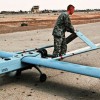
“Drone” a Dirty Word in the U.N. Lexicon
The "drone", one of the eminently controversial lethal weapons deployed by the United States in its war against terrorism, is obviously a dirty word in the U.N. lexicon.
Digging for Water, But Striking Oil
The volatile politics of the Middle East have long been dominated by the fluctuating fortunes of a single commodity: oil.
Mideast Energy Crisis Looks For Light at the End of the Tunnel
When Jordan's Queen Rania Al Abdullah took the podium to address world political and business leaders at a back-to-back energy and water summit here, she said she was representing a country that relies on imports for over 90 percent of its energy needs.
Water Summit to Focus on Resolving Scarcities in Mideast
Amidst a growing water crisis in the predominantly arid Middle East and North Africa (MENA), some of the world's most influential water experts will meet Jan. 15-17 at the International Water Summit (IWS) in Abu Dhabi, United Arab Emirates (UAE) to look for sustainable solutions.
U.N. Aims at Sustainable Energy for All by 2024
When the General Assembly wound down its 67th session in late December, it underscored the key role for energy in the U.N.'s post-2015 economic agenda by declaring 2014-2024 the "Decade of Sustainable Energy for All".
New Push for U.S. to Ratify Major Women’s Treaty
The United States continues to be in the dubious company of six countries that have either refused or are reluctant to ratify the landmark U.N. Convention on the Elimination of All Forms of Discrimination Against Women (CEDAW).
Asia Leaps Forward in Regional Economic Integration
As the United Nations continues to intensify the promotion of South-South cooperation among member states, Asia plans to take a great leap forward in regional economic integration during the next decade.
U.N.’s Last Stand on Arms Trade Treaty
Amidst a politically divisive debate on gun control in the United States following a rash of mass shootings, the United Nations will meet in March to finalise an Arms Trade Treaty (ATT) after nearly two decades of negotiations.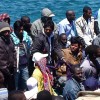
Despite Crises, Migration Still a Political Hot Potato
The United Nations will commemorate its annual International Migrants Day next week amidst reports of a rising tide of anti-migrant sentiments – primarily in Europe.
Israel Rains Fire When U.N. Votes Against It
Whenever the Security Council (sporadically) or the General Assembly (more frequently) lambastes Israel, the reaction from the Jewish state is highly predictable: either launch a military strike on Palestinians or announce new settlements in the occupied territories.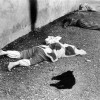
Chemical Arms Treaty Holdouts Include Volatile Syria
The beleaguered government of Syrian President Bashar al-Assad, accused of readying its chemical weapons against rebel forces, is one of three governments in the militarily-volatile Middle East which has shied away from the international Chemical Weapons Convention (CWC).
Qatar Launches Schooling for Children in Crisis Zones
When the U.N. Educational, Scientific and Cultural Organisation (UNESCO) launched its inaugural meeting on "Global Education for All" last month, Secretary-General Ban Ki-moon warned that most developing nations are likely to miss the 2015 deadline to achieve universal primary education.
Palestine Scores Overwhelming Victory in World Body
Amidst thunderous applause - and the spontaneous unfurling of a Palestinian flag in the General Assembly hall - the U.N.'s highest policy-making body Thursday voted overwhelmingly to elevate Palestine from an "observer" to a "non-member state".
Amidst Turmoil, Nuke-Free Mideast Conference Derailed
A long outstanding international conference on a nuclear weapons-free zone in the Middle East, scheduled to take place in Finland next month, has been postponed, giving rise to speculation on whether it will ever get off the ground.
Why Are Women Shut Out of Peace Talks?
Against the backdrop of an upcoming U.N. Security Council (UNSC) meeting on women, peace and security, a coalition of some 63 international women's groups and non-governmental organisations (NGOs) has decried the absence of women during peace negotiations in post-conflict situations.
Cooperatives as Business Models of the Future
When the International Year of Cooperatives (IYC) concluded last week, some of the overwhelming success stories highlighted at a two-day interactive session came both from developing and developed countries, including India, Brazil, China, Kenya, Rwanda, Ethiopia, Italy, France and the United States.
Security Council Vow on Women Lives Mostly on Paper
When the U.N. Security Council (UNSC) adopted a landmark resolution numbered 1325 back in 2000, it was supposed to integrate gender into its core mandate: the establishment and maintenance of international peace and security.
Rights Groups Call for Ban on Futuristic Killer Robots
The predator drone - an unmanned aerial vehicle (UAV) - is one of the relatively new lethal weapons used by the United States for targeted killings of suspected terrorists, particularly in Pakistan, Afghanistan, Yemen and Somalia.
Israeli Firepower Threatens to Overwhelm Palestinians
When the late Yasser Arafat, leader of the Palestine Liberation Organisation (PLO), was engaged in a heavily one-sided battle against a robustly-armed Israel in 2000, he admitted the Palestinians were completely outgunned by the Israelis.
Thinking Outside the Stall on World Toilet Day
When the United Nations commemorates World Toilet Day next week, there will be a lingering question in the minds of activists: how best can water and sanitation be given high priority in the proposed Sustainable Development Goals (SDGs) in the U.N.'s post-2015 economic agenda?
Family Planning Falters Despite Treaty Commitments
Since the 1966 International Covenant on Economic, Social and Cultural Rights, the United Nations has consistently maintained that family planning is a basic human right to be exercised by all - not just the wealthy and otherwise privileged.« Previous Page — Next Page »


The Week with IPS

NEXT STOP - SDGs
Tracking global progress towards a sustainable world
Tracking global progress towards a sustainable world
