Languages
Thursday, November 12, 2026



News and Views from the Global South
Conferences

Could Water Strife Lead to ‘Mass Killings’ in the Future?
As the world faces possible water scarcities in the next two to three decades, the U.S. intelligence community has already portrayed a grim scenario for the foreseeable future: ethnic conflicts, regional tensions, political instability and even mass killings.OP-ED: Some Thoughts on the Nonaligned Movement Summit in Tehran
It must be considered pure fortuity for the Islamic Republic of Iran that the decision to hold the Nonaligned Movement (NAM) summit in Tehran was made three years ago in Sharm El-Sheikh, Egypt.
Q&A: Water and Food Security Are Inseparable
With the U.N. ominously warning of an impending food crisis following severe droughts in farmlands in the United States, Brazil, Russia and at least two rain-deprived states in India, the world will once again turn its attention to a finite natural resource: water.
Jeju Island Base Divides Korean, International Green Groups
As construction of a hotly contested naval base on South Korea’s Jeju Island advances, there’s a showdown underway.Where Are Canada’s Missing Native Women?
First Nations’ leaders are calling on the Canadian government to establish an independent commission of inquiry to investigate at least 582 missing and murdered indigenous women and girls - a wish which was not immediately granted by provincial premiers meeting last week.Caribbean Sees Progress on HIV/AIDS, Fears Funding Cuts
Ian McKnight, executive director of the Caribbean Vulnerable Communities Coalition (CVCC), used one word - “tokenistic” - to sum up his perspective on the 19th International AIDS Conference that ended here over the weekend.AIDS Meet Ends with Talk of Cure, But Realities of Scourge Persist
As the International AIDS Conference ended in Washington on Friday, organisers unveiled groundbreaking new research on the promise of early anti-retroviral (ARV) drug therapy.
Silenced by U.S., Sex Workers Speak from Kolkata
Bare-chested and beaming in the company of many like him, London-based male sex worker Thierry Schaffauser wipes the beads of sweat trickling down his face on a humid Kolkata evening, and slams U.S. President Barack Obama.
Protesters: Free Trade Deals, Drug Patents Derail AIDS Fight
As the nineteenth International AIDS Conference continued in Washington Tuesday, thousands of protesters marched on the White House with a set of demands to end the epidemic.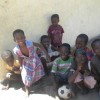
U.S. Aims for AIDS-Free Generation Amid Funding Cuts
As more than 20,000 health workers, scholars and activists from around the world gather here this week for a major biannual AIDS conference, observers are warning that U.S. government proposals to cut HIV/AIDS-related funding could undermine the significant potential to deal a decisive blow to the disease in the near future.
Family Planning Essential for Development
Improving family planning to avoid unwanted pregnancies in developing countries, as well as assuring girls’ access to education, and women’s participation in the economy, are essential components of a sound development policy, according to Western experts and African activists.Family Planning Summit Offers New Hope
The Summit on Family Planning that is taking place in London on Wednesday is a bid to get governments around the world to commit more resources to safeguarding women’s reproductive rights, according to the executive director of the United Nations Population Fund (UNFPA).
Coral Triangle Fights to Save Reefs from Extinction
The planet's richest region of coral and marine life, which feeds 130 million people, is in trouble.
“No Future We Want Without the Ocean We Need”
When South Korea, one of Asia's rising economic powerhouses, decided to host the international exhibition Expo 2012 in the coastal town of Yeosu, it picked a theme high on the agenda of the just-concluded Rio+20 summit on sustainable development: the living ocean.
Going It Alone After the Rio Circus
The works starts now, UN Secretary-General Ban Ki-Moon said at the conclusion of the summit on sustainable development in Rio last week. This was about the only UN statement that civil society groups seem to agree with. It is on the precise task at hand that they differ.No Strategy for Civilisation in Crisis
The Second United Nations Conference on Human Settlements (Habitat II) in Istanbul in 1996 was one of the international meetings most open to civil society participation.2012 Shaping Up as Worst Year Ever for Journalists
It's the type of honour roll that journalists would prefer not to be on.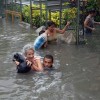
Climate Change: Waiting for a Catastrophic Wake-Up Call *
Disasters are the new midwives of history. But in order to play this role, they need to be catastrophic, like the accidents in Chernobyl in 1986 and Fukushima in 2011 that led governments to suspend and even abolish their nuclear energy programs.
Climate-Smart Agriculture to Reduce Vulnerability*
Agroforestry is gaining ground as a tool for climate change adaptation and mitigation in Central America, a region where global warming could generate losses equivalent to 19 percent of gross domestic product.
Weak Rio+20 Agreement Anticipates New Noah’s Ark
The downpour that fell Friday in this Brazilian city was nature’s warning to the heads of state meeting at the Rio+20 summit. The generation of Noe (Noah), an environmentalist’s son who will be born a month from now, will have to save biodiversity that is more complex than that of his Biblical namesake.
Amazon Countries Want Concrete Sustainable Development Goals*
The countries of the Amazon river basin are pursuing definite goals for the region, such as zero deforestation by 2020, even though the Rio+20 conference's outcome document does not include "sustainable development goals".« Previous Page — Next Page »





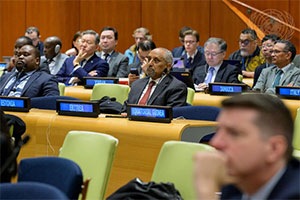 General Assembly Meets to Hear Briefing on UN80 Initiative. Credit: UN Photo/Manuel Elías
Global development conferences are continuing to produce critical frameworks for South-South cooperation and multilateral reform. In January of 2024, the 3rd Global South Nexus (GSN) International Conference was held in Odisha, India, with its theme being “Creating Responsible Professionals for Advancing SDGs: Inputs from Global North and South.” The 2025 UN SDG Report provided a midpoint assessment of the 2030 Agenda, with only 35% of targets on track and 18% having reversed. The 2025 UN Climate Change Conference (COP30) in Belém, Brazil, agreed to mobilize $1.3 trillion annually for climate action by 2035, operationalize the loss and damage fund, triple adaptation finance, and launched the Belém Mission to 1.5°C. In 2025, the Partnership for Economic Policy (PEP) convened its annual Policy Conference in Nairobi, Kenya, addressing the issue of “Financing and Inclusivity in Green Energy Transition in the Global South.” As the Global South advocates increasingly for a South-South framework alongside North-South cooperation, international conferences on sustainability aim to bridge economic and social divides between developed and developing countries in achieving the UN SDGs. Furthermore, to mark the UN’s 80th anniversary, the UN80 Initiative was launched to reshape how the UN system works so that every mandate, dollar, and decision creates greater impact for the global system.

The Week with IPS

NEXT STOP - SDGs
Tracking global progress towards a sustainable world
Tracking global progress towards a sustainable world
