Languages
Monday, September 14, 2026



News and Views from the Global South
Civil Society
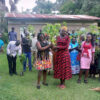
Why Locally Led Development Works and How Funders Can Get It Right
In Uganda, local communities are routinely sidelined in development processes, despite knowing most about their own needs. When a Moroto District officer remarked, ‘This is the first time local leaders were truly heard’, it offered a powerful reminder of what so often goes wrong: development fails when communities are excluded.
Africa’s Development at a Crossroads: Report Warns of Missed SDG Targets Without Urgent Action on Jobs, Equity, and Financing
Africa is making progress on over two-thirds of the Sustainable Development Goals (SDGs), but the pace remains far too slow to meet the 2030 targets, especially in areas like decent employment, gender equality, and access to social protection.
‘After Decades of Making Huge Profits, Companies Shouldn’t Be Allowed to Leave Behind a Toxic Legacy’
CIVICUS speaks with Matthew Renshaw, a partner at a UK law firm that represents Nigerian communities taking legal action against Shell over environmental damage caused by its operations in the Niger Delta.
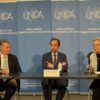
Two-State Solution Conference Presents an “Exceptional Moment” for International Community – The Elders
Dignitaries across the international community have convened in New York to promote the two-State Solution - the coexistence of Israel and Palestine as sovereign states - as the only path forward to shared sustainable peace in the Middle East. Former and current leaders from 145 countries and independent groups will speak at the United Nations to demonstrate their ‘near-universal support’ and discuss the steps that need to be taken to achieve it.
Forests, Fossil Fuels, and the Fight for the Future: DRC’s Oil Expansion Sparks Global Alarm
The Democratic Republic of Congo (DRC) stands on the precipice of a profound environmental and social crisis, as the government prepares to auction 55 new oil blocks that cover more than half the country’s landmass.
Violence Escalates in Sudan as Humanitarian Aid Struggles to Meet Growing Needs
Earlier this month, Sudanese civilians began facing a considerable escalation of hostilities, with the most recent attacks from the Rapid Support Forces (RSF) and the Sudanese Armed Forces (SAF) claiming dozens of lives. Amid a rapidly growing scale of needs and an overwhelming lack of funding, the United Nations (UN) and its partners have struggled to deliver adequate amounts of humanitarian aid.
Protect Women’s Rights, Especially in a Time of Equality Backlash, Say Activists
Discriminatory laws and the absence of legal protections impact more than 2.5 billion women and girls worldwide in various ways. Legal reform is paramount to securing gender equality, and the world cannot afford to roll back on decades of progress in women’s rights.
Soaring Demand for Electric Vehicles, Lithium-Ion Batteries Creates Environmental Crisis in DRC
Electric vehicles contribute to an ongoing environmental and humanitarian crisis in the Democratic Republic of the Congo (DRC). Mining operations cause deforestation, pollution, food insecurity and exploitative labor practices.
‘The Lesson from Gaza Is Clear: When Ai-powered Machines Control Who Lives, Human Rights Die’
CIVICUS discusses the military use of artificial intelligence (AI) in Gaza with Dima Samaro, a Palestinian lawyer and researcher, and director of Skyline International for Human Rights, a civil society organisation (CSO) that defends digital freedoms and human rights in the Middle East and North Africa. Dima serves on multiple boards focused on civic space and surveillance issues, including Innovation for Change’s MENA Hub, the Surveillance in the Majority World Network and the VUKA! Solidarity Coalition, and volunteers with Resilience Pathways to help Palestinian CSOs counter Israeli efforts to restrict civic space and manipulate public narratives.

Price and Power of Freedom: Celebrating Nelson Mandela International Day
The United Nations celebrated Nelson Mandela International Day in honor of the activist and politician’s lifelong commitment to peace and democracy.
From Drylands to Dignity: How Solar Energy and Climate-Smart Farming Are Empowering Communities in Burkina Faso
In the heart of Burkina Faso’s drylands, in the village of Zoungou, a quiet transformation is underway. Alhaji Birba Issa, a smallholder onion farmer, bends over neat rows of lush green crops, the hum of solar-powered pumps audible in the background.
Intersectional Feminist Leadership Needed to Realise Global Goals
In its 80-year history the UN has never once been led by a woman. As the international community convenes for the 2025 High-Level Political Forum (HLPF) to review progress on gender equality and other Sustainable Development Goals (SDGs), this remains a fundamental hypocrisy at the heart of global governance. How can an institution that has systematically excluded women from its highest office credibly champion gender justice worldwide?
From Gaza to Georgia, Human Rights Defenders Pay a High Price for Change. Here’s How You Can Help
Across the globe—from Gaza’s rubble to the streets of Tbilisi—people are standing up for justice, dignity, and basic rights. But far too often, they are paying with their freedom, their safety, even their lives.
‘International Demand for Coltan Is Linked to Violence in the DRC’
CIVICUS speaks with Claude Iguma, a mining governance expert with a PhD in Social Sciences, who is based in Bukavu, South Kivu province, eastern Democratic Republic of the Congo (DRC).

HLPF 2025: Civil Society Is Not A Service Provider – We Are The Frontline Of Transformation
As delegates gather in New York over the coming weeks for the 2025 High-Level Political Forum (HLPF), we see this moment as a test. A test of whether world leaders are serious about rescuing the Sustainable Development Goals (SDGs) - or content to let the promises of Agenda 2030 drift quietly into irrelevance.
Sweet Hope to End Bitter Pills for Multidrug-Resistant Tuberculosis
Every day, Yondela Kolweni has to hold down her son, who screams and fights when it is time for his daily life-saving TB tablets—a painful reminder of her battle with the world’s top infectious killer disease. “It is a fight I win feeling awful about what I have to do,” says Kolweni (30), a Cape Town resident and a TB survivor. “The tablets are bitter, and he spits them out most of the time, and that reminds me of the time I had to take the same pills.”
WHO, UNICEF Find the World Is Off Track To Meet Childhood Immunization Goals
The latest data highlights that the world is off track to meet the targets set by the Immunization Agenda 2030 (IA2030) to achieve 90 percent global immunization coverage for essential childhood vaccines and halve the number of unvaccinated children by 2030.
Man, Sea, Algae: HOMO SARGASSUM’s Stirring Critique of Human Culpability in the Caribbean
The United Nations’ HOMO SARGASSUM exhibition served as a public immersion into the marine world and called upon viewers to take action in the face of the climate crisis, specifically regarding invasive species and water pollution.
The Risks Artificial Intelligence Pose for the Global South
Artificial intelligence (AI) is rapidly developing and leaving its mark across the globe. Yet the implementation of AI risks widening the gap between the Global North and South.
NATO’s Trillion-dollar Gamble: The Dangers of Defence Without Accountability
Donald Trump’s bullying tactics ahead of NATO’s annual summit, held in The Hague in June, worked spectacularly. By threatening to redefine NATO’s article 5 – the collective defence provision that has anchored western security since 1949 – Trump won commitments from NATO allies to almost triple their defence spending to five per cent of GDP by 2035. European defence budgets will balloon from around US$500 billion to over US$1 trillion annually, essentially matching US spending levels.
Conflict, Climate Change Push Migrants in Yemen to Return to Their Home Countries
Yemen's humanitarian crisis, driven by conflict, economic collapse and climate shocks, leaves migrants desperate to return to their home countries.« Previous Page — Next Page »


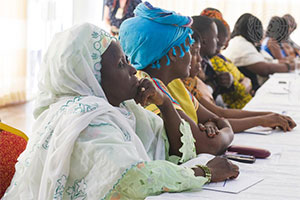 Representatives of Civil Society, Sierra Leone. Credit: UN Photo/Eskinder Debebe
Civil society faces mounting threats worldwide, even as it remains essential for democratic accountability, especially in countries struggling with economic instability and social inequality. However, at the same time, nations with weak democratic governance structures also systemically suppress the power of civil society. Human rights activists across the Global South frequently challenge issues such as political persecution and gender oppression, but in return face state-sanctioned punishment for their advocacy. Imprisonment and exile are common mechanisms of punishment that seek to erode the strength of civil society. The 2026 World Press Freedom Index has reached its lowest level in 25 years, with more than half of the world’s countries now falling into the "difficult" or “very serious” category for press freedom. IPS seeks to highlight the work of civil society across the Global South as well as the challenges that they face.
Updated by Yilan Batista and Shuli Wong August 2026

The Week with IPS

NEXT STOP - SDGs
Tracking global progress towards a sustainable world
Tracking global progress towards a sustainable world
