Languages
Thursday, September 17, 2026



News and Views from the Global South
Civil Society

WHO, UNICEF Find the World Is Off Track To Meet Childhood Immunization Goals
The latest data highlights that the world is off track to meet the targets set by the Immunization Agenda 2030 (IA2030) to achieve 90 percent global immunization coverage for essential childhood vaccines and halve the number of unvaccinated children by 2030.
Man, Sea, Algae: HOMO SARGASSUM’s Stirring Critique of Human Culpability in the Caribbean
The United Nations’ HOMO SARGASSUM exhibition served as a public immersion into the marine world and called upon viewers to take action in the face of the climate crisis, specifically regarding invasive species and water pollution.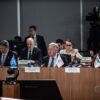
The Risks Artificial Intelligence Pose for the Global South
Artificial intelligence (AI) is rapidly developing and leaving its mark across the globe. Yet the implementation of AI risks widening the gap between the Global North and South.
NATO’s Trillion-dollar Gamble: The Dangers of Defence Without Accountability
Donald Trump’s bullying tactics ahead of NATO’s annual summit, held in The Hague in June, worked spectacularly. By threatening to redefine NATO’s article 5 – the collective defence provision that has anchored western security since 1949 – Trump won commitments from NATO allies to almost triple their defence spending to five per cent of GDP by 2035. European defence budgets will balloon from around US$500 billion to over US$1 trillion annually, essentially matching US spending levels.
Conflict, Climate Change Push Migrants in Yemen to Return to Their Home Countries
Yemen's humanitarian crisis, driven by conflict, economic collapse and climate shocks, leaves migrants desperate to return to their home countries.
Bonn Climate Talks: Why World Needs to go Further, Faster, and Fairer
This 62nd meeting of the Subsidiary Bodies (SB62) from June 16 to 26, 2025 revealed the persistent complexities and political tensions that continue to challenge multilateral climate governance.
UN Funding Crisis Threatens Work of Human Rights Council
The United Nations Human Rights Council (HRC) has expressed concern at the UN High Commissioner for Human Rights’ announcement that certain activities mandated by the council cannot be delivered due to a lack of funding. The council has sought clarity on why certain activities had been singled out.
HIV/AIDS Funding Crisis Risks Reversing Decades of Global Progress
UNAIDS called the funding crisis a ticking time bomb, saying the impact of the US cuts to the President’s Emergency Plan for AIDS Relief (PEPFAR) could result in 4 million unnecessary AIDS-related deaths by 2029.
For the Aged, Their Sunset Years Will Be Bedeviled by Lethal Heatwaves
The global population is aging at a time when heat exposure is rising due to climate change. Extreme heat can be deadly for older populations given their reduced ability to regulate body temperature. Already there has been an 85 percent increase since 1990 in annual heat-related deaths of adults aged above 65, driven by both warming trends and fast-growing older populations.
‘Only a Handful of Environmental Organisations Still Dare Challenge Corporate Projects in Court’
CIVICUS speaks to Cristinel Buzatu, regional legal advisor for Central and Eastern Europe at Greenpeace, about how Romania’s state gas company is weaponising the courts to silence environmental opposition.
How Mongolia Can Expedite It’s Just Transition Plans to Include Its Nomads
Youth activist Gereltuya Bayanmukh still reflects on the events in her formative years that inspired her to become a climate activist. When she was a child, she would visit her grandparents in a village 20 km to the south of the border between Russia and Mongolia.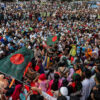
Bangladesh’s Democratic Promise Hangs in the Balance
When Bangladesh’s streets erupted in protest in mid-2024, few could have predicted how swiftly Sheikh Hasina’s regime would crumble. The ousting of the prime minister last August, after years of mounting authoritarianism and growing discontent, was heralded as a historic opportunity for democratic renewal. Almost a year on, the question remains whether Bangladesh is genuinely evolving towards democracy, or if one form of repression is replacing another.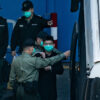
The Silencing of Hong Kong
Joshua Wong sits in a maximum-security prison cell, knowing the Hong Kong authorities are determined to silence him forever. On 6 June, police arrived at Stanley Prison bringing fresh charges that could see the high-profile democracy campaigner imprisoned for life. This is the reality of Hong Kong: even when behind bars, activists can be considered too dangerous ever to be freed.
Democracy under Attack: Why the World Needs a New UN Special Rapporteur
When tanks rolled through Myanmar’s streets in 2021, civil society groups worldwide sounded the alarm. When Viktor Orbán systematically dismantled Hungary’s free press, democracy activists demanded international action. And as authoritarianism returns to Tanzania ahead of elections, it’s once again civil society calling for democratic freedoms to be respected.
Multi-Year Drought Gives Birth to Extremist Violence, Girls Most Vulnerable
While droughts creep in stealthily, their impacts are often more devastating and far-reaching than any other disaster. Inter-community conflict, extremist violence, and violence and injustice against vulnerable girls and women happen at the intersection of climate-induced droughts and drought-impoverished communities.
FFD4 Must Deliver for the World’s Most Vulnerable Nations
Five years from the 2030 deadline for the Sustainable Development Goals (SDGs), we face a development emergency. The promise to eradicate poverty, combat climate change, and build a sustainable future for all is slipping away. The SDG financing gap has ballooned to over $4 trillion annually—a crisis compounded by declining aid, rising trade barriers, and a fragile global economy.
Mexico’s Judicial Elections: A Democratic Mirage
On 1 June, Mexico made history by becoming the only country in the world to elect all its judges by popular vote, from local magistrates to Supreme Court justices. This unprecedented process saw Mexican voters choose candidates for 881 federal judicial positions, including all nine Supreme Court justices, plus thousands at local levels across 19 states. Yet what the government heralded as a transformation that made Mexico the ‘the most democratic country in the world’ may turn out to be a dangerous deception.
The Young Nigerian Innovator Lighting Up Communities With Recycled Solar Innovation
When Stanley Anigbogu heard his name announced as the 2025 Commonwealth Young Person of the Year in London earlier in March, he could hardly believe it. He had not expected to win, especially among a pool of brilliant nominees from across the globe.
‘Enabling Machines to Make Life and Death Decisions Is Morally Unjustifiable’
CIVICUS discusses autonomous weapons systems and the campaign for regulation with Nicole van Rooijen, Executive Director of Stop Killer Robots, a global civil society coalition of over 270 organisations that campaigns for a new international treaty on autonomous weapons systems.

Increased Demand for Cobalt Fuels Ongoing Humanitarian Crisis in the Democratic Republic of the Congo
The demand for cobalt and other minerals is fueling a decades-long humanitarian crisis in the Democratic Republic of the Congo (DRC). In pursuit of money to support their families, Congolese laborers face abuse and life-threatening conditions working in unregulated mines.
Lawmakers in Maldives Pledge to Support Women Leaders
A meeting of parliamentarians in Malé, the Maldives, pledged to provide an enabling environment for emerging women leaders by supporting them and promoting a political culture rooted in mutual respect, inclusivity, and equal opportunity.« Previous Page — Next Page »


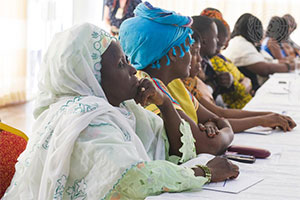 Representatives of Civil Society, Sierra Leone. Credit: UN Photo/Eskinder Debebe
Civil society faces mounting threats worldwide, even as it remains essential for democratic accountability, especially in countries struggling with economic instability and social inequality. However, at the same time, nations with weak democratic governance structures also systemically suppress the power of civil society. Human rights activists across the Global South frequently challenge issues such as political persecution and gender oppression, but in return face state-sanctioned punishment for their advocacy. Imprisonment and exile are common mechanisms of punishment that seek to erode the strength of civil society. The 2026 World Press Freedom Index has reached its lowest level in 25 years, with more than half of the world’s countries now falling into the "difficult" or “very serious” category for press freedom. IPS seeks to highlight the work of civil society across the Global South as well as the challenges that they face.
Updated by Yilan Batista and Shuli Wong August 2026

The Week with IPS

NEXT STOP - SDGs
Tracking global progress towards a sustainable world
Tracking global progress towards a sustainable world
