Languages
Saturday, September 19, 2026



News and Views from the Global South
Civil Society

Lawmakers in Maldives Pledge to Support Women Leaders
A meeting of parliamentarians in Malé, the Maldives, pledged to provide an enabling environment for emerging women leaders by supporting them and promoting a political culture rooted in mutual respect, inclusivity, and equal opportunity.
Rising Temperatures, Rising Inequalities: How a New Insurance Protects India’s Poorest Women
As Deviben Dhaundhaliya, 45, a streetside seller of artificial jewelry, waits for her husband Devabhai to arrive and help her shift their iron-frame mobile ‘shop’ to the Bhadra Fort open-air marketplace in Ahmedabad city, she tells of how “as heat increased, my wares started melting under the direct exposure to the sun, or they got discolored.”
Poland’s Democratic Deadlock
Poland’s embattled Prime Minister Donald Tusk emerged bruised but still standing after his government survived a parliamentary vote of confidence on 11 June. He’d called the vote, which he won by 243 to 210, just days after the presidential candidate of his Civic Platform (PO) party suffered an unexpected defeat.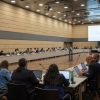
How Many Developing Countries Are Forging Paths to Climate Accountability at SB62
A packed conference room buzzing with the energy of over 300 national experts, negotiators, and implementers discussed their submissions of the First Biennial Transparency Reports (BTRs) during the 62nd session of the Subsidiary Body for Implementation (SB62) negotiations taking place in Bonn, Germany.
‘In the Face of Funding Cuts, Civil Society Has Taken a Leading Role in the Humanitarian Response’
CIVICUS discusses the closure of offices of the United Nations Refugee Agency (UNHCR) in Mexico with members of Integral Human Rights In Action (DHIA), a Mexican civil society organisation (CSO) that promotes and defends human rights in contexts of mobility.

Time to Redesign Global Development Finance
Can the Fourth International Conference on Financing for Development (FFD4) be a turning point? The stakes are high. The international financial system—so important to each and every one of us—feels out of reach and resistant to change, because it is deeply entrenched in unjust power imbalances that keep it in place. We deserve better.
Women in Afghanistan Face a Total Lack of Autonomy
Nearly four years ago, the Taliban took control of Afghanistan and issued a series of edicts that significantly restricted women’s rights nationwide. This has resulted in a multifaceted humanitarian crisis, one marked by a notable decline in civic freedoms, stunted national development, and a widespread lack of basic services.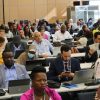
Climate and Health: Urgent Need for Adaptation Strategies in Africa
In recent years, there has been growing evidence of how climate change is impacting human health in several ways.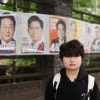
South Korea‘s Democracy Renewed
On a resounding 79.4 per cent turnout, South Korean voters have delivered a clear mandate for change. Lee Jae-myung of the centrist Democratic Party of Korea (DPK) decisively won the 3 June election, becoming the country’s new president after a turbulent time for South Korean democracy.
The Cost of Conservation—How Tanzania Is Erasing the Maasai Identity
On the vast plains of Tanzania’s Ngorongoro Conservation Area (NCA), the sight of young Maasai men in bright shawls, wielding sticks as they herd cattle, has long symbolized peaceful coexistence with nature. These herders, moving in harmony with zebras and wildebeests, are inseparable from the landscape. But today, that very identity—nurtured for generations—is under siege.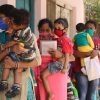
Time to Rethink Health Financing: It’s Not Just a Public Sector Concern
As G7 leaders of the world’s wealthiest nations wrapped up their summit in Kananaskis June 16, a critical issue was absent from the agenda: the future of global health financing.
‘Live Facial Recognition Treats Everyone as a Potential Suspect, Undermining Privacy and Eroding Presumed Innocence’
CIVICUS discusses the dangers of live facial recognition technology with Madeleine Stone, Senior Advocacy Officer at Big Brother Watch, a civil society organisation that campaigns against mass surveillance and for digital rights in the UK.

Regaining Progress on Birth Registration Is Critical to Child Protection
Registering the birth of a newborn, which is taken for granted in many countries, has profound lifelong repercussions for a child’s health, protection, and well-being. But after initially increasing this century, the global birth registration rate has declined in the past ten years, with some countries in the Pacific and Sub-Saharan Africa facing significant challenges. Embracing new registration technologies, increasing political will, and increasing parents’ understanding of its importance are paramount to reversing the trend.
Tanzania Champions Aquatic Foods at UN Ocean Conference in Nice
With less than six harvest seasons left to meet the Sustainable Development Goals (SDGs), the urgency to find transformative solutions to end hunger, protect the oceans, and build climate resilience dominated the ninth panel session at the 2025 United Nations Ocean Conference in Nice, France.
A Step Closer to Justice For Slain Journalist Daphne Caruana Galizia
“We didn’t want revenge. We want justice—justice for Daphne and for the [crimes exposed in] her stories.”
El Salvador: Bukele’s Authoritarianism Goes Global
At a White House meeting, presidents Nayib Bukele and Donald Trump exchanged praises and joked about mass incarceration while discussing an unprecedented agreement: the USA would pay El Salvador US$6 million a year to house deportees – of any nationality, potentially including US citizens – in its Centre for Terrorism Confinement (CECOT), a notorious mega-prison. This agreement marked the evolution of Bukele’s authoritarian model from a domestic experiment to an exportable commodity for strongmen worldwide.
Make Use of all Urban Waste, a Utopia in Brazil?
In 2014, Santa Catarina became the first and only state free of open-air garbage dumps in Brazil. Now, 14 of its municipalities are seeking to also free themselves from landfills and make use of nearly all urban solid waste.
France Rallies World Leaders to Seal Ocean Protection Deal at UN Conference in Nice
With the future of the world’s oceans hanging in the balance, global leaders, scientists, and activists gathered in the French Riviera city of Nice this week for the historic UN Ocean Conference, where France declared a new era of high seas governance and marine protection.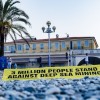
UN Ocean Conference Closes with Historic Commitments, But Activists Demand Action Beyond Words
The third United Nations Ocean Conference (UNOC3) concluded today in Nice with an urgent call for governments to translate bold words into concrete action to protect the world’s oceans. Co-hosted by France and Costa Rica, the summit brought together more than 15,000 participants, including 50 heads of state and government, civil society leaders, scientists, youth, and Indigenous communities in an 11-day event hailed as both a milestone for ocean diplomacy and a test of global resolve.
Reviving Mangroves at the Edge of Mozambique Channel
Just before dawn, a flotilla of wooden canoes drifts silently through mangrove-tangled channels where roots sprout from the black mud of the lagoon. Here, at the edge between sea and forest, lies a story of restoration.
Ocean Action Boosted in Africa as Biodiversity Leaders Call for Urgent Synergy, Funding Reform
As the curtains draw on the UN Ocean Conference, a flurry of voluntary commitments and political declarations has injected fresh impetus into global efforts to conserve marine biodiversity. With the world’s oceans facing unprecedented threats, high-level biodiversity officials and negotiators are sounding the alarm and calling for renewed momentum—and funding—to deliver on long-standing promises.« Previous Page — Next Page »


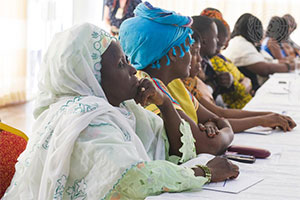 Representatives of Civil Society, Sierra Leone. Credit: UN Photo/Eskinder Debebe
Civil society faces mounting threats worldwide, even as it remains essential for democratic accountability, especially in countries struggling with economic instability and social inequality. However, at the same time, nations with weak democratic governance structures also systemically suppress the power of civil society. Human rights activists across the Global South frequently challenge issues such as political persecution and gender oppression, but in return face state-sanctioned punishment for their advocacy. Imprisonment and exile are common mechanisms of punishment that seek to erode the strength of civil society. The 2026 World Press Freedom Index has reached its lowest level in 25 years, with more than half of the world’s countries now falling into the "difficult" or “very serious” category for press freedom. IPS seeks to highlight the work of civil society across the Global South as well as the challenges that they face.
Updated by Yilan Batista and Shuli Wong August 2026

The Week with IPS

NEXT STOP - SDGs
Tracking global progress towards a sustainable world
Tracking global progress towards a sustainable world
