Languages
Wednesday, September 23, 2026



News and Views from the Global South
Civil Society

The Africa Our Youth and Women Want
History rarely remembers those who waited quietly. In Africa, it is those who dare to act, to resist, to lead, and to dream aloud who have shaped the continent’s most defining moments.
‘Despite Deep-rooted Prejudice Against Dalits, Encouraging Shifts Are Emerging among Young Urban People’
CIVICUS discusses the challenges facing Nepal’s Dalit community with Rup Sunar, chairperson of the Dignity Initiative, a Kathmandu-based research and advocacy organisation working to dismantle caste-based discrimination.

Climate Justice Starts with a Bus Ride: A Lifeline for Delhi’s Waste Pickers
Every day, Delhi’s waste pickers walk three to four kilometers under the blazing sun, collecting and sorting the garbage that keeps India’s capital functioning. Their work is essential—yet largely invisible.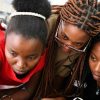
Africa in Control of Its Digital Future: Mobilising Domestic Resources & Strategic Partnerships
As political, financial and social leaders met on 27 May 2025 in Abidjan, Republic of Côte d’Ivoire, for the Annual Meetings of the African Development Bank (AfDB), the continent stands at a crucial turning point. Digitalisation can be the engine of inclusive and resilient development, but only if approached with local leadership and strategic vision.
‘We Are Witnessing Ecocide in West Papua, One of the World’s Richest Biodiversity Centres’
CIVICUS discusses the devastating impact of palm oil extraction in West Papua with Tigor Hutapea, legal representative of Pusaka Bentala Rakyat, an organisation campaigning for Indigenous Papuan people’s rights to manage their customary lands and forests.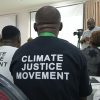
Climate Justice Movement in Nigeria to Tackle Oil Polluters Launched
Greenpeace Africa earlier in May brought together over 40 Nigerian civil society groups in Abuja to launch the Climate Justice Movement, the first of its kind in the country. The goal is to unite various climate efforts nationwide and address the severe impacts of climate change on Nigeria and the African continent.
Can These Prehistoric Sea Creatures Survive Climate Change?
In November, tens of thousands of male olive ridley sea turtles (Lepidochelys olivacea) start congregating on just five kilometers of nearshore in Odisha in eastern India. They wait for the females of the species to arrive. The survival of these prehistoric sea species has largely depended on suitable pairing and mating. However, research findings from around the world indicate that, in the long term, there may be a limited number of males at these mating sites compared to an overwhelming number of females.
The 2025 World Social Summit Must Not Be a Missed Opportunity
Rumors circulating at UN Headquarters suggest there is little appetite for ambition at the Second World Summit for Social Development, set to take place in Doha on 4-6 November 2025. Diplomats and insiders whisper of “summit fatigue” after a packed calendar of global gatherings—the 2023 SDG Summit, the 2024 Summit of the Future, and the upcoming June 2025 Fourth International Conference on Financing for Development. Compounding this fatigue is the chilling rise of anti-rights rhetoric and political resistance from some governments, casting a shadow over multilateral efforts. For some, just getting any multilateral agreement is good enough. As a result, the Zero Draft of the Social Summit Political Declaration lacks the ambition required to confront the multiple social crises our world faces.
UNOC3: Bringing Ocean Education and Science to the Global Agenda
A greater understanding and appreciation of the world’s oceans is needed to protect them. As the global community prepares to convene for the ocean conference, they must also prepare to invest in scientific efforts and education that will bolster their joint efforts.
A New Pope at a Pivotal Moment: Civil Society’s Hopes for Leo XIV
The new pope, the latest in a line dating back almost 2,000 years, was quickly subjected to a very modern phenomenon: no sooner had Pope Leo XIV delivered his first address than people started trawling his social media history for clues about his views. In the context of an ongoing culture war, the fact that far-right grievance entrepreneurs were quick to decry the new pope as ‘woke’ seemed reason enough for progressives to welcome him. But for civil society and the global human rights community, it’s how Leo acts that matters.
Agenda for Nuclear Non-Proliferation Review Conference Still Unclear
The Treaty on the Non-Proliferation of Nuclear Weapons must not be allowed to collapse under the weight of geopolitical cynicism, the preparatory committee at the UN heard.
‘Our Legal Challenge of the Funding Freeze Is Testing the Judiciary’s Ability to Check Executive Power’
CIVICUS speaks with Eric Bjornlund, President and CEO of Democracy International, about the impacts of the US foreign aid freeze and the resulting legal challenges the Trump administration is facing. Democracy International is a global civil society organisation (CSO) that works for a more peaceful and democratic world.

How Mangroves Save Lives, Livelihoods of Bangladesh Coastal Communities
Golenur Begum has faced 12 cyclones in her life. As a child, she witnessed her father’s house destroyed, and as an adult, she watched her home smashed. Saltwater brought by the tidal surges that accompanied the cyclones wrecked their farms and livelihoods. And with climate change, these impacts are becoming more intense and frequent.
From Grief to Action: Demands for Democratic Renewal in the Balkans
Three catastrophic events in the Balkans have sparked powerful movements for systemic change. A train collision that killed 57 people in Greece, a nightclub fire that claimed 59 young lives in North Macedonia and a collapsed railway station roof that left 15 dead in Serbia have ignited sustained anti-corruption protests in all three countries. These weren’t random tragedies but the culmination of systemic failure – neglected safety regulations, illegally issued permits and compromised oversight – with corruption the common denominator.
Young Africans Priced Out of Cities as Urban Housing Crisis Deepens
After graduating in 2019, Jeremiah Achimugu left Sokoto State in northwestern Nigeria for Abuja, the nation’s capital, in search of better opportunities. But life in the city brought unexpected challenges, especially the high cost of housing.
‘Our Weak and Corrupt Institutions Acted Too Late to Address Manipulation That Destabilised Democracy’
CIVICUS discusses Romania’s presidential election with Anda Serban, Executive Director of Resource Center for Public Participation (CERE), a civil society organisation (CSO) that focuses on public participation and transparency in decision-making processes.

Hungary’s LGBTQI Amendment an Affront to Human Rights, Say Activists
A controversial amendment to Hungary’s constitution has left the country’s LGBTQI community both defiant and fearful, rights groups have said.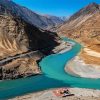
The Indus Water Treaty Suspension: A Wake-Up Call for Asia–Pacific Unity ?
On April 23, India suspended the Indus Water Treaty (IWT), a 65-year-old agreement that had been a rare symbol of cooperation between India and Pakistan despite decades of hostility. The suspension came a day after militants attacked civilians in Jammu and Kashmir, a disputed region, killing 26 people, most of them Indian tourists. India accused Pakistan of supporting “cross-border terrorism” and responded by halting the treaty. Pakistan denied involvement in the attack and called India’s move an “act of war.”

In Zimbabwe, Farmers Are Leading Scientific Research on Conservation Agriculture
Migren Matanga grew up shying away from small and traditional grains in Rushinga, in northern Zimbabwe. The 58-year-old mother of four from Toruzumba village relied on maize and cotton, one of the major cash crops in the area at the time.
Rights with No Age Limit: Hopes for a Convention on the Rights of Older People
The world’s population is ageing. Global life expectancy has leapt to 73.3 years, up from under 65 in 1995. Around the world, there are now 1.1 billion people aged 60-plus, expected to rise to 1.4 billion by 2030 and 2.1 billion by 2050. This demographic shift is a triumph, reflecting public health successes, medical advances and better nutrition. But it brings human rights challenges.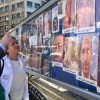
UN Needs to Protect its Vital, Yet Underfunded, Human Rights Work
Major-power cutbacks and delayed payments amidst conflict and insecurity are testing the very principles and frameworks upon which the international human rights infrastructure was built nearly 80 years ago.« Previous Page — Next Page »


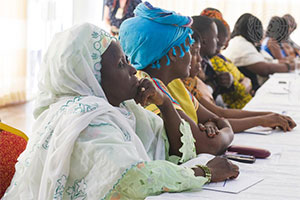 Representatives of Civil Society, Sierra Leone. Credit: UN Photo/Eskinder Debebe
Civil society faces mounting threats worldwide, even as it remains essential for democratic accountability, especially in countries struggling with economic instability and social inequality. However, at the same time, nations with weak democratic governance structures also systemically suppress the power of civil society. Human rights activists across the Global South frequently challenge issues such as political persecution and gender oppression, but in return face state-sanctioned punishment for their advocacy. Imprisonment and exile are common mechanisms of punishment that seek to erode the strength of civil society. The 2026 World Press Freedom Index has reached its lowest level in 25 years, with more than half of the world’s countries now falling into the "difficult" or “very serious” category for press freedom. IPS seeks to highlight the work of civil society across the Global South as well as the challenges that they face.
Updated by Yilan Batista and Shuli Wong August 2026

The Week with IPS

NEXT STOP - SDGs
Tracking global progress towards a sustainable world
Tracking global progress towards a sustainable world
