Languages
Saturday, November 28, 2026



News and Views from the Global South
Civil Society
IRAN: Anger and Despair Linger After Govt Confirms Poll
On Monday, after a televised counting of the 10 percent of the ballot boxes, the body that oversees Iranian elections upheld the results of the disputed presidential elections.
COLOMBIA: Jaime Garzon’s Murder; No Digging Allowed (Part 2)
It’s always the same: the TV audience is grief-stricken and indignant that he is no longer with us, but they continue to laugh along with him. Beloved Colombian comic Jaime Garzón was assassinated on Aug. 13, 1999, but he is still alive on the small screen.ENVIRONMENT: ‘Slow Down Living’
A group of Christian environmentalists met in Pistoia in central Italy over the weekend to call for an end to mass consumption and a return to family values.SRI LANKA: Journalists Laying Aside Pens Once Again
Sri Lankan journalists are laying aside their pens once again and bracing for renewed confrontation with President Mahinda Rajapaksa’s government after the revival of the repressive Press Council and fresh attacks on the media.POLITICS: U.N. Plan for Financial Crisis Derided as Weak
When the General Assembly adopted a proposed plan of action aimed at overcoming the global financial crisis, one of the political surprises was that all 192 member states gave their blessings to the wide range of proposals spelled out in an "outcome document".SOUTHEAST ASIA: Regional Rights Body Dismissed as “Toothless”
Southeast Asia is weeks away from getting its own regional human rights body, but not everyone is cheering the birth of this new mechanism due to be approved at a foreign ministers’ meeting here. Least of all the region’s vibrant human rights community, spread across the 10 countries that belong to the Association of South-east Asian Nations (ASEAN).
IRAN: Cries and Whispers
After several tumultuous days, the streets of Tehran are relatively quiet. But the density of police and basij presence has given the city an air of suffocation. It is hard to breathe.HONDURAS: Referendum Row Rocks Democracy
Honduras is caught up in a crisis following the dismissal of the head of the armed forces for refusing to provide logistics and security for a non-binding referendum called by President Manuel Zelaya for Sunday, the legality of which is disputed by the courts and the opposition.DEVELOPMENT: Not Another Missed Opportunity, Civil Society Urges
A coalition of civil society organisations called the Global Social Economy Group (GSEG) is pressing for the immediate and long-term financing needs of developing countries to take centre-stage at the U.N. Conference on the World Financial and Economic Crisis.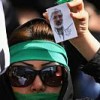
IRAN: Women at Forefront of Popular Defiance
When tens of thousands of protesters braved the ongoing government crackdown to gather in Tehran's Baharestan Square in front of the Parliament building Wednesday in response to a call by supporters of Mir Hossein Moussavi and Mehdi Karroubi, they were met with some of the harshest violence seen since Iran's post-election turmoil erupted nearly two weeks ago.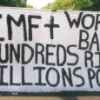
ECONOMY-AFRICA: Deny Neoliberal Consensus
Africa should ‘‘deny consensus'' at multilateral level to ensure that the region's interests are taken seriously, says Professor Patrick Bond speaking on how Africa should approach this week's high-level United Nations' meeting on the global economic crisis.GUATEMALA: Journalists in Jeopardy
Veteran television reporter Rolando Santiz was on his way to downtown Guatemala City on Apr. 1 when two gunmen on a motorcycle drove up alongside his car and killed him in a rain of gunfire. The photographer driving with him was wounded but miraculously survived.
POLITICS-SOUTH SUDAN: Women Ready To Take Their Place
When the women of South Sudan welcomed the signing of the Comprehensive Peace Agreement (CPA) in 2005, they were cognizant of the fact that true democracy will be realised only when their human rights are realised.INDIA: Opposition to ‘Nuclearism’ Builds Up
As India follows up on the historic civilian nuclear agreement it signed last year with the United States by drawing up hard commercial deals, opposition to ‘nuclearism’ is building up among activist groups.
ARGENTINA: Huge Loan to Flow into ‘Open Sewer’ River
Local residents and environmentalists are eyeing with cautious optimism a major loan from the World Bank to the Argentine government to clean up the Matanza-Riachuelo river that runs through Buenos Aires - the country's most polluted waterway.DEVELOPMENT: UN Meet May Short-Change the Poor
As United Nations members gather for talks on how best to end the global financial crisis, anti-poverty campaigners fear that instead of addressing poverty in the developing world, governments will work to prop up financial structures.RIGHTS-SPAIN: ‘Universal Justice’ Threatened
Spain, considered a pioneer in the area of universal justice and especially legal action in human rights cases, is about to take a step backwards in that regard. On Tuesday, activists and legal experts criticised a draft law that would limit the Spanish courts’ ability to investigate human rights abuses committed in other countries.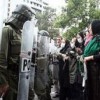
IRAN: Harsh Crackdown Extends to Leading Opposition Figures
Eleven days after Iran’s disputed Jun. 12 president election, the government of President Mahmoud Ahmadinejad appears determined to round up key members of the opposition, journalists and human rights activists who could play a key role in rallying public support for opposition demands.
COLOMBIA: Spying in the Name of ‘Democratic Security’ (Part 1)
While the world's attention was riveted on the inauguration of U.S. President Barack Obama, an operation was surreptitiously being carried out Jan. 19-21 at the headquarters of Colombia’s domestic intelligence agency, the Departamento Administrativo de Seguridad (DAS), which answers directly to the president’s office.SOUTH AMERICA: Anti-Nuclear Activists to Form Common Front
Environmental organisations in Chile plan to revive the anti-nuclear movement in the Southern Cone of South America, in response to vigorous lobbying by corporations and politicians in favour of nuclear energy in the region.IRAN: “The Streets Were Overtaken by Tear Gas”
The streets of Tehran were a veritable war zone Saturday night, as angry voters took to the streets for the sixth day of protests this week against the Jun. 12 elections that re-instated Mahmoud Ahmadinejad as president.« Previous Page — Next Page »


 Representatives of Civil Society, Sierra Leone. Credit: UN Photo/Eskinder Debebe
Civil society faces mounting threats worldwide, even as it remains essential for democratic accountability, especially in countries struggling with economic instability and social inequality. However, at the same time, nations with weak democratic governance structures also systemically suppress the power of civil society. Human rights activists across the Global South frequently challenge issues such as political persecution and gender oppression, but in return face state-sanctioned punishment for their advocacy. Imprisonment and exile are common mechanisms of punishment that seek to erode the strength of civil society. The 2026 World Press Freedom Index has reached its lowest level in 25 years, with more than half of the world’s countries now falling into the "difficult" or “very serious” category for press freedom. IPS seeks to highlight the work of civil society across the Global South as well as the challenges that they face.
Updated by Yilan Batista and Shuli Wong August 2026

The Week with IPS

NEXT STOP - SDGs
Tracking global progress towards a sustainable world
