Languages
Sunday, November 29, 2026



News and Views from the Global South
Civil Society
ENVIRONMENT-BRAZIL: Bishop Fasts Again for Sao Francisco River
Brazilian Catholic Bishop Luiz Cappio has entered the third week of his hunger strike against the diversion of water from the Sao Francisco river, in the arid northeast of the country, amid expressions of support.RELIGION-MEXICO: Outspoken Bishop Backed by Civil Society
Former members of the Catholic Church hierarchy and over 100 social organisations closed ranks behind Monsignor Raúl Vera, the only Catholic bishop in Mexico who still adheres to liberation theology, and whose unorthodox stances and confrontational style are disturbing conservative sectors.RIGHTS-JAPAN: Naming Hanged Convicts – Step Towards Reform
When Japan’s justice ministry departed from norm to name three convicts it hanged this month, many here saw it as a sign that the country was now prepared to adopt more humane policies towards capital punishment.LATIN AMERICA: Prizes for Communities Fighting Exclusion
They work in the deep heartland of Brazil, or in urban slums. They all seek social inclusion, and their starting point is the bottom of the social ladder, with people who have a wide experience of life, contrasting with their short years.RIGHTS: NGO Coalition Slams U.S. Record at Home
A coalition of more than 200 not-for-profit human rights and social justice organisations charge that the George W. Bush administration is contributing to racial, religious and ethnic discrimination in the U.S. - and attempting to cover up its violations in a report to the United Nations they term "a complete whitewash".CLIMATE CHANGE: Trade, Finance Issues Add to Wrangling in Bali
Three poles - trade, finance and the environment - have emerged at a pivotal international conference on climate change, posing a daunting task for leaders to find common ground before the end of this two-week meeting, Friday.BULGARIA: Street Barricades Fail to Save Nature
When the Bulgarian Parliament adopted the final list of nature sites to be protected, it excluded precisely those areas that are most spectacular, and most interesting for tourism developers.MALAYSIA: Arrests of Peaceful Protestors Mar Rights Day
Malaysia is observing World Human Rights Day under a cloud, as the administration of Prime Minister Abdullah Badawi, rattled by a series of street protests over the last month, launches a tough crackdown against peaceful demonstrators.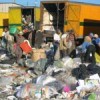
RIGHTS: For Some, Childhood Is Rubbish
"When I thought of my future, I saw my whole life picking through this rubbish dump," says 20-year-old Julia Castillo. "I never thought I'd get away."CLIMATE CHANGE: Survival of Pacific Islands Rests on Bali Outcome
With the effects of climate change lapping at their shores, representatives of the small island nations to the United Nations climate change conference underway in Bali are hoping that the industrialised countries will learn from the new Australian government’s decision to ratify the Kyoto Protocol.POLITICS-PAKISTAN: Taking Part in Musharraf’s Polls – Under Protest
With general elections barely a month away, Pakistan’s major political parties have decided not to boycott the polls and take their chances in a situation where the media and the judiciary have been hobbled.THAILAND: Thaksin's Pro-Poor Politics Haunt Poll Campaign
For the past 15 months, Thailand’s conservative political elites, who profited most from last year’s coup, rallied around the theme that populist policies lead to corruption and spread their idea through the media, public speeches and at university seminars.RIGHTS-CHILE: Workers’ Massacre More Relevant Than Ever 100 Years On
Dec. 21 will be the 100th anniversary of a massacre of thousands of striking workers of the then-flourishing saltpetre industry in northern Chile, carried out by military troops on the order of the government, an event known as the massacre of the Santa María de Iquique school.DEVELOPMENT-LATIN AMERICA: Local Innovation – Fresh and Fair
This is no ordinary contest. The participants are from the most vulnerable areas of Latin America, and they are already winners because they have been selected out of 900 projects applying for the Social Innovation Fair organised by ECLAC in this southern Brazilian city.CLIMATE CHANGE: ‘Not Fair Picking on India, China’
Painting China and India as the villains of climate change, while letting rich industrialised countries get away with rising emissions of greenhouse gases (GhGs) that cause global warming, is patently unfair says an internationally-reputed non-government organisation (NGO).CHILE: Indigenous Hunger Strikers in Critical Condition
Four Mapuche community leaders and an activist are in critical condition on the 58th day of a hunger strike in the southern Chilean prison where they are serving time on charges of terrorism. Two of them had already fasted for more than two months in 2006.DEVELOPMENT-SOUTHERN AFRICA: Local is Essential
Local communities in Southern Africa should be given a greater opportunity to participate in initiatives for the management and conservation of natural resources such as water. This was one of the main conclusions of the third Zambezi Basinwide Stakeholders Forum, held recently in Victoria Falls, Zimbabwe.RIGHTS: World Social Forum and World Economic Forum – A Bridge Too Far?
A group of human rights organisations will attempt to bridge the gap between two antagonistic camps in January: the World Economic Forum which meets in the Swiss ski resort of Davos, and the World Social Forum, generally held in the southern Brazilian city of Porto Alegre.BOLIVIA: Governors Accept President’s Referendum Challenge
Bolivian President Evo Morales said he would send a proposal to Congress Thursday for a referendum in which voters would decide whether or not he should stay in office, and the country’s governors accepted his challenge to also submit themselves to a vote.AFRICA-EU: Dodging the (Human Rights) Issue
On the eve of the second Africa-European Union summit, there is broad agreement on the need to defend human rights, above all else. But academics, analysts and activists from both continents harbour serious doubts that this noble aim will find root in reality.BRAZIL: Modelling Change in the Favelas
When police in Brazil discovered an enormous detailed scale model of the Pereirão favela, they were going to destroy it because they thought it was part of a drug trafficking gang’s plan to invade a nearby neighbourhood. Ten years later, portions of the miniature reproduction built by children have travelled around the world to art exhibits and festivals.« Previous Page — Next Page »


 Representatives of Civil Society, Sierra Leone. Credit: UN Photo/Eskinder Debebe
Civil society faces mounting threats worldwide, even as it remains essential for democratic accountability, especially in countries struggling with economic instability and social inequality. However, at the same time, nations with weak democratic governance structures also systemically suppress the power of civil society. Human rights activists across the Global South frequently challenge issues such as political persecution and gender oppression, but in return face state-sanctioned punishment for their advocacy. Imprisonment and exile are common mechanisms of punishment that seek to erode the strength of civil society. The 2026 World Press Freedom Index has reached its lowest level in 25 years, with more than half of the world’s countries now falling into the "difficult" or “very serious” category for press freedom. IPS seeks to highlight the work of civil society across the Global South as well as the challenges that they face.
Updated by Yilan Batista and Shuli Wong August 2026

The Week with IPS

NEXT STOP - SDGs
Tracking global progress towards a sustainable world
