Languages
Monday, October 26, 2026



News and Views from the Global South
Civil Society

At GEF’s Eighth Assembly, Uzbekistan Signals New Role as Donor
In a significant policy shift symbolising rising environmental ambition, Uzbekistan on Thursday announced that it will become a donor of international environmental funding to the Global Environment Facility (GEF), as the Eighth GEF Assembly opened in the historic city of Samarkand.
From War Zones to Global Environment Talks, Communities Seek Faster Green Finance
For three decades, Iffat Rachid Edriss walked Lebanon's coastline with a clear purpose: protecting the sea she loves.
GEF Pushes Innovation, Blended Finance Ahead of the Eighth Assembly
As the Global Environment Facility (GEF) steps into the starting blocks of its next financial cycle, the Interim CEO Claude Gascon reflects on what he termed a “moment of transition and delivery".
Filipino Indigenous Leader Takes Ancient Wisdom to the Global Stage
Every year, when dark clouds gather above the dense forests of the Philippines, 56-year-old Mini Baeyens, of the Aplay Kankanaey tribe, vigilantly watches the sky.
GEF Approves Adaptation Funds Strengthening Resilience in Vulnerable Countries
Bangladesh, the Democratic Republic of Congo, Guinea-Bissau, Niue, Senegal, Solomon Islands, Sudan, and Togo will receive over USD 67 million in new funding to help strengthen resilience.
As Three COPs Converge, Leaders at GEF Council Call for Unified Global Action
On day 2 of the Global Environment Facility’s 71st Council Meeting, which focused on process and procedure, a clear message emerged: global environmental governance cannot afford fragmentation.
Delegates Push for Greater Accountability, Community Inclusion as GEF Crosses Major Environmental Milestones
While the Global Environment Facility (GEF) said its eighth replenishment cycle (GEF-8) was about to exceed environmental targets for biodiversity protection, marine conservation, ecosystem restoration, and reducing greenhouse gas emissions, governments and civil society groups called for stronger safeguards to ensure that local communities, Indigenous Peoples, and smaller implementing agencies are not left behind as funding mechanisms become more complex.
GEF Council Welcomes New Green Pledges, Highlights Old Access Barriers
The 71st Council meeting of the Global Environment Facility (GEF) opened today amid a sharp divide, with donor nations urging broader and increased funding commitments, while developing countries called for more equitable and accessible pathways to environmental finance.
US-Israeli Ceasefire: You Cease, We Fire
If you have been paying attention to the ongoing wars in Ukraine, Iran, Lebanon, and many other places, perhaps you have noticed that battles today are far different from those of the last century. Now it’s not only tanks and planes but also scores of long-range missiles and massive flights of drones linked to cybernetic warfare.
When UN Elections Were Once Tainted by Trade-Offs, Cheque Book Diplomacy & Luxury Cruises…
The year 2026 seems to be an eventful year at the United Nations --a new President of the General Assembly (PGA), who will officially preside over the 81st session in mid-September, plus the election and appointment of a new Secretary-General (SG) who will takeover in January 2027 after the conclusion of a 10-year tenure by the outgoing SG Antonio Guterres.
India’s LED Story Highlights How Blended Finance Powers Environmental Action
Ahead of the Eighth Global Environment Facility (GEF) Assembly in Samarkand, governments and development institutions are grappling with a familiar challenge: How to finance environmental action at the scale required to meet rapidly growing needs.
A New Youth Generation: Largest in History & a Decisive Force
In this exclusive interview, Dr. Felipe Paullier, UN Assistant Secretary-General (ASG) and Head of the United Nations Youth Office shares his leadership approach, insights on youth engagement, and his vision for driving institutional change from the grassroot level — redefining what is possible and proving that age is just a number.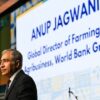
Connecting the Dots: Quality Seed, Resilient Food Systems and Good Health
It is often said that the quality of seed determines the quality of the produce and, consequently, the sustainability of the entire agricultural value chain, influencing everything from crop yields to nutritional value.
How the Global Anti-Rights Movement Is Targeting Women’s Rights in Africa Through Family Laws
The theme of Africa Day 2026, “63 years of unity, integration and development," offers a stark reminder of the gap that often exists between rhetoric and reality. While commendable regional legal frameworks have advanced legal protections for millions of women and girls, injustice remains written into the fabric of national family laws in many African countries, entrenching gender inequality in the home.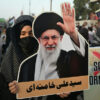
Iran War Deepens Activist Dangers
Narges Mohammadi, awarded the Nobel Peace Prize for her human rights activism in Iran, has been allowed to go home. After guards found her unconscious in her cell, the apparent victim of a heart attack, she was granted temporary release from prison and transferred to a hospital. However, she still faces the threat of being taken back to jail once her condition has improved.
Scarcity of Treatment Makes Syrians More Vulnerable to Mental Health Crisis
The protracted years of conflict in Syria have inflicted profound scars that transcend physical destruction, permeating the psychological well-being of millions.
Brazil’s Indigenous Communities Receive $9M in GEF Funding to Protect Lands, Traditions Under Threat
On Brazil’s northeastern coast, the Indigenous community, Tremembé da Barra do Mundaú, lives on a preserved stretch of land shaped by mangroves, dunes, and deserted beaches. The group of around 160 families is led by women and depends on the 3,500-hectare territory for fishing and subsistence farming.
UN General Assembly Votes for Resolution on ICJ Advisory Ruling on Climate Obligations
Member states this week (May 20) deliberated over a draft resolution on states’ obligations in respect of climate change following the advisory opinion from the International Court of Justice (ICJ). The General Assembly agreed to take measures to uphold the ICJ’s advisory opinion for member states to meet their existing obligations to climate justice under international law and multilateral frameworks.
TRANSNATIONAL REPRESSION: ‘China Feels Emboldened to Globalise Its Political Red Lines’
CIVICUS discusses the cancellation of RightsCon 2026 with Barbora Bukovská, Senior Director for Law and Policy at ARTICLE 19, a human rights organisation that works on freedom of expression and information around the world.
The 3Ds for a Credible Post-2030 Development Agenda
Just four years of the Agenda 2030 for Sustainable Development remain. What comes after 2030 is already a political battleground.
India: Climate Diplomacy Questioned After COP33 Hosting Withdrawal
India has withdrawn its bid to host the 2028 United Nations climate summit, a move that indicates a recalibration of its global climate engagement even as it projects itself as a leader in renewable energy and climate action.« Previous Page — Next Page »





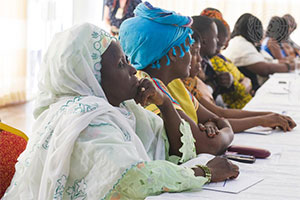 Representatives of Civil Society, Sierra Leone. Credit: UN Photo/Eskinder Debebe
Civil society faces mounting threats worldwide, even as it remains essential for democratic accountability, especially in countries struggling with economic instability and social inequality. However, at the same time, nations with weak democratic governance structures also systemically suppress the power of civil society. Human rights activists across the Global South frequently challenge issues such as political persecution and gender oppression, but in return face state-sanctioned punishment for their advocacy. Imprisonment and exile are common mechanisms of punishment that seek to erode the strength of civil society. The 2026 World Press Freedom Index has reached its lowest level in 25 years, with more than half of the world’s countries now falling into the "difficult" or “very serious” category for press freedom. IPS seeks to highlight the work of civil society across the Global South as well as the challenges that they face.
Updated by Yilan Batista and Shuli Wong August 2026

The Week with IPS

NEXT STOP - SDGs
Tracking global progress towards a sustainable world
Tracking global progress towards a sustainable world
