Languages
Sunday, October 25, 2026



News and Views from the Global South
Civil Society

‘Do More With Less’: GEF CEO Claude Gascon on Speed, Scale and Reform
As governments prepare for the Eighth Assembly of the Global Environment Facility (GEF) – scheduled to be held from May 30 to June 6 in Samarkand, Uzbekistan – the stakes are unusually high.
Stop the Madness: Civil Society Cannot Thrive on Burnout
In an era when civil society funding is in decline, it’s time to rebel against a broken system.
Breaking Cultural Barriers to Equip Marginalised Kenyan Girls With Entrepreneurial Skills
For generations, communities in Kenya’s arid and semi-arid lands (ASAL) have viewed girls through the lens of marriage, with some being married at 11 in exchange for livestock or soon after secondary school, denying them opportunity for further education and skills training.
Media As Bedrock for Developing Russian-African Relations
Under the auspices of the Faculty of Journalism of Lomonosov Moscow State University, the Russian-African Club, in late April, held its IV International Forum of Journalists from Russia and Africa, which marked another historical milestone. According to an established annual tradition, discussions were focused on aspects of the media, its structure, current performance, information contents, and challenges as well as future perspectives.
DIGITAL RIGHTS: ‘The Priority Should Be Holding Tech Companies Accountable, Not Banning Children from the Digital World’
CIVICUS discusses the rising trend of social media bans for children with Marie-Ève Nadeau, Head of International Affairs of the 5Rights Foundation, an organisation that promotes children’s rights in the digital environment.
Field-Based Research Is a Lifeline for Zimbabwe’s Food Security
Agriculture sustains millions of people in Zimbabwe, serving as a vital source of both food and income. But climate-related pressures affecting land, crops, rainfall patterns, and increasing pest outbreaks are threatening smallholder farmers’ harvests, leaving them food insecure.
The GEF Leads Global Drive to Tackle Shipping Threat to Oceans
Under the warm waters off Tanzania’s Mafia Island, marine scientist Asha Mgeni hovers above a coral reef she has studied for years. Small fish dart through the currents. To most divers, the reef appears pristine. But Mgeni notices something unusual.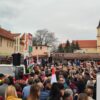
What Hungary’s New Pro-Democracy Government Means For Rule of Law
Péter Magyar, leader of the pro-democratic centre-right Tisza Party, which recently swept into power on an unstoppable wave of hope for change, has now been sworn into office as Hungary’s new Prime Minister.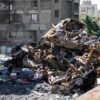
The Global Epidemic of Violence in an Age of Impunity
Violence has metastasized into humanity's baseline condition. Yet international institutions remain paralyzed by vetoes and rivalry, offering hollow declarations while dehumanization becomes normalized. Coordinated action, not gestures, is desperately needed.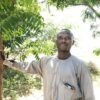
Ambitious Great Green Wall Shows Slow, Steady Progress in Strengthening Landscapes, Improving Livelihoods
In 2021, Gadeja Shehu and about a hundred farmers in Garbadu village, Zamfara State in northwestern Nigeria, were invited by officials of the National Agency for the Great Green Wall to plant trees across a large stretch of land in their community.
The Iran War Is Costing Children’s Lives in Somalia
When war erupted in the Middle East in late February, the most visible consequences were playing out in the Persian Gulf, with smoke rising from Dubai's Jebel Ali port and shipping traffic across one of the world's most critical maritime routes grinding to a near halt.
PHILIPPINES: ‘A Protest Is One Day, but Organising Is the Thousands of Conversations That Make That Day Possible’
CIVICUS discusses Gen Z-led protests in the Philippines with Charles Zander, a 17-year-old climate justice activist from Bohol and youth campaigner for Greenpeace Philippines.
Hungary’s Long Road Back
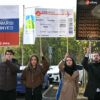
When Péter Magyar took the stage in Budapest on the night of 12 April, he told the crowd they had ‘liberated Hungary’. The hyperbole seemed justified. His party, Tisza, had won a parliamentary supermajority on the highest turnout since Hungary’s first free election in 1990, ending 16 years of increasingly autocratic rule.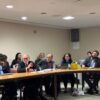
Nuclear ‘Close-Calls’ Prove Deterrence No Guarantee for Peace
The consequences of nuclear warfare would transcend borders and the impact would be felt across generations. Yet knowing this, member states, including nuclear-armed states, are increasingly flouting the nuclear taboo, while also relying heavily on deterrence to prevent fallout.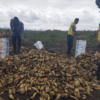
Cleaning Up the Fields: Across Africa and Asia GEF is Helping Farmers Rewrite Their Pesticide Story
For decades, pesticides have been a quiet pillar of Malawi’s agriculture, guarding crops against pests, improving yields, and sustaining millions of livelihoods. But beneath this success story lay a troubling reality: weak regulation, unsafe handling practices, and growing threats to human health and the environment.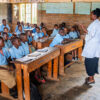
Data Gaps are Hiding the Most Excluded Children
In 2024, 273 million children, adolescents, and youth were out of school globally as per the UNESCO Institute for Statistics. While that is a staggering number, the figure is incomplete. The 2026 Global Education Monitoring report warns that the global out of school population may be undercounted by at least 13 million once humanitarian sources are used to correct data gaps in conflict-affected contexts.
VENEZUELA: ‘The Credit Goes to Detainees’ Families, Human Rights Organisations and the International Community’
CIVICUS discusses the status of political prisoners in Venezuela with Manuel Virgüez, director of Movimiento Vinotinto, a Venezuelan human rights organisation that works for citizen empowerment, democracy and justice.

How Santa Marta Finally Made Fossil Fuel Phase-Out Politically Discussable
The First Conference on Transitioning Away from Fossil Fuels in Santa Marta, Colombia, may eventually be remembered as a defining moment in global climate politics, not because it produced a treaty or a formal negotiation outcome, but because it changed the tone, structure, and ambition of the conversation itself.
100 Days, No Outcry – The Cost of Speaking Out
“We’ve abandoned this couple completely; we have not done even 1% of what they did for us all these years!” said journalist Asad Ali Toor.
The UN NGO Committee: Civil Society’s Gatekeeper in Hostile Hands
In January, the government of Algeria succeeded in locking two civil society groups out of access to the United Nations (UN). It raised questions at the UN Committee on Non-Governmental Organizations, known as the NGO Committee, about two civil society groups with accreditation. It alleged that Italian organisation Il Cenacolo was making politically motivated statements at the UN Human Rights Council and the Geneva-based International Committee for the Respect and Implementation of the African Charter on Human and Peoples’ Rights (CIRAC) was selling UN grounds passes. Four days later, it called a vote to revoke their status. Other states urged delay, but the no-action motion failed, and 11 of the body’s 19 members voted to recommend that the UN’s Economic and Social Council (ECOSOC) revoke Il Cenacolo’s accreditation and suspend CIRAC’s for a year.
Pacific Ocean Under Pressure — Now a Region Finally Armed With Evidence
For generations, Pacific people have understood the ocean not as a resource but as identity, sustenance, and survival. Today, that relationship is being tested in ways science is only just beginning to fully capture.« Previous Page — Next Page »





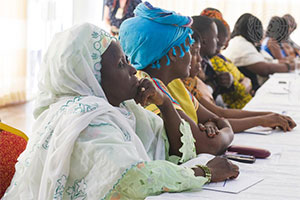 Representatives of Civil Society, Sierra Leone. Credit: UN Photo/Eskinder Debebe
Civil society faces mounting threats worldwide, even as it remains essential for democratic accountability, especially in countries struggling with economic instability and social inequality. However, at the same time, nations with weak democratic governance structures also systemically suppress the power of civil society. Human rights activists across the Global South frequently challenge issues such as political persecution and gender oppression, but in return face state-sanctioned punishment for their advocacy. Imprisonment and exile are common mechanisms of punishment that seek to erode the strength of civil society. The 2026 World Press Freedom Index has reached its lowest level in 25 years, with more than half of the world’s countries now falling into the "difficult" or “very serious” category for press freedom. IPS seeks to highlight the work of civil society across the Global South as well as the challenges that they face.
Updated by Yilan Batista and Shuli Wong August 2026

The Week with IPS

NEXT STOP - SDGs
Tracking global progress towards a sustainable world
Tracking global progress towards a sustainable world
