Languages
Thursday, November 12, 2026



News and Views from the Global South
Civil Society
We Have Swung into the Dark Ages, Says Nobel Peace Laureate Jody Williams
On Monday, United States President Donald Trump continued to float the idea that he should be awarded a Nobel Prize, but that it would never happen because the system was rigged.
World Summit of Nobel Peace Laureates Calls for Decisive Action, With No Time to Waste
In a world of increasing fragility and declining resources, can the world foster peace? With a looming climate crisis, is war inevitable? Will nuclear war be the final result? Are women the ultimate peace builders? How do we train and engage youth to promote peace?
50 Days of Kashmir Under Lockdown – in Pictures
It is 50 days into the lockdown in Kashmir since roads were blocked off, schools shut, and internet and communication services stopped.
‘I Want my Kids to Know What a Rhino and Turtle Are’ – #ClimateStrike Kids Say
 From Nigeria, to Kenya to the Democratic Republic of Congo, to South Africa, thousands of African climate campaigners have taken to the streets joining millions around the world for the global Climate Strike ahead of the United Nations Climate Action Summit 2019, which starts in New York next week.

Hiring for Inclusion
As companies begin to focus on hiring people with disabilities, we need to shape how they think and act on this interest.
NYC Library Ditches Controversial Saudi Royal MBS’ Event
A New York library appeared to bow to pressure this week when it canceled an event that was being co-hosted by Saudi Arabia’s crown prince Mohammad bin Salman, who is accused of a range of human rights abuses.
Translating Ambition to Action: High Hopes for United Nations Action Week
In less than 10 days, countries from around the planet will come together in New York for the United Nations Secretary General’s Climate Action Summit. I look forward to representing the Pacific Community (SPC) at this important event, and throughout “Action Week” during the upcoming UN General Assembly.
Calls for Reform, Research and Reorganisation in Leprosy Healthcare
Rachna Kumari of Munger in Eastern India’s Bihar state is not yet 30. But she's already been married at 18, abandoned by her husband after she was diagnosed with leprosy and become an award-winning advocate of the disease. She has traversed a long road. And this week she undertook another step in her journey to fly to Manila, Philippines, as a delegate at the 20th International Leprosy Congress (ILC).
Ministers Call for Coalition to scale up land restoration massively worldwide
1. On the road to the Climate Action Summit, the Minister of Environment, Forest and Climate Change of India and President of COP14, His Excellency Mr. Prakash Javedkar, and the United Nations Deputy Secretary-General, Her Excellency Ms. Amina J. Mohammed, hosted a high-level luncheon on land and climate on 9 September 2019, on the margins of the UNCCD Fourteenth Session of the Conference of the Parties (COP14). The event was co-facilitated by the United Nations Convention to Combat Desertification (UNCCD) and the United Nations Environment Programme (UNEP).
‘Conference Emphasises Need for Partnerships to Create a World Without Leprosy’
Forty years ago, Yohei Sasakawa saw his father moved to tears after meeting and witnessing the suffering of people affected by leprosy – also known as Hansen’s disease. Not only did the patients have a physical illness, but they also suffered from social exclusion and discrimination. It made the young Sasakawa vow to work for the elimination of leprosy from the world – just as his father had been doing.
Let’s Get Climate Action into Traction with Gender Equality
Climate change is already altering the face of our planet. Research shows that we need to put all our efforts over the coming decade to limit warming to 1.5°C and mitigate the catastrophic risks posed by increased droughts, floods, and extreme weather events.
Nothing For Us, Without Us – Hansen’s Disease-Affected Tell International Gathering
Stronger government action to fight stigma and discrimination, more government funding for health and non-health support programmes, and a larger role for people’s organisations in developing policy towards Hansen's disease treatment and eradication are still needed for eliminating the disease.
The Emergence of a Global Voice for Hansen’s Disease Affected Persons
The Global Forum of People’s Organisations on Hansen’s Disease, which was attended by members of people’s organisations from 23 different countries, wrapped up in Manila, Philippines, today Sept. 10 after four days of discussion and deliberation. The main outcome was a set of recommendations, which included participants stating that those affected by the disease should have more inclusive roles in the global campaign against leprosy.
‘Join Me on this Journey’ to Eliminate Leprosy – WHO Ambassador
Octogenarian Yohei Sasakawa has travelled to more than 90 countries across the globe; from areas of conflict, to the jungles of Brazil, shaking hands, hugging and washing the feet of Hansen’s disease-affected people. His message is simple: Stop stigmatisation and eliminate the disease. 
India Promotes South-South Cooperation, but Key Questions Unaddressed
At his speech at the United Nations Convention to Combat Desertification (UNCCD) summit in Delhi, Prime Minister Narendra Modi emphasised South-South cooperation and technology solutions, but issues of land ownership dog the ongoing negotiations. As the second week of the UNCCD Conference of Parties (COP) kicked off in Delhi, Indian Prime Minister Narendra Modi highlighted South-South cooperation and issues of land degradation.
Awareness Should be the Priority in Public Health Efforts against Leprosy
Increasing awareness of the continuing existence of Hansen’s Disease (leprosy) is critical to sustaining effective public health efforts against the disease, eliminating the social stigma associated with it, and halting its transmission.
Culture of Peace Takes Big Stride as UN Observes 20th Anniversary of Norm-Setting 1999 Decision
It has been a long, arduous journey – a journey ridden curiously with obstacles and indifference. Two decades have passed by since the UN General Assembly (UNGA) adopted, by consensus and without reservation, its landmark and norm-setting resolution 53/243 on the Declaration and Programme of Action on a Culture of Peace in 1999.
Litigation, a Mechanism to Ensure Justice and End Stigma for Hansen’s Disease
Professor Ai Kurosaka remembers the day she first interacted with a person affected by Hansen’s disease. It was 2003 and Kurosaka, then a graduate student of sociology at the Saitama University in Japan, had been assigned to interview ex-patients and their family members to document what kind of discrimination they faced. It was a very difficult task because nobody wanted to speak or identify themselves.
The Business of Social Enterprise
Organisations supporting people affected by Hansen’s disease (leprosy) have social rather than capitalist aims, but they need to take a business-minded approach to their work if they wish to be sustainable, experts at a global conference in Manila, Philippines said.
Global Network Key to Strengthening Leprosy Organisations
Organisations of people affected by Hansen’s Disease or leprosy agree that a global network of volunteer groups is key to eradicating the disease, but concrete steps need to be taken to move the idea from an often-discussed concept to a reality.
First Global Forum of Leprosy-Affected People’s Organisations Kicks off in Manila
Being part of a platform where leprosy-affected people from all over the world can freely interact, exchange and share opinions, ideas, experiences and strategies was always something Tasfaye Tadesse dreamt of.« Previous Page — Next Page »


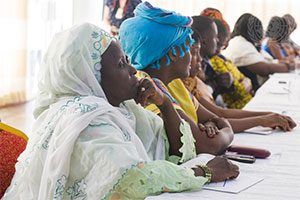 Representatives of Civil Society, Sierra Leone. Credit: UN Photo/Eskinder Debebe
Civil society faces mounting threats worldwide, even as it remains essential for democratic accountability, especially in countries struggling with economic instability and social inequality. However, at the same time, nations with weak democratic governance structures also systemically suppress the power of civil society. Human rights activists across the Global South frequently challenge issues such as political persecution and gender oppression, but in return face state-sanctioned punishment for their advocacy. Imprisonment and exile are common mechanisms of punishment that seek to erode the strength of civil society. The 2026 World Press Freedom Index has reached its lowest level in 25 years, with more than half of the world’s countries now falling into the "difficult" or “very serious” category for press freedom. IPS seeks to highlight the work of civil society across the Global South as well as the challenges that they face.
Updated by Yilan Batista and Shuli Wong August 2026

The Week with IPS

NEXT STOP - SDGs
Tracking global progress towards a sustainable world
Tracking global progress towards a sustainable world
