Languages
Tuesday, October 20, 2026



News and Views from the Global South
Aid
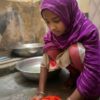
Before the Flood, Jannat Carried Books. After the Flood, She Carried Dirty Dishes
When catastrophic floods swept through the Haor wetlands of Sunamganj in 2022, they destroyed far more than homes and crops. They shattered childhoods.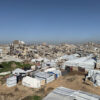
Gaza’s Deepening Health Crisis Leaves Hospitals Overwhelmed
Despite the implementation of a ceasefire between Hamas and Israel last October, Israeli forces continue to launch airstrikes into the Occupied Palestinian Territory. This has resulted in extensive destruction of infrastructure, loss of human life and exacerbating immense health needs amid an increasingly strained health system in Gaza.
Cleaning Up the Fields: Across Africa and Asia GEF is Helping Farmers Rewrite Their Pesticide Story
For decades, pesticides have been a quiet pillar of Malawi’s agriculture, guarding crops against pests, improving yields, and sustaining millions of livelihoods. But beneath this success story lay a troubling reality: weak regulation, unsafe handling practices, and growing threats to human health and the environment.
Famine in South Sudan Projected to Worsen Without Humanitarian Intervention
In 2026, the humanitarian situation in South Sudan has taken a considerable turn for the worse, with widespread food shortages, ongoing disruptions to food production systems, and rising rates of malnutrition affecting over half of the population. Compounded by the vast scale of needs and an overwhelming lack of access to basic services, humanitarian experts warn that nationwide levels of hunger are projected to worsen to catastrophic levels if urgent intervention is not secured.
Clean Energy, Digital Technologies Are Coming at a Human Cost, UN Report Warns
A newly released United Nations report has raised urgent concerns that the world’s push toward clean energy and digital technologies is driving a hidden crisis in some of the planet’s most vulnerable regions, where mining for critical minerals is depleting water supplies, damaging health, and deepening inequality.
Pacific Islanders Combat Mercury Poisoning of the Environment
It is an invisible contaminant that has been found in fisheries, an essential part of the food chain for many Pacific Islanders. Mercury, emitted from fossil fuel power generation and other industrial processes around the world, has now penetrated marine ecosystems in the Pacific Islands with detrimental consequences for people’s health and wellbeing.
Addressing the Mental Health of Ukrainian Children living on Frontlines of War
“What’s important is to make sure that you can immerse yourself in an environment that is positive for your mental health and wellbeing,” says Olena*.
Inside GEF-9: What it is and Why it Could Define the Next Four Years of Environmental Action
The gap between global environmental ambition and real-world progress is widening, with less than five years left to meet key climate and biodiversity targets.
African Institutions in Plan to Stabilise Food, Fuel and Fertiliser Amid Mideast War
Fearing the Middle East war could drive millions into hunger and cripple economies, Africa’s leading institutions are drafting a strategy to mobilise domestic and "innovative" finance and harness national competitiveness to stabilise food, fuel, and fertiliser supplies.
Guardians of the Sea: How GEF Small Grants Program Enables Young Volunteers Take the Lead in Sea Turtle Conservation
Every winter thousands of sea turtles come ashore at Cox’s Bazar, in the Bay of Bengal, Bangladesh, to lay eggs.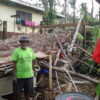
Informal Settlements Grapple With Climate Extremes in Pacific Islands
A rising cycle of poverty and extreme weather threatens many towns and cities, especially those situated on coastlines, in the Pacific Islands. Urban centres in the Pacific have grown at an unprecedented rate this century, rapidly straining national resources for urban planning. But governments are now making progress on improving people’s lives in the informal settlements that dominate the urban sprawl in some of the region’s largest cities.
Humanitarian Response in Lebanon ‘Under Significant Strain’ after Wednesday Airstrikes
On April 8, Israeli military forces launched the deadliest series of airstrikes on Lebanon since hostilities escalated in early March, resulting in the deaths of at least 254 civilians. This latest incident threatens to further complicate humanitarian efforts in Lebanon that are already under immense pressure.
It Is Time For Africa to Fund Its Health Security
Relying on foreign aid is bad for Africa's health and it must stop if the continent is to enjoy health security.
Artisanal Miners in Western Kenya Move Away From Mercury
They call this land Bushiangala. Gold has been mined here for nearly a century. In 1931, colonial prospectors arrived after traces were found in the nearby Yala River, setting off a rush that changed this quiet corner of western Kenya.
Caribbean Leaders and Civil Society Prepare for Global Push on Fossil Fuel Phase-Out
As the world edges closer to breaching key climate thresholds, Caribbean policymakers, scientists and civil society leaders gathered in Saint Lucia this month to coordinate the region’s position ahead of a landmark global meeting on transitioning away from fossil fuels.
War in Iran, Middle East Threatens Global Agrifood Systems
The current conflict in Iran and the Middle East region threatens to disrupt the global energy and agri-food sectors, as the closure of the Strait of Hormuz affects oil and fertilizer exports for farmers during critical harvest seasons.
EXCLUSIVE: Water Laureate Kaveh Madani on Arrest, Exile and Fight for Science
Professor Kaveh Madani of Iran has been named the 2026 Stockholm Water Prize laureate. The award will be formally presented by King Carl XVI Gustaf of Sweden in August during World Water Week in Stockholm.
80 Percent of Rural Households Without Direct Water Access – World Water Report
A new United Nations report has warned that global water inequality remains one of the most pressing development challenges of the decade, with billions still lacking safe drinking water and sanitation – while women and girls continue to bear the heaviest burden of water insecurity.
UN Launches 300 Million Dollar Humanitarian Appeal for Lebanon
During a solidarity visit to Lebanon, the UN chief announced a flash appeal of USD 308.3 million to support humanitarian operations there in the wake of escalated fighting.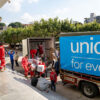
UN: Amid Security Risks in Middle East, Humanitarian Work is Underway
As military fighting breaks out across the Middle East with increasing frequency and intensity, the United Nations promises to ramp up its humanitarian response on the ground.
Financing Africa’s Biodiversity Conservation With Dwindling Donor Support
As the global community marks 2026 World Wildlife Day today (March 3), this year's focus is on Medicinal and Aromatic Plants: Conserving Health, Heritage and Livelihoods. However, beneath these celebrations, a difficult question emerges: who will bear the cost of conservation when traditional donor funding becomes uncertain and in the face of climate change?« Previous Page — Next Page »





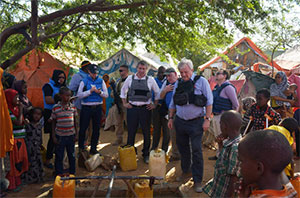 UN Emergency Relief Coordinator Visits Somalia. Credit: UN Photo/Tobin Jones
In recent years, conflicts have broken out across the world with no sign of slowing down or stopping. In times like this, millions of people globally are in dire need of humanitarian aid. Famine, warfare, natural disasters, and economic decline plague a host of nations, including Palestine, Sudan, Chad, Lebanon, and Haiti, to name a few. Humanitarian aid provides millions of people with critical services including healthcare, food, clean drinking water, psychosocial support, housing, and access to education. UN agencies such as the UNDP, UNICEF, the World Food Programme (WFP), UNHCR, UNRWA, and UNEP work with the UN Office for the Coordination of Humanitarian Aid (OCHA) and local organizations to come up with the best possible strategies to support affected communities. At the same time, humanitarian aid and those working on the frontlines are consistently threatened by both actors directly involved in conflict as well as those who are meant to contribute to the international humanitarian regime at large. The near-collapse of United States international aid structures in 2025, including the termination of 83% of USAID’s 6,300 global initiatives, has left millions of people without access to vital humanitarian assistance. 98 million people in 2025, only 65% of people targeted for humanitarian assistance, received the help they needed. In contrast, 123 million people received some form of humanitarian assistance in 2024, and OCHA’s 2026 Global Humanitarian Overview estimates that 239 million people are in need of assistance in 2026. IPS is well-positioned to discuss current initiatives to provide aid and relief through in-depth reporting and opinion content.

The Week with IPS

NEXT STOP - SDGs
Tracking global progress towards a sustainable world
Tracking global progress towards a sustainable world
