Languages
Friday, October 23, 2026



News and Views from the Global South
Aid

80 Percent of Rural Households Without Direct Water Access – World Water Report
A new United Nations report has warned that global water inequality remains one of the most pressing development challenges of the decade, with billions still lacking safe drinking water and sanitation – while women and girls continue to bear the heaviest burden of water insecurity.
UN Launches 300 Million Dollar Humanitarian Appeal for Lebanon
During a solidarity visit to Lebanon, the UN chief announced a flash appeal of USD 308.3 million to support humanitarian operations there in the wake of escalated fighting.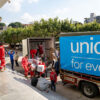
UN: Amid Security Risks in Middle East, Humanitarian Work is Underway
As military fighting breaks out across the Middle East with increasing frequency and intensity, the United Nations promises to ramp up its humanitarian response on the ground.
Financing Africa’s Biodiversity Conservation With Dwindling Donor Support
As the global community marks 2026 World Wildlife Day today (March 3), this year's focus is on Medicinal and Aromatic Plants: Conserving Health, Heritage and Livelihoods. However, beneath these celebrations, a difficult question emerges: who will bear the cost of conservation when traditional donor funding becomes uncertain and in the face of climate change?
Fragile Progress in Gaza Humanitarian Response Undermined by Rampant Insecurity
Since the ceasefire agreement between Israel and Hamas in October of last year, humanitarian conditions in Gaza have notably improved — but aid agencies warn that progress is extremely fragile. Acute shortages of lifesaving medical care and psychosocial support persist, hunger remains widespread, with conditional cash assistance as the primary barrier preventing full-scale food insecurity, while Israeli attacks continue to undermine stability and humanitarian efforts.
Bridging the Capital Gap: Strategic Public-Private Partnerships Invest in Young Agri-entrepreneurs
The global aid system is crumbling amidst chronic underinvestment in rural areas, posing a systemic threat to food systems everywhere. With 1.3 billion young people in the world today – the largest generation in history, and nearly half of them living in rural areas – investing in their entrepreneurial potential is key.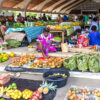
Local Resilience Can Mitigate Climate Conflicts in the Pacific
The Pacific Island countries are at the frontline of climate change. Their territories mostly consist of small, low-lying islands, with long coastlines and vast ocean spaces between them. Many livelihoods are based on agriculture or fishing, and importing water or food is often infeasible or expensive. This makes those large ocean nations highly vulnerable to the impacts of climate change, such as storms, droughts, and rising sea levels. Analysts have expressed concerns that this can result in various forms of socio-political conflict.
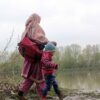
‘When Rains Come, Our Hearts Beat Faster’
When the rain begins in Kashmir's capital Srinagar, Ghulam Nabi Bhat does not watch the clouds with relief anymore. He watches them with calculation. How much can the gutters take? How fast will the river rise? Which corner of the house will leak first? Where should the children sleep if the floor turns damp?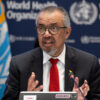
WHO Launches $1 Billion Appeal Amid Funding Shortfalls and Widening Gaps in Healthcare Access
On February 3, the World Health Organization (WHO) launched its 2026 global appeal to help millions of people living in protracted conflicts and humanitarian crises access lifesaving healthcare. Following a trend of sharply declining international funding, the agency warns that it is becoming increasingly difficult to respond to emerging health threats, including pandemics and drug-resistant infections.
Humanitarian Access Collapses as Yemen’s Political and Security Crisis Deepens
In recent weeks, Yemen’s humanitarian crisis has sharply worsened, as escalating food insecurity and brutal clashes between armed actors have prompted United Nations (UN) officials to warn that the country is approaching a critical breaking point. Intensified violence has increasingly obstructed lifesaving humanitarian operations, while deepening economic and political instability continues to erode access to essential services. As a result, millions of Yemenis now face the growing risk of being left without the support they need to survive, with children being the hardest-hit.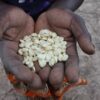
To Develop a Continent, Africa Must Nourish Its Children
Hunger shadowed Mercy Lung’aho’s childhood, fueling her campaign to promote nutrition as a foundation for Africa’s development.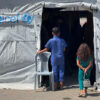
‘Unfathomable But Avoidable’ Suffering in Gaza Hospitals, Says Volunteer Nurse
“I’d never encountered anything like it before. I had no idea that there could be a place that needed humanitarian aid and that a government entity wouldn’t allow physicians or health workers into [that place],” says Jane.*
Haiti at a Crossroads: Political Uncertainty and Gang Control Push Nation Toward Collapse
As Haiti’s Transitional President Council (TPC) approaches its February 7 expiration date and the country remains without a newly elected president, humanitarian experts warn the nation risks further sliding into insecurity, raising fears of broader collapse.
What Next? United States Exits Key Entities, Vital Climate Treaties in Major Retreat from Global Cooperation
President Donald Trump has escalated efforts to further distance the United States from international organizations and entities focused on climate, the environment, and energy. This strategy is in step with his administration’s established approach to undermine and redirect funds and international cooperation away from climate and clean energy programs.
Gaza: Physicians Call For Unimpeded Aid To Restore Reproductive Healthcare
Israel must lift all restrictions on medicine, food and aid coming into Gaza, rights groups have demanded, as two reports released today (Jan 14) document how maternal and reproductive healthcare have been all but destroyed in the country.
Experts Urge Rapid Adaptation as India Braces for ‘Stronger’ Cyclones, Quakes
Despite early warnings reportedly reaching communities before the cyclones (Ditwah and Senyar) struck coastal regions in Sri Lanka and Southeast Asia late in November 2025, over 1,500 people lost their lives and hundreds went missing even as millions were impacted by these disasters, which caused massive destruction. Scientists say that these disasters reflect a changing climate system, which is making cyclones more hazardous than what we considered “typical” in the past.
Millions at Risk in 2026 as Aid Budgets Hit Historic Lows
2025 has been an especially turbulent year for humanitarian aid operations as global aid budgets have experienced record declines in funding. As conflicts, environmental disasters, and economic crises intensify and disproportionately impact the world’s most vulnerable communities, the resources available in global emergency funds are falling far short of rapidly growing needs.
Fresh Lens For Nuanced Multifaceted Climate Solutions Needed
“I see more philanthropic support aligning with systems thinking, linking climate stability, biodiversity protection, Indigenous leadership, and community resilience,” says Michael Northrop, Program Director at the Rockefeller Brothers Fund.
Vulnerable Populations Will Suffer With UNAIDS Early Closure
“It’s like adding fuel to an already burning fire,” says Aditia Taslim. “We have not recovered from the impact of the US funding cuts earlier this year, and closing down UNAIDS prematurely will only make things worse, especially for key populations and other criminalized groups, including people who use drugs,” Taslim, who is Advocacy Lead at the International Network of People Who Use Drugs (INPUD), tells IPS.
Trump’s Threat of ‘Military Action’ in Nigeria Stokes Religious Tensions
Diplomatic relations between Nigeria and the US have continued to sour after US President Donald Trump threatened 'military' intervention over what some American lawmakers have called “Christian genocide” in Africa’s most populous country.
Civil Society Warns of New Land Grabs as World Bank Pushes for Tenure Reforms in Africa
As the COP30 negotiations intensify in Belém, Brazil, civil society organizations and research experts have called out major financial institutions for promoting foreign interests in controlling Africa's land by formalizing land tenure and seeking to convert Africa's land into industrial farms or carbon markets.« Previous Page — Next Page »





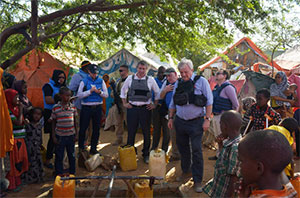 UN Emergency Relief Coordinator Visits Somalia. Credit: UN Photo/Tobin Jones
In recent years, conflicts have broken out across the world with no sign of slowing down or stopping. In times like this, millions of people globally are in dire need of humanitarian aid. Famine, warfare, natural disasters, and economic decline plague a host of nations, including Palestine, Sudan, Chad, Lebanon, and Haiti, to name a few. Humanitarian aid provides millions of people with critical services including healthcare, food, clean drinking water, psychosocial support, housing, and access to education. UN agencies such as the UNDP, UNICEF, the World Food Programme (WFP), UNHCR, UNRWA, and UNEP work with the UN Office for the Coordination of Humanitarian Aid (OCHA) and local organizations to come up with the best possible strategies to support affected communities. At the same time, humanitarian aid and those working on the frontlines are consistently threatened by both actors directly involved in conflict as well as those who are meant to contribute to the international humanitarian regime at large. The near-collapse of United States international aid structures in 2025, including the termination of 83% of USAID’s 6,300 global initiatives, has left millions of people without access to vital humanitarian assistance. 98 million people in 2025, only 65% of people targeted for humanitarian assistance, received the help they needed. In contrast, 123 million people received some form of humanitarian assistance in 2024, and OCHA’s 2026 Global Humanitarian Overview estimates that 239 million people are in need of assistance in 2026. IPS is well-positioned to discuss current initiatives to provide aid and relief through in-depth reporting and opinion content.

The Week with IPS

NEXT STOP - SDGs
Tracking global progress towards a sustainable world
Tracking global progress towards a sustainable world
