Languages
Saturday, October 10, 2026



News and Views from the Global South
Education
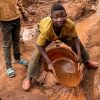
A Staggering 160 Million Are Victims of Child Labour
Among the many daunting issues leaders of the G7 will have to discuss in their upcoming summit in idyllic Cornwall on June 11-13, child labour won’t be on the official agenda.
Global Progress Against Child Labour “Ground to a Halt” – UN Report
Malleshwar Rao, 27, spent his early years as a child labourer in the southern Indian city of Hyderabad. Soon after finishing school at a local ashram, where the children of poor parents, sex workers and orphans studied, the 9-year-old would rush to a local construction site to join his parents who would be toiling in the harsh tropical sun to construct buildings as daily wage earners. The supervisor would assign Rao simpler tasks and his extra income would help his parents feed him and his younger brother.
From Climate Change to Covid, Are We Ready to Deal with Disasters?
In the last 20 years, disasters affected over 4 billion people. At global level we witness on average one sweeping disaster a day, the majority of which are floods and storms. From the Covid-19 pandemic to climate change, calamities are taking new shapes and sizes, infiltrating every dimension of society. From the emotional to the political, how do we deal with disasters? How can we create a whole-of-society approach to disaster risk reduction?
Education Cannot Wait Investments Transform Children’s Lives in Somalia
Ten-year-old Sabah Abdi from Ali Isse, a small rural village on the Somaliland-Ethiopian border, scored well in her recent exams, placing third overall in her local village school of 400 students. Yet is was just three years ago Sabah spent her days helping with household chores and herding goats, rather than studying because her pastoralist family could not afford her school fees.
Time to End Generational Injustice with a ‘Global Blue New Deal’ to Protect Oceans
Increasingly, youth are rising up to declare that they've had enough of the cyclical exploitation of the environment that jeopardizes their own future.
ECW Interviews Save the Children Uk’s Chief Executive Kevin Watkins
Kevin Watkins is the Chief Executive of Save the Children UK. Kevin joined Save the Children in September 2016, after spending three years as Executive Director of the Overseas Development Institute.
Why Investing in Women Is Key to Achieving the Sustainable Development Goals
Last year, the Asia-Pacific region recorded its worst economic performance in decades. With the pandemic far from over, the region’s recovery is slow, fragile and highly uneven both across and within countries. As the region struggles to recover, how can countries rebuild their economies and revive their development?
Africa’s Forgotten Crisis
A few weeks ago, I traveled with the UN High Commissioner for Refugees Filippo Grandi to the Modale refugee site in the Nord-Ubangi province of the Democratic Republic of the Congo (DRC). What we witnessed there was a profound humanitarian crisis that has left 4.7 million children and youth in need of urgent, life-saving, life-changing educational support.
Pandemic Relief Policies Need More Resources, Better Design
Pandemic relief measures in developing countries have been limited by modest resources, fear of financial market discipline and policy mimicry. COVID-19 has triggered not only an international public health emergency, but also a global economic crisis, setting back decades of uneven progress, especially in developing countries.
Motorcycle Diaries with a Twist
Four women, two motorbikes, 64 districts and a journey of a lifetime, this is the story of Dr. Sakia Haque from Bangladesh. In November 2016, Dr Haque co-founded “Travelettes of Bangladesh - Bhromon Konya,” a women's only group, with the motto of “empowering women through travelling.” This platform is not just an ordinary online travel group, but it is a platform of connection, sisterhood and networking of almost 60,000 girls and women in Bangladesh that empowers them by teaching them to raise their voices and encourages them to step out of their comfort zones and to “go see the world”.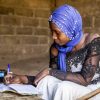
Radio-Based Learning Gets Its Day in the Sun in Mali
Persistent insecurity in central and northern Mali has helped fuel a protracted humanitarian crisis, disrupting access to education, health and other services, and displacing more than 300,000 people – more than half of them children.
COVID-19 Widens Learning Gap For Girls In Rural Ghana
Seventeen-year-old Muniratu Adams, a form two student of the Jeyiri D/A Junior High School at Funsi in the Wa East District of the Upper West Region of Ghana, is fortunate to have returned to school this January after the long COVID-19 shutdown.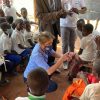
Q&A: Reflecting on Five Years of Educating Children in the Throes of Crises, Emergencies and Displacement
Education Cannot Wait (ECW), the global fund that brings teaching and learning to children in emergencies and protracted crises, is observing five years of reaching boys and girls in some of the world’s hardest-hit conflict and disaster zones.
– Jamaica Failing to Cope with Plastic Waste –
On the occasion of World Environment Day, 5 June 2021, drawing from IPS’s bank of features and opinion editorials published this year, we are re-publishing one article a day, for the next two weeks. The original article was published on January 20 2021

Women Leading Somalia’s Health System
Somalia is one of the most complex regions of the world, with threats and political instability, extreme weather conditions, movement of internally displaced people (IDPs), decades of conflict, poverty-related deprivation, poor health and communicable diseases that are killing people. There is a constant risk of gender violence making women, children and members of minority groups particularly vulnerable, and more so during displacement or while seeking work. Three decades of civil war and instability have weakened Somalia’s health system and contributed to it having some of the lowest health indicators in the world. The COVID-19 pandemic has added yet another strain on its tremendously fragile infrastructure presenting unexpected challenges and dilemmas.
Where are the Women? How Pandemic Decisions are Ingraining Global Gender Bias
There are teams of experts around the world right now tackling the coronavirus pandemic, providing pathways to put an end to this deadly global scourge and charting the course for recovery.
Reimagining Education with Imagination
The month of May marks mental health awareness month or mental health awareness week in several countries around the world. Many people will be reading posts and blogs about the importance of getting more sunshine and exercise to avoid the blues, about ways to deal with the stress of the pandemic, about dealing with everyday challenges that disrupt our striving for happiness.
Pakistanis in Italy: Against All Odds
We met 22-year old Ali B. in a park in Rome’s city center on a rather cold and windy April evening. We could not share a meal, or even a coffee, as all restaurants were shut due to continuing COVID-19 restrictions. He had travelled down from Cerveteri (a small town about 50km north of Rome) where he works for an old couple. They provide boarding and lodging as well as a decent salary and social security benefits. In return, he has to cook for them and look after the kitchen.
ECW Interviews Melissa Fleming, United Nations Under-secretary-general for Global Communications
Melissa Fleming is the United Nations Under-Secretary-General for the Department of Global Communications – taking up her functions as of 1 September 2019 – and oversees operations in 60 countries and platforms that reach millions of people in multiple languages.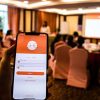
The Illusion of Digital Inclusion in the Post-COVID World
We are living through a decisive moment. The COVID-19 pandemic’s devasting impact is reaching every corner of the world. As we look back at this period, we will see history divided into a pre-COVID and a post-COVID world.
Africa Goes Digital
In rebuilding after COVID-19, policymakers must invest in innovative technology to leapfrog obstacles to inclusive development. Africa has enjoyed strong economic growth for most of the 21st century, mainly because of robust global demand for primary commodities.« Previous Page — Next Page »





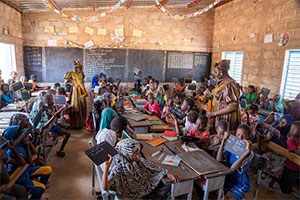 Two teachers work in a classroom in Forces Vives School in Dori, Burkina Faso. Credit: UNICEF/UNI978361
Safe and uninterrupted education is a fundamental right for all children. Education is paramount to global development, as it has been proven that investing in education – especially for girls and children – contributes significantly to economic growth and prosperity. Although more than 1 billion children go to school, many are subjected to conditions that are not conducive to a proper learning environment, including makeshift facilities, a lack of supplies, violence in classrooms, inadequate sanitation, untrained instructors, and widespread school closures. Since 2015, there have been immense gains in education with an increase of 109 million children in school. However, as of 2023, 272 million children are still out of school.
High poverty levels in developing countries also impede children’s access to a proper education. For example, from the early to mid 2000s, Sub-Saharan African nations witnessed a dramatic decline in trained teachers due to inadequate funding in the education sector. Furthermore, major cuts to United States international aid threaten an estimated 23 million additional children's access to education, as USAID‑funded school programmes across Africa and Asia face closure.
Various other factors contribute to the decline of education, notably hunger, which has increased as conflict and climate change interfere with global food production and dissemination. Meanwhile, certain social and cultural practices also impede children’s access to education, with gender inequality, discrimination, child labour, and child marriages preventing millions of children from attending school. Economic conditions such as the inaccessibility of higher education also affect disenfranchised communities across the world. In extreme situations, such as warfare where educational facilities are destroyed in their totality, notably in Gaza and Sudan, entire generations of children might grow up without access to education. Rebuilding educational infrastructure is a long and arduous process, especially when violence persists across generations, and this significantly stunts the development of societal prosperity and stability.
IPS is dedicated to telling the shocking truths about worldwide education through impassioned opinion pieces and comprehensive articles, highlighting global issues that impede worldwide education and the courses of action being taken by organizations such as UNICEF and Education Cannot Wait.

The Week with IPS

NEXT STOP - SDGs
Tracking global progress towards a sustainable world
Tracking global progress towards a sustainable world
