Languages
Saturday, October 10, 2026



News and Views from the Global South
Education

To Prevent Teenage Pregnancies in Sub Saharan Africa, It Takes a Whole Village to Raise a Child
Honorine Meda is 23. Cycling through her hometown of Dissin, in Burkina Faso’s verdant southwest, she smiles, waves and stops to chat with one of the girls she counsels.
Child Rights’ Experts Warn that Displaced Children and Young People Risk Being Wiped Out of the Education System
The difficulties in accessing education faced by children and young people forcibly displaced from their homes were today laid bare in a virtual high-level roundtable convened by UNHCR, the UN Refugee Agency, Education Cannot Wait (ECW), the UK and Canada.
Honour Killings – Religion or Culture?
There is nothing honourable about murder. And murdering someone of your own family, your own child - a daughter, someone you held in your arms and rocked to sleep when they were babies? This is such a horrifying crime that there are no words to describe it – certainly not the word Honour. And yet it happens! It happens in Pakistan and to the shame of all of us in the diaspora, it has been brought to Italy.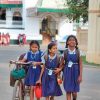
It’s Time To Reopen Primary Schools in India
“The government should open schools, even if it’s for an hour, to facilitate some student-teacher interaction. Most teachers feel that students should be encouraged to come to school.
Papua New Guinea Battles COVID-19 and Health Workers’ Vaccine Scepticism
Papua New Guinea (PNG), like many other Pacific Island countries, successfully held COVID-19 at bay last year, aided by early shutting of national borders. However, by March this year, the pandemic was surging in the most populous Pacific Island nation, and by July, it had reported 17,282 cases of the virus and 175 fatalities.
Combating COVID-19 and Ensuring No One is Left Behind
If the world wants to beat back the COVID-19 pandemic and ensure no one is left behind in the recovery, two issues thrown into sharp relief by the pandemic need attention: digitalization and regional cooperation.
Nothing About Us, Without Us, Asian Youth Tell Parliamentarians
Youth advocates from Asian countries called for an overhaul of a system that excluded young people from participation in policymaking. During an interaction with parliamentarians from 23 countries, youth representatives considered an enabling political framework to be the most crucial reform required to remove inequities.
Bridging the Gap and Crossing the Bridge
It may be a challenge, but it is also an absolute necessity: bridging the gap between international law and reality and quickly crossing the bridge to reach all crisis-affected children and youth left furthest behind. Inclusive and equitable quality education is the right of every girl and boy and the objective of Sustainable Development Goal 4.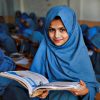
Investing in Education as Driver for All Our Futures
Never before have so many children been out of school. 1.6 billion children and young people – more than 90% of students worldwide – have been impacted by school closures during the pandemic. Hundreds of millions of those children have gone without any learning at all, deprived of all the benefits that being in school provides.
ECW Interviews Jan Egeland, Secretary General of the Norwegian Refugee Council
Jan Egeland has been the Secretary General of the Norwegian Refugee Council since August 2013, a role which oversees the work of the humanitarian organisation in over 30 countries affected by conflict and disaster.
Dalit and Muslim Indian Women Leading Change in South Sudan
Two Indian women, one Muslim and the other Dalit (former untouchables), separated by culture and geography, have found common ground in leading change in conflict-torn South Sudan.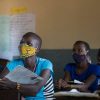
Education Cannot Wait Develops Groundbreaking Curriculum for Crisis-Affected Adolescents – Derived from Viktor Frankl’s Seminal Work ‘Man’s Search for Meaning’
Education Cannot Wait (ECW) – the United Nations global fund for education in emergencies – is developing a curriculum derived from the seminal work of world-renowned psychiatrist and Holocaust survivor Viktor Frankl’s “Man’s Search for Meaning”, and its related branch of psychotherapy, Logotherapy. The curriculum, which has been preliminary field-tested in Uganda, aims to fully tap into the resilience of girls and boys living in crisis settings.
Acceleration Rights Plan for Gender Equality Mooted at Equality Forum
As the global gathering for gender equality, the Generation Equality Forum, kicks off in Paris on June 30, 2020, IPS conducted an exclusive interview with Katja Iversen.
Education Cannot Wait for Refugee Children in Crisis, says Yasmine Sherif
With financing, the number of out-of-school refugees could be reduced to zero, Yasmine Sherif, Director of Education Cannot Wait (ECW) says, as the world commemorates World Refugee Day.
World Refugee Day
"Education will prepare refugee children and youth for the world of today and of tomorrow. In turn, it will make the world more resilient, sustainable and peaceful." ~ Filippo Grandi, UN High Commissioner for Refugees
Central Sahel: Ground Zero in Tackling Climate Change Through Education
The climate crisis is amplifying the effects of instability and violence in the world’s poorest countries. Nowhere is this more visible than in Africa’s Central Sahel region, where increasing temperature, floods, droughts and other climate change-induced disasters are triggering conflicts, displacement, and pushing girls and boys into the shadows.
Developing Country Health Professionals Sidelined in Canadian Healthcare
In Canada, we are fortunate to have many talented newcomers eager to contribute to the country, including thousands of doctors from Africa, Asia and the Middle East who meet Canadian standards but are blocked from becoming practicing physicians. These doctors are Canadian citizens and permanent residents with recognized training and experience.
The Marginalisation of Africa
Is Africa marginalised in contemporary economics and politics, and in contemporary economic and political research? Impressions gathered over the years and a bit of evidence (much more could be assembled) indicate that it is. I would distinguish three types of marginalisation: objective, objectified and subjective marginalisation.
Letter from Rome – Italy at the Crossroads
Italy, as other countries, has been struggling to balance the health and economic challenges posed by COVID-19. Controlling the spread of the virus implied restrictions on economic activity, on school and college attendance, and on personal movement. It also had to deal with the economic and social implications of a fall of almost 10% in GDP. This has been hard for a country which, even before the pandemic, was one of the slowest growing economies in Europe, with unemployment, especially among young people in the South of the country, at alarming levels.
The Real Price of Marriage in South Sudan
August of this year will mark the one-year anniversary of the end of South Sudan’s civil war, yet recent surges of violence suggest that peace is far from being realized. These attacks by armed groups include instances of sexual violence against women and girls.
Justice Delayed Is Justice Denied: Their Education Cannot Wait
The right to an inclusive quality education is not a privilege. It is a human right. Delaying or ignoring the right to an education equals failing to protect human rights. The longer we wait, the less we contribute to justice.« Previous Page — Next Page »





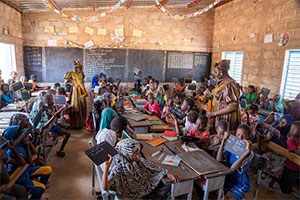 Two teachers work in a classroom in Forces Vives School in Dori, Burkina Faso. Credit: UNICEF/UNI978361
Safe and uninterrupted education is a fundamental right for all children. Education is paramount to global development, as it has been proven that investing in education – especially for girls and children – contributes significantly to economic growth and prosperity. Although more than 1 billion children go to school, many are subjected to conditions that are not conducive to a proper learning environment, including makeshift facilities, a lack of supplies, violence in classrooms, inadequate sanitation, untrained instructors, and widespread school closures. Since 2015, there have been immense gains in education with an increase of 109 million children in school. However, as of 2023, 272 million children are still out of school.
High poverty levels in developing countries also impede children’s access to a proper education. For example, from the early to mid 2000s, Sub-Saharan African nations witnessed a dramatic decline in trained teachers due to inadequate funding in the education sector. Furthermore, major cuts to United States international aid threaten an estimated 23 million additional children's access to education, as USAID‑funded school programmes across Africa and Asia face closure.
Various other factors contribute to the decline of education, notably hunger, which has increased as conflict and climate change interfere with global food production and dissemination. Meanwhile, certain social and cultural practices also impede children’s access to education, with gender inequality, discrimination, child labour, and child marriages preventing millions of children from attending school. Economic conditions such as the inaccessibility of higher education also affect disenfranchised communities across the world. In extreme situations, such as warfare where educational facilities are destroyed in their totality, notably in Gaza and Sudan, entire generations of children might grow up without access to education. Rebuilding educational infrastructure is a long and arduous process, especially when violence persists across generations, and this significantly stunts the development of societal prosperity and stability.
IPS is dedicated to telling the shocking truths about worldwide education through impassioned opinion pieces and comprehensive articles, highlighting global issues that impede worldwide education and the courses of action being taken by organizations such as UNICEF and Education Cannot Wait.

The Week with IPS

NEXT STOP - SDGs
Tracking global progress towards a sustainable world
Tracking global progress towards a sustainable world
