Languages
Friday, October 9, 2026



News and Views from the Global South
Education
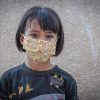
Education Cannot Wait Enhances Mental Health and Psychosocial Support for Crisis-affected Children and Youth in the Middle East and North Africa
Approximately 100 million children are out of school in the Middle East and North Africa as a result of the COVID-19 pandemic, armed conflicts and protracted crises. To provide these girls and boys with the mental health and psychosocial support they need to deal with the trauma and stress of these multiplying crises, Education Cannot Wait (ECW) announced today US$250,000 in new funding to support the Norwegian Refugee Council’s Better Learning Programme in the Middle East.
Unlearning During a Lockdown
Children all over the world are having tough times while coping with the consequences of the pandemic but the circumstances affecting them in the Philippines are even more daunting.
Refugee Children Explain How Education Helped Put Their Trauma Behind Them
Eighteen-year-old Chuol Nyakoach lives in the Nguenyyiel Refugee Camp in Gambella, Ethiopia. Chuol is grateful that despite the trauma she has already experienced in her young life, she is able to continue her education in the refugee camp. Learning has given her a reason to wake up every day.
UN Women Launches New Programme to Foster Economic Participation in Care Industry
The lockdowns and illnesses brought on by the COVID-19 pandemic have dramatically increased the need to care for children, the elderly and the sick. And in societies where gender inequality and biased norms persist, most of this burden has fallen on women, many of whom have had to leave their regular jobs with no idea of when they can return.
Sacred Words
is all that you can't say.
Years gone by and still
words don't come easily,
like forgive me, forgive me.
Tracy Chapman

Q&A: Drawing Attention to the Crisis in the DRC’s Education Sector
Yasmine Sherif, Director of Education Cannot Wait (ECW), has sounded the alarm on the need for Central African Republic refugee children and youth to access quality education during her visit to a refugee site in the Democratic Republic of the Congo (DRC) from Apr. 20-23.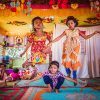
Addressing the Impact of COVID-19 on Infants and Young Children
Conventional wisdom is that the health of young children is not at great risk from COVID-19, but, in the Global South, the space constraints imposed on young children by the pandemic pose a significant risk to the stimulation on which brain development thrives. Early childhood development is further jeopardized by the pandemic’s impact on caregivers.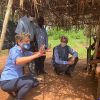
Education Cannot Wait Calls on World Leaders to Urgently Fund Education in the Democratic Republic of the Congo with US$45.3 Million
Education Cannot Wait (ECW) Director Yasmine Sherif today called on world leaders to urgently support the children and youth in desperate need of education support in the Democratic Republic of the Congo (DRC), affected by new emergencies and multiple protracted crisis.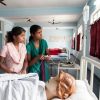
Challenges with Skill Development Programmes During the Pandemic
India’s evolving Technical and Vocational Education and Training ecosystem (TVET) faced many challenges during the COVID-19 pandemic. Because of the national lockdown, organisations had to remain shut for 7-8 months, until September 2020.
Invest in the Humanity of Those Left Furthest Behind
“To deny people their human rights is to challenge their very humanity,” Nelson Mandela once said. Today, the humanity of 128 million children and adolescents living in countries is impacted by armed conflicts, forced displacement and climate-induced disasters, where virtually every single one of their human rights are being challenged. The most central one, and in all too many cases, their only hope - their inherent right to an inclusive quality education, as enshrined in international human rights conventions - is brutally challenged, if not also willfully ignored or denied.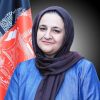
Education Cannot Wait Interviews Afghanistan’s Minister of Education Rangina Hamidi
H.E. Rangina Hamidi is the first female Minister of Education of Afghanistan in the last 30 years. Minister Hamidi was born in Kandahar, Afghanistan, fled with her family to Pakistan in 1981 during the Soviet Occupation and eventually immigrated to the United States. She attended high school in the United States and received her B.A. degree with a double major in Religion and Gender Studies at the University of Virginia.
Rohingya Children Find Refuge in Education
Although learning centres in Cox’s Bazar Kutupalong Refugee Camp are closed because of the COVID-19 pandemic, Mariom Akhter, a Rohingya mother of four, is grateful not only for the schooling her children have had but the training sessions she as a parent was able to attend. The skills she learnt has helped her assist her children with their education at home in a crisis. It’s something she’s likely needed to help her children with over the last few weeks after a Mar. 22 fire spread through the camp, destroying the shelters of at least 45,000 people as well as important infrastructure, including hospitals, learning centres, aid distribution points and a registration centre. At least 15 people were reported dead and 400 missing.
Overcoming COVID-19: World Leaders Must Finance a More Equal World to Beat Pandemics
Leaders at this year’s World Bank/IMF Spring Meetings (April 5-11) will determine how best to recover from one of the biggest crises the institutions have faced since their founding in 1944—COVID-19’s impact and its economic aftermath.
Helping Youth Agribusiness Keep Pace with Fast Growing Africa
From small towns to big cities, sub-Saharan Africa has the fastest urban growth rate in the world. The continent’s population is expected to double by 2050 with the youth representing 60% of the overall population. The UN Department of Global Communication, for example, projects that for the next 15 years urban growth is set to double for several African cities: Dar es Salaam will reach over 13 million inhabitants and Kampala will exceed seven million.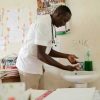
A Post-COVID-19 Recovery will not be Possible if Water, Sanitation & Hygiene are not High on the Agenda
This World Health Day, G20 finance ministers will meet in Rome, Italy, to discuss how they will build back from the pandemic. The global economy is and concerted effort, coordination and imagination is needed to enable not only a worldwide recovery but also to ensure that the world’s poorest people are not left behind.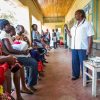
On World Health Day, a Call for Equity, Justice & the End of Paternalism
The past year has forced many of us to address difficult truths about how we treat and take care of each other — among them is a reckoning with racism and injustice.
Women and Girls to the Front
Women hold up half the sky. Some years ago, Sarah al-Amiri, a young Emirati engineer, had a fixed gaze beyond the sky and towards our galaxy. “Space was a sector that we never dared to dream growing up,” she noted.
Fulfilling the Right to Education for Children Left Furthest Behind in Burundi’s Crisis
On 5 December 2019, heavy rainfall triggered landslides in Cibitoke province in northwestern Burundi. Twenty-seven people were killed and almost 2,000 were forced to relocate. Along with the lives and homes lost, the school in the Nyamakarabo village was also destroyed. Today, some children in the village walk over two hours a day to attend an over-crowded school in a neighboring village. Others have yet to step back in a classroom.
World Autism Awareness Day – 2 April 2021
 Autism Spectrum Disorder is a complex condition that remains misunderstood.
The effects of ASD and the severity of symptoms vary so much between individuals.
Autism Spectrum Disorder is a complex condition that remains misunderstood.
The effects of ASD and the severity of symptoms vary so much between individuals.

Covid19 a Wake-up Call to Address Development Fault Lines in Asia and the Pacific
The world is emerging from the biggest social and economic shock in living memory, but it will be a long time before the deep scars of the COVID-19 pandemic on human well-being fully heal. In the Asia-Pacific region, where 60 per cent of the world lives, the pandemic revealed chronic development fault lines through its excessively harmful impact on the most vulnerable. The United Nations Economic and Social Commission for Asia and the Pacific (ESCAP) estimates that 89 million more people in the region have been pushed back into extreme poverty at the $1.90 per day threshold, erasing years of development gains. The economic and educational shutdowns are likely to have severely harmed human capital formation and productivity, exacerbating poverty and inequality.
Identities
« Previous Page — Next Page »





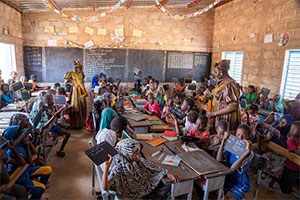 Two teachers work in a classroom in Forces Vives School in Dori, Burkina Faso. Credit: UNICEF/UNI978361
Safe and uninterrupted education is a fundamental right for all children. Education is paramount to global development, as it has been proven that investing in education – especially for girls and children – contributes significantly to economic growth and prosperity. Although more than 1 billion children go to school, many are subjected to conditions that are not conducive to a proper learning environment, including makeshift facilities, a lack of supplies, violence in classrooms, inadequate sanitation, untrained instructors, and widespread school closures. Since 2015, there have been immense gains in education with an increase of 109 million children in school. However, as of 2023, 272 million children are still out of school.
High poverty levels in developing countries also impede children’s access to a proper education. For example, from the early to mid 2000s, Sub-Saharan African nations witnessed a dramatic decline in trained teachers due to inadequate funding in the education sector. Furthermore, major cuts to United States international aid threaten an estimated 23 million additional children's access to education, as USAID‑funded school programmes across Africa and Asia face closure.
Various other factors contribute to the decline of education, notably hunger, which has increased as conflict and climate change interfere with global food production and dissemination. Meanwhile, certain social and cultural practices also impede children’s access to education, with gender inequality, discrimination, child labour, and child marriages preventing millions of children from attending school. Economic conditions such as the inaccessibility of higher education also affect disenfranchised communities across the world. In extreme situations, such as warfare where educational facilities are destroyed in their totality, notably in Gaza and Sudan, entire generations of children might grow up without access to education. Rebuilding educational infrastructure is a long and arduous process, especially when violence persists across generations, and this significantly stunts the development of societal prosperity and stability.
IPS is dedicated to telling the shocking truths about worldwide education through impassioned opinion pieces and comprehensive articles, highlighting global issues that impede worldwide education and the courses of action being taken by organizations such as UNICEF and Education Cannot Wait.

The Week with IPS

NEXT STOP - SDGs
Tracking global progress towards a sustainable world
Tracking global progress towards a sustainable world
