Languages
Saturday, October 17, 2026



News and Views from the Global South
Education
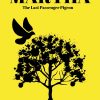
What a Little Pigeon Could Teach Our World
Over 100 years ago a little brown passenger pigeon named Martha died in the Cincinnati Zoo. She was the last of her breed. Just like that, in an instant, a bird species that had once numbered in the billions was wiped out forever.
Boom or Bust -Education Will Determine Africa’s Transformation
August 12, marks International Youth Day, and the theme for this year is ‘making education more relevant, equitable and inclusive’, is particularly apt for Africa. Consider this. Every 24 hours around 35,000 African youth are looking for work.
Free Speech and the Hong Kong Protests
Sometime in the summer of 1974, I was leaning against the gunwale of the ferry between Calais and Dover, watching the moonlight streaming dark waters. When I turned to the left I found that a Chinese lady also looked out over the calm sea. What she told me changed my world view.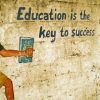
The Role of Education in Breaking down the Walls of Ignorance
Education constitutes an important building block to enhance inter-faith dialogue, cultural exchange between ethnic and linguistic groups, counter violent extremist narratives and promote peaceful and inclusive societies. The founder of Modern India, Mahatma Gandhi, once said:
The Precipitous Barbarisation of Our Times
When all is said and done, it appears that Thomas Hobbes, the 17th century English philosopher who had a dire vision of man, was not totally wrong. From the frivolous to the serious, in just a week we have had four items of news which would not happen in a normal world. An English porn beauty with 86,000 followers on social media has put bottles of the water she bathes in on sale at 30 pounds a bottle and has sold several thousand bottles.
It Takes Listening to Children to End Violence
We see many challenges that affect children around the world. Child marriage, corporal punishment, voting ages, air pollution, teachers going on strike…
Finland’s Education System Leads Globally
Finland has garnered attention for its top-notch education, and the newly appointed Minister of Education for Finland is planning to continue with the success of her country’s education system through various and innovative approaches.
US Leads Donor Funding to Fight HIV/AIDS Amidst Overall Decline
Since 2010, donor funding to fight HIV/AIDS in low-and middle-income countries has dropped significantly, according to a new report released here.
How Governments Still Allow Violence Against Children
Despite what you might have heard, things are getting better, every year. We are making amazing progress on fighting diseases, reducing the preventable deaths of children, and investing huge amounts to advance medicine and knowledge and to create better living conditions.
Community Action Is a Critical Weapon in the War on Terror
During the egregious Dusit attack, Kenya demonstrated remarkable, resilience, solidarity and stood firm against the terrorists.
Chilean Schools Recycle Greywater to Combat Drought
Children from the neighboring municipalities of Ovalle and Río Hurtado in northern Chile are harvesting rain and recycling greywater in their schools to irrigate fruit trees and vegetable gardens, in an initiative aimed at combating the shortage of water in this semi-arid region.
Kenya’s March Towards Demographic Dividend with Investments in Health Sector Partnering with The Netherlands
Demographic dividend is a term which is increasingly preoccupying discussions among development economists and the donor community in general in Kenya. The term refers to countries with the greatest demographic opportunity for development and those that are ushering in a period in which the working-age population has good health, quality education, decent employment and a lower proportion of young dependents. Smaller numbers of children per household generally lead to larger investments per child, more freedom for women to enter the formal workforce and more household savings for old age. When this happens, the national economic payoff can be substantial, and this is the demographic dividend.
An Economic No-Brainer: Empower Women, Empower Economies
As the first woman to lead the International Monetary Fund (IMF), and a leader in advocating for increased investment and action toward gender equality, Christine Lagarde helps Deliver for Good explore the steps needed to build sustainable financing & economic opportunities for girls and women.
Cities of Light are Providing Safe Havens to Refugees
While cities around the world have been providing safe havens to refugees, a few US cities in the Upstate New York region have been integrating refugees and asylum-seekers into their communities.
Afghan Schools Left Unprotected by Government & International Community
Attacks on Afghan schools tripled between 2017 and 2018, according to a UNICEF report released last week: from 68 attacks to 192 in 2018. This figure seems unlikely to decrease as the Afghan government prepares to use schools once again for political activity in the upcoming election.
What Standardised Testing Doesn’t Tell Us About Learning
When we look at learning outcomes for children, we only look at standardised tests, ignoring any indigenous knowledge, language, or problem solving strategies they might have.
Transforming Society, Financialization Destroys Social Solidarity
Finance has not stopped at dominating the real economy. The tentacles of finance have reached into significant, if not most parts of society. Gerald Davis characterises modern society, where finance is dominant, as a ‘portfolio society’, in which aspects of social life have been securitized and transformed into a kind of capital or investment to be managed.
The World Has Lost Its Compass
The terrible feeling I had on waking up and seeing the Italian voting results at the recent European elections was that my country was suddenly full of strangers. How could the majority of Italians reconfirm a government which has been the most inefficient in history, quarrelling on everything every single day and looking with total indifference to the looming problem of how to establish the next budget without clashing with the European Union or squeezing Italian citizens? Its irresponsible debate on the Italian finances has now led to a spread (difference of value) of 290 points with the Germans.
Exploitation and Acculturation
There are several means to make profitable use of other human beings, an endeavour that tends to turn others into tools by depriving them of their roots and self-respect. This happened in concentration - and work camps, where individuals were reduced to mere numbers.
Within a Parallel Universe – Monsters of the Dark Web
Human existence includes dreams, thoughts, ideas, music, stories, religion, and other immaterial ”things”. They constitute an important part of our habitat, i.e. the dwelling place of any living organism, consisting of both organic and inorganic surroundings. I learned this when I many years ago found myself among the undulating heights of Cordillera Central, which rise diagonally across the island of Hispaniola, shared by Haiti and the Dominican Republic.
SENT FOR HOUSE WORK: MANY TRICKED INTO SEX WORK
Little-educated women from remote villages find themselves sold as sex-workers in the Middle East, because neither the government nor recruiting agencies can authenticate foreign employers seeking housemaids.« Previous Page — Next Page »





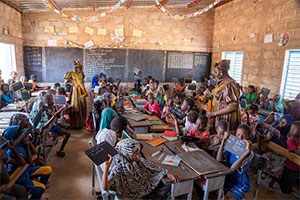 Two teachers work in a classroom in Forces Vives School in Dori, Burkina Faso. Credit: UNICEF/UNI978361
Safe and uninterrupted education is a fundamental right for all children. Education is paramount to global development, as it has been proven that investing in education – especially for girls and children – contributes significantly to economic growth and prosperity. Although more than 1 billion children go to school, many are subjected to conditions that are not conducive to a proper learning environment, including makeshift facilities, a lack of supplies, violence in classrooms, inadequate sanitation, untrained instructors, and widespread school closures. Since 2015, there have been immense gains in education with an increase of 109 million children in school. However, as of 2023, 272 million children are still out of school.
High poverty levels in developing countries also impede children’s access to a proper education. For example, from the early to mid 2000s, Sub-Saharan African nations witnessed a dramatic decline in trained teachers due to inadequate funding in the education sector. Furthermore, major cuts to United States international aid threaten an estimated 23 million additional children's access to education, as USAID‑funded school programmes across Africa and Asia face closure.
Various other factors contribute to the decline of education, notably hunger, which has increased as conflict and climate change interfere with global food production and dissemination. Meanwhile, certain social and cultural practices also impede children’s access to education, with gender inequality, discrimination, child labour, and child marriages preventing millions of children from attending school. Economic conditions such as the inaccessibility of higher education also affect disenfranchised communities across the world. In extreme situations, such as warfare where educational facilities are destroyed in their totality, notably in Gaza and Sudan, entire generations of children might grow up without access to education. Rebuilding educational infrastructure is a long and arduous process, especially when violence persists across generations, and this significantly stunts the development of societal prosperity and stability.
IPS is dedicated to telling the shocking truths about worldwide education through impassioned opinion pieces and comprehensive articles, highlighting global issues that impede worldwide education and the courses of action being taken by organizations such as UNICEF and Education Cannot Wait.

The Week with IPS

NEXT STOP - SDGs
Tracking global progress towards a sustainable world
Tracking global progress towards a sustainable world
