Languages
Sunday, November 8, 2026



News and Views from the Global South
Energy
ENVIRONMENT-BURUNDI: Urban Waste Becomes Urban Fuel
Several months ago, residents of the Burundian capital, Bujumbura, were struggling with disposal of household waste. The Municipal Technical Services (Services techniques municipaux, SETEMU) weren't able to deal with all the refuse - and health conditions in the city were deteriorating.CUBA: Sugarcane – Source of Renewable Energy, But Not Ethanol
Like other Latin American countries, Cuba is focusing on the development of renewable energy sources. But unlike Brazil, a leader in biofuels, this Caribbean island nation has ruled out the production of ethanol fuel based on sugarcane, because of President Fidel Castro's opposition to using food crops to produce biofuel on a large scale.ENERGY-MALAWI: Technology to Save Forests
Malawi's utilisation of energy resources is heavily dominated by firewood, which provides 93 percent of all energy needs. Current annual household consumption of firewood and charcoal are at 7.5 million tons, exceeding sustainable supply by 3.7 million tons.
G8: Sailing Against Ecological Debt
As leaders of the world's eight richest countries prepare to meet in Germany's Baltic resort of Heiligendamm next week, a Fair Trade ship has left the shores of Finland and is on the high seas heading towards the summit venue.TRADE-AFRICA: Europe Looks to Encourage Diaspora Investment
Africa's robust diaspora in Europe will soon have an investment facility to help people make direct investments to better develop their home countries thanks to a new study by the Brussels-based Africa Caribbean Pacific (ACP) Business Climate (BizClim) facility.CLIMATE CHANGE: Overcoming the Ostrich Effect
The vast majority of North Americans now declare that they want action on climate change. But whether people are truly willing to embrace "carbon-neutral" lifestyles - including giving up their gas-guzzling sports utility vehicles - remains an open question, say experts.TRADE-AFRICA: Electricity Producers Get Ready to Power Up
European investment in Africa's electricity markets may soon get the boost it needs, from infrastructure to integration.SOUTH AFRICA: Cape Floral Kingdom as Vulnerable as It Is Biodiverse
Climate change is threatening the Cape Floral Region, a World Heritage Site in South Africa's Western Cape province, say environmentalists.ICELAND: Change – But How Much? – in the Wake of Elections
There has been a change in the make-up of Iceland's ruling coalition after the recent parliamentary elections, which bodes for a new approach to health, education and farm policy. But how much change is in store regarding the environment, energy production and the Iraq war remains unclear.TRADE-AFRICA: How to Turn The Curse of Oil Into a Blessing
Africa's abundance in natural resources, especially oil, has been called a curse because of the fierce global thirst that exists for these assets.ENVIRONMENT: China – New Promoter of Mega Dams
China is emerging as a new backer of massive dam projects around the globe, giving rise to fears for pristine natural resources and the cultural heritage of river peoples.
ENVIRONMENT: Ecuador Seeks Aid Not to Exploit Amazon Oil
A novel proposal by Ecuador is testing world leaders' commitment to fight global warming and preserve the biodiversity of the Earth.ENVIRONMENT-AFRICA: Getting Most of the Heat From Global Warming
Nobody will escape the effects of climate change but the poor in Africa will suffer the most because of decreasing food production and the heightened prevalence of diseases such as malaria, warn environmentalists, church leaders and researchers.BOLIVIA: Will Nationalisation Scare Off Foreign Investment?
Foreign investment in Bolivia fell to 237 million dollars in 2006 as part of a continued tendency that is jeopardising economic growth, warn some analysts, who blame the phenomenon on the government's strategy of placing firms that were privatised in the 1990s back in state hands.ANGOLA: Oil-Driven Boom Set to Take on Nuclear Flavour
Like the phoenix, Angola - sub-Saharan Africa's second largest oil producer after Nigeria - has risen from the ashes of decades of armed conflict, and analysts are talking about its potential to one day become an economic, political and military powerhouse in Africa.ENVIRONMENT: Momentum Grows to “Ban the Bulb”
On Feb. 20, Australia announced it would phase out the sale of inefficient incandescent light bulbs by 2010, replacing them with highly efficient compact fluorescent bulbs that use one-fourth as much electricity.POLITICS-US: Elite Group Urges Embracing Angola
Despite Angola's poor human rights record, a widening gap between rich and poor, and a reputation for world-class corruption, an elite U.S. group is calling for Washington to strengthen ties - including military ties - with Luanda, Africa's second-biggest oil exporter.CLIMATE CHANGE: We Need Trees And More
Reforestation, new energy sources and technologies, and a substantial improvement in energy efficiency can be crucial elements in a worldwide campaign to reduce greenhouse gas emissions and stall global warming, environment experts say.ENVIRONMENT: Oxy Faces Lawsuit Threat Over Amazon Toxins
Indigenous communities in the Peruvian Amazon are warning the U.S. oil giant Occidental Petroleum (Oxy) that it could soon face a lawsuit in the United States if it fails to clean up toxic waste in their tropical rainforest.GUYANA-SURINAME: Oil Riches Await “Law of Sea” Ruling
A much anticipated decision by a world court that will draw - once and for all - a maritime border between Guyana and Suriname could dramatically change the fortunes of the two nations if predictions about the abundance of oil and natural gas deposits prove true.BULGARIA: Addicted to Russia’s Energy
A member of the European Union since Jan 1 2007, Bulgaria still takes its cues on energy from Russia.« Previous Page — Next Page »





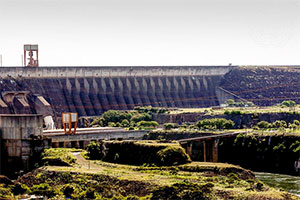 UN Power Plant, Paraguay. Credit: UN Photo/Evan Schneider
Energy has posed a great challenge for economies around the world. As global energy consumption skyrockets throughout the years, so does the need for sustainable solutions. The Sustainable Development Goals are essential in providing people with access to safe, affordable, and sustainable energy sources that minimize harm on the planet. Progress towards these goals opens the door for an advancement in modernization for communities on a global level and allows for a potential mitigation of tensions between nations.
The UN’s Summit of the Future in 2024 offered new initiatives that are being taken to achieve these goals, including a decreased reliance on fossil fuels, a switch to renewable energy sources, and improved climate financing.
IPS is well positioned to provide relevant, insightful, and compelling analysis of recent updates and measures being taken around the world to achieve a cleaner future.

The Week with IPS

NEXT STOP - SDGs
Tracking global progress towards a sustainable world
Tracking global progress towards a sustainable world
