Languages
Friday, October 9, 2026



News and Views from the Global South
Energy

Suburban Living the Worst for Carbon Emissions – New Research
Work, education, entertainment, or simply better connectivity all draw people to cities. By the end of this century around 85% of the world population are predicted to live in cities.
El Salvador’s Bitcoin Mining Proposal Faces Many Hurdles
That a country like El Salvador, poor and with many social needs, would embark on an effort to attract so-called bitcoin mining, which demands a huge amount of energy and does not generate large numbers of jobs, is an extravagance that many find hard to digest.
Threat of Blackouts in Brazil Highlights Climate Crisis
Twenty years after the blackout that prompted nine months of rationing to keep the power grid from collapsing, Brazil may see a repeat of the traumatic situation, this time with a more obvious climate change undertone.
Latin America Vastly Underspends on Green Post-Pandemic Recovery
Latin America is investing too little in a green recovery from the Covid-19 pandemic, with only 2.2% of the region's stimulus funds spent on environmentally sustainable projects last year, according to a new platform developed by Oxford University and the UN.
To Fund Grand Inga Using Green Hydrogen, Equity and Ethics Matter
Visions of Grand Inga, a proposed massive hydropower plant in the Democratic Republic of Congo (DRC) powering much of Africa, have excited energy experts, investors, and governments for decades. The announcements this week by the Australian company, Fortescue Metals Group, and its chairman, billionaire Andrew Forrest, of their plans to develop Inga for green hydrogen exports brings this vision a little closer to reality.
The Energy Revolution Is Here: How to Be Part of It
The industrial revolution took 100 years. The digital revolution, two decades. The next global revolution, the energy revolution, has already begun. But how fairly and how fast it happens is the biggest challenge of our time.
Betting on Green Hydrogen in Chile, a Road Fraught with Obstacles
Chile is in a privileged position in the world to produce green hydrogen and boost the development of the new fuel thanks to the country’s optimal conditions for generating solar and wind energy, but the large investment required and the scarcity of water are two of the biggest obstacles to overcome.
Charcoal Production Risks Future of Zimbabwe’s Native Forests
Once a week a tonnage of fresh charcoal is dropped off at Sibangani Tshobe's rugged, pit-stop stall by a hired, battered old Bedford lorry. Small, makeshift trolleys — nicknamed Scania's — quickly cart off small loads and disappear into Old Pumula, the oldest suburb in the country’s second-largest city of Bulawayo.
Latin America’s Challenge of Financing Energy Recovery
Hit by the pandemic's socioeconomic and health impacts, Latin America is facing the challenge of financing an economic recovery based on a sustainable energy sector and a transition to clean sources of energy.
Why Latin America is the Middle East of Biofuel
Latin America has lots of natural advantages for the coming energy transition. It already has the greenest power matrix in the world. While having the planet’s largest reserves of copper make it a key provider for international electrification programmes.
Energy Transition Evolves in Central America and the Caribbean
The situation of the energy transition in Central America and the Caribbean was the main issue debated this Friday 21st in the sessions at the XXX La Jolla Energy Conference, which is attended virtually by high officials, business delegates and analysts from the region.
China’s Firms Gain a Foothold in South America as Energy Providers
Over the past decade, state-owned enterprises (SOEs) from China have carved out a niche as owners and operators of electric utilities in South American countries through acquisitions of energy grids. As SOEs shift from their previous role as mostly builders to investors in large energy assets, policymakers in South America and in Washington should consider the implications of having these companies at the helm of such services.
International Cooperation Gives Biogas a Boost in Rural Cuba
Yunia Cancio cooked with firewood until a few years ago, when a biodigester was built on her family’s El Renacer farm in Cabaiguán, a municipality in the central Cuban province of Sancti Spíritus, under the Biomass Cuba project. That change meant a lot for her family’s quality of life, but it was not the only one.
South America’s Gas Dreams
The gas producing countries of South America are debating on how to make better use of the resource and how to integrate the sector, amid geographical and infrastructural barriers.
Biogas in Argentina: Turning an Environmental Problem into a Solution
"Until five years ago, we didn't know about the circular economy, but today our waste generates environmentally neutral products that also offer a return,” says José Luis Barrinat, manager of a cooperative that brings together some 550 small farmers in Monje, Argentina.
Latin America Bets Heavily on Hydrogen
Several Latin American countries are stepping up the pace to generate hydrogen for various uses in transportation and industry, but they must first resolve several questions.
The Complex Energy Transition of Chile’s “Sacrifice Zones”
Standing on Punta Ventanilla, Carlos Vegas, 65, looks across at the industrial park which has been there most of his life. He looks at the impact of the 15 industries spread around the bay that connects the towns of Quintero and Puchuncaví, in central Chile.
Farmers in Brazil Benefit as Biogas Replaces Firewood
"Biogas is worth gold to us, we can no longer live without it," Claudete Volkswey, a poultry farmer in the municipality of Toledo, in the southwestern state of Paraná, Brazil, said enthusiastically about the new source of energy that has allowed her to get a good night’s sleep again, because she no longer has to get up to stoke the fire every two hours.
The Invisible Women in Energy: Biomass Producers Who Deserve More Recognition
As the world looks to address issues of gender equity, development and climate change, the importance of increasing the participation of women in the energy sector is gaining attention. To date, this topic has generally been framed around the underrepresentation of women in the energy workforce.
Recipes with a Taste of Sustainable Development on the Coast of El Salvador
Salvadoran villager Maria Luz Rodriguez placed the cheese on top of the lasagna she was cooking outdoors, put the pan in her solar oven and glanced at the midday sun to be sure there was enough energy for cooking.
Indigenous Communities in Mexico Fight Energy Projects
Indigenous farmers on communally owned lands have blocked since 2016 a private solar farm in the southeastern Mexican state of Yucatan by means of legal action, due to the company’s failure to hold consultations with local native communities and the risk of environmental damage.« Previous Page — Next Page »





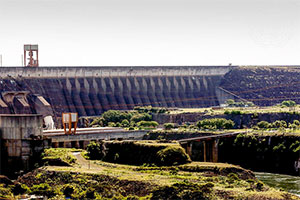 UN Power Plant, Paraguay. Credit: UN Photo/Evan Schneider
Energy has posed a great challenge for economies around the world. As global energy consumption skyrockets throughout the years, so does the need for sustainable solutions. The Sustainable Development Goals are essential in providing people with access to safe, affordable, and sustainable energy sources that minimize harm on the planet. Progress towards these goals opens the door for an advancement in modernization for communities on a global level and allows for a potential mitigation of tensions between nations.
The UN’s Summit of the Future in 2024 offered new initiatives that are being taken to achieve these goals, including a decreased reliance on fossil fuels, a switch to renewable energy sources, and improved climate financing.
IPS is well positioned to provide relevant, insightful, and compelling analysis of recent updates and measures being taken around the world to achieve a cleaner future.

The Week with IPS

NEXT STOP - SDGs
Tracking global progress towards a sustainable world
Tracking global progress towards a sustainable world
