Languages
Saturday, November 21, 2026



News and Views from the Global South
Food and Agriculture

DEVELOPMENT: Africa ‘Not Badly Hit’ Despite 16 Million More Poor
Former United Nations secretary general Kofi Annan believes that Africa has not been affected as ‘‘profoundly’’ by the global economic crisis compared to other regions in the world - despite the number of Africans living in poverty having increased by 16 million in the last year and annual growth dropping from six to one percent.
INDIA: Farm Suicides Turn Children Into Farmers
Eleven-year-old Digambar Rathod looks older than his age. Shy and uncertain, he stares disconcertedly at the garlanded photograph of his father Jaideep, a 42-year-old cotton farmer who committed suicide on Jan. 1, 2009 in Tiwsala village, in eastern Maharashtra state’s suicide-torn Yavatmal district.
AGRICULTURE: Liberia’s Land Just for Some
After watching the murder of her husband and his three other wives by Charles Taylor’s rebels, Fatu Bonah and her seven children fled into the dense forest to hide. "The rebels burned down our home and when I returned my in-laws had taken the land," she says. "I went to the town chief, who tried to resolve it, but the family refused, saying they had already taken over the land."TRADE: EPA Signing Threatens Southern African Customs Union
Fears that accession to an economic partnership agreement (EPA) in Southern Africa will destroy regional integration seem to be coming true after Botswana, Lesotho and Swaziland (BLS) ignored a key provision of the Southern African Customs Union when they initialled their trade deal with the European Union last week.
DEVELOPMENT: Thousands March as Food Crisis Deepens
An estimated 300,000 people across the globe hit the streets Sunday to support the World Food Programme (WFP) and its mission to feed hungry schoolchildren and battle malnutrition worldwide.
POVERTY-ANGOLA: NGOs Sceptical of Govt’s Rural Development Plans
In an attempt to reduce rural poverty, Angola’s government plans to diversify its oil-focused economy by trying to restore the country’s once-booming agricultural sector.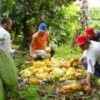
COLOMBIA: The Farmers Who Abandoned Coca for Cocoa
Chocaguán Amazónico, a small peasant-run alternative crop company that emerged in the midst of Colombia's cocaine boom and civil war, will celebrate its 15th birthday in September.BIODIVERSITY: Scientists Build a Macroscope of Life on Earth
Imagine looking at a Google Maps-like satellite image of the Amazon forest and with a mouse click find out what lives in that bit of forest - what tree and plant species are there, what animals, birds and insects.ENERGY: South African Government Edging Towards Renewable Sources
South Africa is slowly moving towards exploring renewable energy sources, having set itself a target of three percent of energy being generated from renewable sources by 2013.
Q&A: ‘Climate Change Will Soon Make Millions Homeless’
Millions of people will soon have to leave their homeland as a result of global warming, says a report on environmental refugees by the Italian environmental association Legambiente. Half of them will move due to natural catastrophes, the rest will be hit by desertification and rising sea levels.ECONOMY: 'Africa Should Seize Control over its Development'
Colonisation can be blamed for Africa's underdevelopment but today Africans must take their fate in their own hands and become ambitious. The continent badly needs industrialisation but it has fallen back into the trap of merely exporting commodities because of booming prices.YEMEN: Qat Cultivation Draining Water Reserves
The tall green shrubs on Yehia Abdullah's farm in the Haraz mountains produce the bitter-tasting leaves that feed the nation's number one addiction. More than seven million Yemenis chew qat, the mildly narcotic leaf of the Catha edulis tree. Expanding cultivation of qat to meet growing national demand is rapidly depleting Yemen's limited groundwater resources, experts warn.
CUBA: Exotic Fish Has Bad Reputation but High Yields
Known for eating everything in its path, and even for stinging people, the African catfish (Clarias gariepinus) is feeding debates in Cuba while at the same time it is filling family dinner plates.
SOUTH AFRICA: Finally Owning the Land That They Have Been Tilling
Bathed in sunlight on a crisp autumn morning, the Welgemeen farm in the Ceres district in the Western Cape province is a shining example in the otherwise patchy track record of land reform in South Africa.PHILIPPINES: Fish Farming to Reduce Protein Deficiency in Uplands
Like most upland dwellers in the Philippines, the Higaonon indigenous people in the southern town of Sumilao are living in extreme poverty. There are no jobs available and members of the tribe barely scrap by on subsistence farming, mainly root crops.AGRICULTURE-AFRICA: Knowledge Is Power for Farmers
Following training by the Alliance for a Green Revolution in Africa, a hundred farmers in central Kenya, armed with an improved understanding of their local markets are commanding higher prices for their bananas.
LIBERIA: Rural Women Confront Hunger Gap, Their Own Way
Three brightly-clothed women walk slowly around the fallen, charred trees strewn haphazardly across the blackened clearing, each carrying snail shells filled with indigenous rice seed to bury in the rich soil.
AGRICULTURE-GHANA: Few Signs of Concern as GM Crops Advance
Ghanaians are daily consuming genetically modified (GM) products imported by various traders without much care. However, as the government prepares to allow the planting of GM crops locally in a bid to boost food production, one non-governmental organisation, Friends of the Earth (FoE) Ghana is sounding the alarm.BRAZIL: Vigil Against Farming Offensive in Amazon
Celebrities and environmental organisations held a vigil at the Brazilian Congress in an effort to block passage of a bill that they say could cause an even greater "environmental disaster" in the Amazon jungle.
MALAWI: Separating the ‘‘Ultra-Poor’’ from the Poor – Why?
A group of civil society organisations in Malawi is pushing for changes to the country’s controversial social cash transfer scheme which has caused tension in communities as it attempts to separate the poor from the ‘‘very poor’’ in a country where some 65 percent of people live on less than a dollar a day.
SOUTH AFRICA: Protecting Migrant Farmworker Rights
Migrant farm workers in South Africa are entitled to the same workplace rights as any other employee. But the reality across the country suggests the opposite.« Previous Page — Next Page »


 Farming on the Outskirts of Juba. Credit: UN Photo/JC McIlwaine
Promoting human and planetary health is a central focus of the United Nations, as laid out in the 2030 Sustainable Development Goals (SDGs). World hunger and unsustainable farming practices continue to be pressing concerns for the world. According to the 2025 State of Food Security and Nutrition in the World report by the Food and Agriculture Organization (FAO), 673 million people faced hunger in 2024. There are stark regional disparities, with the FAO projecting that 60% of the world population facing hunger will reside in Africa by 2030. Globally, the prevalence of food insecurity has remained consistently higher for women than men.
Sustainable and efficient national food systems are essential in preserving health, education, environmental well-being, peace, economy, and security. However, creating sustainable food systems can be a challenging endeavor, as food production takes a heavy toll on the environment. The agricultural sector accounts for a significant portion of greenhouse gases. Finding safe, sustainable, and ethical strategies to feed the world is crucial in ensuring planetary longevity. A recent initiative from 2023, the EU Regulation on Deforestation-free Products (EUDR), seeks to advocate for sustainable food systems. The main driver of deforestation is the expansion of agricultural land used to produce commodities like cattle, wood, cocoa, coffee, etc. The EUDR is part of the 2020 European Green New Deal and the EU Biodiversity Strategy for 2030 and aims to limit Europe’s consumption of products linked with deforestation by requiring that companies prove that their products are deforestation-free. Despite aiming to achieve major strides in sustainability, policies such as EUDR also raise socioeconomic concerns for targeted countries. Many emerging Latin American economies are impacted by the policy, and have raised the question of how developing countries can grapple with the tensions between economic development and advancing sustainability.
IPS has been at the forefront of providing compelling and insightful stories on communities facing hunger as well as the cost of food production. IPS uses statistics from FAO, the World Food Programme (WFP) and the International Fund for Agricultural Development (IFAD) to bring relevant and hard-hitting facts to readers. This gathering of information and data from such organizations helps bring the best stories from IPS journalists working in the different regions in consultation with experts on the ground.

The Week with IPS

NEXT STOP - SDGs
Tracking global progress towards a sustainable world
Tracking global progress towards a sustainable world

