Languages
Thursday, October 1, 2026



News and Views from the Global South
Health

Sudan Ravaged By Disease, Famine, and War
As living conditions in Sudan deteriorate as a result of the Sudanese Civil War, levels of famine and violations of international humanitarian law continue to accelerate among the roughly 11.5 million displaced persons. Conflict between the Rapid Support Forces (RSF) and the Sudanese Armed Forces (SAF) have severely hampered aid efforts, leaving millions of civilians to deal with widespread disease and an overall lack of essential resources.
International Criminal Court Issues Arrest Warrant for Netanyahu
On November 21, the International Criminal Court issued arrest warrants for Israeli Prime Minister Benjamin Netanyahu, as well as the former defense minister Yoav Gallant. In a statement released by the ICC, both Netanyahu and Gallant are wanted for crimes against humanity and war crimes that spanned from at earliest October 8 2023 through May 20 2024. This coincides with Israel’s respective wars with Lebanon and Palestine, for which there have been extensive damage on civilian infrastructure, thousands of civilian casualties, and repeated blockages of humanitarian aid.
Where Is Mental Health in Global Climate Negotiations?
The mental health impacts of climate change are not widely discussed, but increasing evidence shows how climate change is affecting mental health and raising the risk of new mental health challenges. Experts say that existing systems are not equipped to cope with the current and additional challenges related to health and mental health caused by climate change.
Doctors Without Borders Halts Operations in Haiti Amid Threats from
Doctors Without Borders, the medical humanitarian organization, which has served in Haiti for over 30 years, announced on Wednesday that it would suspend its activities in Port-au-Prince, Haiti’s capital amid repeated threats from local law enforcement. This announcement indicates the precariousness of the situation in Haiti where humanitarian groups on the ground face security issues from even members of law enforcement.
Contingent Mission in Haiti Exacerbates Gang Offensives
Over the past week, the deployment of the Multinational Security Support Mission (MSS) in Haiti and extended efforts by the Haitian National Police has led to local gangs ramping up their offensives in order to hold onto their territories. Humanitarian organizations fear that displacement will skyrocket without more efficient security controls and relief responses.
‘The International Community Must Stop Turning a Blind Eye to the Suffering of Sudanese Women’
CIVICUS discusses Sudan’s civil war and its impact on women with Sulaima Elkhalifa, a Sudanese human rights defender and expert on gender-based violence.
Governments Must Ease Pressure on Families to Stop Children Slipping Through the Cracks
From the cost-of-living crisis to the impacts of war, cuts to social protection and even climate change, families worldwide are facing a combination of pressures that test their capacity to cope and care for children.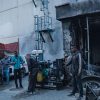
Human Rights Watch Condemns Israel’s “Deliberate” Military Offensives in Gaza
A new report from Human Rights Watch (HRW) postulates that Israeli military practices in the Gaza Strip constitutes as war crimes. Released on November 14, the new report details the scale of destruction in the Gaza Strip over a 13-month period, during which time the Israeli Defense Forces’ (IDF) undertook a campaign to enact “deliberate, controlled demolitions of homes and civilian infrastructure” that were conducted to drive millions of Gazans out of their homes and inflict as much damage as possible.
Human Rights Violations Against Women Rises in Afghanistan, While Taliban Enjoy Impunity
It has been three years since the 2021 Taliban offensive and the humanitarian crisis in Afghanistan continues to grow more dire. Human rights violations are committed by the Taliban insurgent group on a frequent basis, with gender-based discrimination and violence being regular occurrences for millions of Afghan women. Gender inequalities are pervasive, with freedom of speech and mobility being significantly limited. The humanitarian crisis is exacerbated by widespread impunity enjoyed by members of the Taliban.
‘Ending impunity for violations of Palestinians’ rights would strengthen global norms that protect all humanity’
CIVICUS discusses the gender dimensions of genocide in Gaza with Kifaya Khraim, International Advocacy Coordinator at the Women’s Centre for Legal Aid and Counselling (WCLAC). Founded in 1991, WCLAC is a feminist organisation that documents Israeli violations against Palestinian women and uses this evidence for international advocacy.
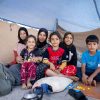
Bombardments in Lebanon Threaten Civilian Safety, Destroy UNESCO Cultural Heritage Sites
As winter approaches, the ongoing airstrikes and bombardments on Lebanon has threatened the lives and livelihoods of civilians across the country and neighboring regions, which has resulted in skyrocketing death tolls and levels of displacement. Since hostilities escalated in September, Lebanon has seen the destruction of a significant amount of critical infrastructure, including historical sites that are integral to Lebanese history.
Make Health Top of Climate Negotiations Agenda—Global Climate & Health Alliance
Climate change and its impact on public health hasn't made the top of the agenda even at a forum like the UN Climate Conference, but is should, say the health community. Understanding the gap, more than 100 organizations from across the international health and climate community came together as the Global Climate and Health Alliance and have called wealthy countries to protect people's health by committing to provide climate finance in the order of a trillion dollars annually, in addition to global action with leadership from the highest emitting countries to end the fossil fuel era.
Sudan Faces Esclations in Famine, Humanitarian Law Violations
After 19 months of conflict, the ongoing Sudanese Civil War continues to deteriorate living conditions for millions of Sudanese people. Intensive conflicts between the Rapid Support Forces (RSF) and the Sudanese Armed Forces (SAF) have greatly exacerbated nationwide levels of famine. Numerous civilians have been caught in the crossfire, leading to a rising death toll. Sexual violence and rape have been used as weapons of war, with thousands of cases going unreported due to a pervasive state of fear. Sudan has seen record numbers in displacement, becoming one of the biggest displacement crises in the world.
Haiti’s Transition of Power Predicted to Worsen Gang Violence
Gang violence has ravaged Haiti, causing thousands of civilian deaths, displacements, and violations of international humanitarian law. Turmoil is expected to escalate following the removal of Haitian Prime Minister Garry Conille from office on November 11.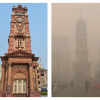
Lahore’s Dangerous Smog: Where Disease and Death Stalk
"It's been horrible; I've been sick on and off for the last 10 days," said 29-year-old asthmatic Natasha Sohail, who teaches A-Level students at three private schools in Lahore. Last week, her condition worsened with a vertigo attack and fever. “It’s criminal what is happening here,” said an incensed Sohail, referring to the “band-aid measures” taken by the Punjab government.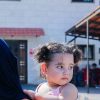
Growing Death and Displacement Devastate Lebanon
The ongoing, escalating violence in Lebanon forces millions of Lebanese civilians to face daily bombardment, repeated orders of evacuation, routine destruction of critical infrastructure, and limited access to basic services. With the death toll and rates of displacement on the rise, humanitarian organizations fear that the upcoming winter season is expected to exacerbate these harsh conditions, making Lebanon almost uninhabitable.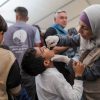
Polio Vaccination Campaign in Gaza Misses Thousands of Children
On November 6, the World Health Organization (WHO) announced that the second round of polio vaccinations in the Gaza Strip has been completed. A total of 556,744 children under ten years of age received the mOPV2 vaccine along with a dose of vitamin A to ensure immunization. However, due to rampant hostilities from the Israeli Defense Forces (IDF), the campaign has not been entirely successful, leading to humanitarian organizations fearing that herd immunity has not been achieved.
Diverse Diets Are Essential for Nourishing a Healthy Planet as Well as Healthy People
It’s often said that we are what we eat. However, our diets are also a reflection on the health of our food systems, the environment and agricultural biodiversity.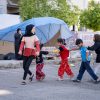
Death Toll in Lebanon Rising From Israeli Bombardment
The eastern region of Baalbek, Lebanon was believed to be a “safe zone” for residents, and refugees who had been displaced by the increased hostilities across the country. That changed on October 29, when an Israeli airstrike on the region resulted in over sixty casualties, including two children.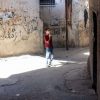
Israel’s Ban on UNRWA Threatens the Stability of Palestine
On October 28, the Israeli parliament voted to ban activity from the United Nations Relief and Works Agency for Palestinian Refugees in the Near East (UNRWA) in Israel. Two bills were passed by the Knesset, Israel’s house of representatives, one that barred all UNRWA efforts, and another that prevents interactions between Israeli authorities and UNRWA personnel. The implications of this amendment are expected to exacerbate dire conditions for millions of Palestinians who were already in the midst of a severe humanitarian crisis.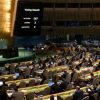
Hurricane Oscar Threatens Humanitarian Crisis in Cuba
Although classified as a compact tropical cyclone and considered one of the smallest in the North Atlantic, Hurricane Oscar has caused considerable damage in eastern Cuba since it made landfall on October 20, 2024. Cuban authorities have confirmed that the death toll has risen to seven, in additional to the damage in infrastructure. Communications and relief efforts were greatly impeded by a nationwide power grid blackout, which continues on in much of Cuba at the time of publication.« Previous Page — Next Page »


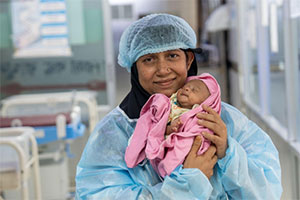 Bangladesh: Sarid, born one month early, receives specialized newborn care and grows stronger every day. Credit: UNICEF/UNI944397/Mojumder
Since the onset of the 2000s, global life expectancy has seen an overall rise, attributed to significant technological and scientific innovations in healthcare. Due to an increased understanding of different conditions as well as a rise in cooperation among healthcare experts around the world, there have been major strides made in ensuring that as few people die from chronic illnesses as possible. Despite the belief that healthcare is a fundamental human right, people from low- or middle-class backgrounds, marginalized groups, and underdeveloped countries have far more limited access to basic healthcare services.
The COVID-19 pandemic showed how marginalized communities are disproportionately affected by health crises, proving that we have much work to do in ensuring that no one dies of terminal conditions. While the global response to the coronavirus saw significant strides in immunization and vaccine development, the global outbreak of mpox in 2022 and its upsurge in parts of Africa in 2024 must remind us to remain vigilant.
Other major disease outbreaks in recent years have been linked to the destruction of infrastructure during warfare. Notably, in 2024, the Gaza Strip witnessed a return of the poliovirus since its eradication in the region 25 years ago. Israel’s blockade on Gaza has resulted in the collapse of the region’s sewage plants and desalination plants, and also destroyed healthcare capacities. The UN stated that this lack of clean water and sanitation would lead to an outbreak of cholera and other deadly infectious diseases. The 2026 OCHA Humanitarian Situation Report confirmed that the over two years of conflict in Gaza has produced a catastrophic health emergency, with millions remaining dependent on relief aid amid tight restrictions and no functioning public health system.
IPS is committed to providing full and comprehensive coverage on healthcare challenges around the world. IPS seeks to address the multifaceted causes of such challenges, including unprecedented pandemics, conflict-driven disease outbreaks, as well as socioeconomic barriers to equal healthcare access. IPS is also dedicated to reporting on innovations in the healthcare industry.

The Week with IPS

NEXT STOP - SDGs
Tracking global progress towards a sustainable world
Tracking global progress towards a sustainable world
