Languages
Saturday, October 17, 2026



News and Views from the Global South
Health

Onerous Debt Making Poorest Poorer
Contractionary economic trends since 2008 and ‘geopolitical’ conflicts subverting international cooperation have worsened world conditions, especially in the poorest countries, mainly in Africa, leaving their poor worse off.
Ban or Restrict? Quandary Facing Governments as Vaping Entices Teens Worldwide
A hot debate on electronic smoking devices is expected to engage governments, scheduled to meet in Panama from 5-10 February for the tenth session of the Conference of Parties (COP) to the WHO Framework Convention on Tobacco Control (WHO FCTC).
Scared of Sharps? This MAP Shows the Way to Delivering Painless Vaccines
If the fear of sharps makes a visit to the doctor dreadful, you need not dread it anymore. A South Korean company's invention of an innovative micro-needle patch could make you look forward to your next doctor’s visit.
Gaza Health Workers Struggling to Save Injured Without Medical Supplies, WHO Expert Warns
Gaza’s healthcare system is “on its knees” as ongoing hostilities force hospitals to operate beyond their capacity and displace their healthcare workers, according to a WHO expert.
The Impact of Climate Migration on Developing Nations
As the world is still gearing up to welcome 2024, let us find a moment to reflect on some of the key trends of the past year and pursue now to embrace the path towards hope and promise for everyone, everywhere.
Technology Transfer Critical to Revolutionizing Africa’s Pharma Industry
An agreement signed between the Rwandan government and the Africa Pharmaceutical Technology Foundation (APTF) gives impetus to Africa’s domestic industry with the hope of helping the continent tackle vaccine inequity and fill the critical gap in vaccine manufacturing.
Amidst a Horrendous 2023, Civil Society is Fighting Back Society
The year 2023 has brought so much tragedy, with incomprehensible loss of lives, whether from wars or devastating ‘natural’ disasters, while our planet has seen yet more records broken as our climate catastrophe worsens. And so as the clock ticks towards the (mostly western) New Year, readers are traditionally subjected by media outlets like ours to the 'yearender'—usually a roundup of main events over the previous 12 months, one horror often overshadowed by the next.
South Asian Women, Girls Need Responsive Legal System to Gender Violence
Criminal justice systems in South Asia are failing women, despite stark statistics on the prevalence of violence. WHO estimates translate to one in every two women and girls in the region experiencing violence daily.
What’s in Store for Indian Farmers After Cop 28’s Conclusion in Dubai?
Durga Das*, a 59-year-old farmer from the Indian state of Maharashtra, committed suicide last year by ingesting a poisonous substance. He was unable to repay the loan he had taken from the bank for the renovation of his single-story house. This year, his 32-year-old son, Pradeep Das, a father of two children, is equally desperate. The family owns half an acre of cultivated land where they grow cotton. The harvest has been devastated due to intense heat waves, leaving farmers like Dass and his son Pradeep in dire straits. The loan the family had taken is yet to be paid, and the land they had mortgaged in the bank is about to be confiscated. This means no crops, no cultivation, no business, and no food.
UN and Humanitarian Partners Seek USD 46 Billion for Humanitarian Assistance
Funding humanitarian programs will continue into the new year, but the funding cuts of the previous year may impact the prioritization of the most immediate and most life-threatening needs. The Office for the Coordination of Humanitarian Affairs (OCHA) released the Global Humanitarian Overview (GHO) for 2024. This annual assessment of the global humanitarian sector provides insight into the humanitarian action undertaken by the UN and its partners and reviews current and future trends in this sector.
Sudan’s Conflict Needs Civil Society Solutions
It’s recently been reported that the two main protagonists of Sudan’s current conflict – leaders of the armed forces and militia at war since April – have agreed to face-to-face talks. The Intergovernmental Authority on Development (IGAD), an East African body, announced the potential breakthrough – although Sudan’s foreign ministry has since claimed IGAD’s statement is inaccurate, creating further uncertainty.
Rich Nations, IMF Deepen World Stagnation
With the US Fed raising interest rates, the world economy is slowing as debt distress spreads across the global South, increasing poverty worldwide to pre-pandemic levels, with the poorest countries faring worst.
From Dancing ‘For a Living’ to Dancing For ‘Women’s Dignity’
At first, he danced for money, but later on, he realized the need to dance for sanitary pads in order to help poor girls and women. Now, 29-year-old Proud Mugunhu conducts dance tutorials that earn him 100 pads from each session.
The Solutions to Child Poverty Must Reach the Most Vulnerable Communities
Child poverty persists even in some of the world’s richest countries, new findings from a UNICEF report reveal.
Rise of the Global South Highlights Minamata Convention on Mercury COP5
As it strives to be the prototype environmental treaty of this era, the Minamata Convention on Mercury continues its razor-like focus on ending all major uses of mercury. Emerging as the force leading the charge is the Global South, particularly the Africa Region, whose proposals led to hard-charging changes addressing dental amalgam, mercury-based skin creams, and fluorescent lights.
Africa’s Negotiators Urged to Leverage on African Science at COP28 High Table
African scientists and researchers are concerned that the data shows that the continent is being cornered by the spiraling effects of climate change, that the real impact of climate devastation is yet to unfold, and that the region is on the cusp of more severe and catastrophic consequences.
U.S. Misuses Trade Agreements to Undermine Food Sovereignty
The dispute mounted by the U.S. government over Mexico's policies to restrict the use of genetically modified corn is the latest example of the misuse of a trade agreement to impede social programs in Mexico and other countries. The U.S. government has been doing this for years.
COP28: One Health Steps Delight Many, Others Show Cautious Optimism
One Health activist, Kelly Dent, has been attending UNFCCC COPs since 2009, when it was held in Copenhagen. From there, it has been a 15-year-long journey to Dubai, but Dent is finally having a reason to feel good: for the first time, the majority of the countries have come together to formally declare their commitment to prevent the worsening health impacts of climate change.
For Africans, the Climate Debate Around the Role of Livestock Misses the Mark
Africa is contending with a climate crisis it did not create without sufficient recognition for the unique rights and needs of the world’s youngest and fastest-growing population. Not only is the continent least responsible for reducing greenhouse gas emissions, having historically produced just a tiny fraction, but it is also disproportionately impacted by the consequences of emissions generated elsewhere.
Harmful Industry Blowing Smoke on Human Rights
As the world commemorates the 75th anniversary of the UN Universal Declaration of Human Rights, ( on Human Rights Day December 10), we turn the spotlight on a glaring contradiction the world is experiencing from a harmful industry. Despite causing 8 million annual deaths and a myriad of diseases, the tobacco industry has enjoyed six decades of the legal right to manufacture and sell its harmful products.
Beware Carbon Myopia at COP28: Why Climate and Nature Action Must Now Come Together in the Race for a Liveable Planet
As COP28 delegates focus on the first Global Stocktake, there is no doubt that the race to net-zero greenhouse gas emissions is vital. But while electric vehicles and solar power uptake have seen visible and welcome progress in particular, the transition to a thriving future on a healthy planet requires much more than decarbonization alone.« Previous Page — Next Page »





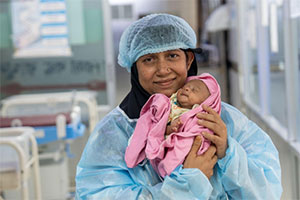 Bangladesh: Sarid, born one month early, receives specialized newborn care and grows stronger every day. Credit: UNICEF/UNI944397/Mojumder
Since the onset of the 2000s, global life expectancy has seen an overall rise, attributed to significant technological and scientific innovations in healthcare. Due to an increased understanding of different conditions as well as a rise in cooperation among healthcare experts around the world, there have been major strides made in ensuring that as few people die from chronic illnesses as possible. Despite the belief that healthcare is a fundamental human right, people from low- or middle-class backgrounds, marginalized groups, and underdeveloped countries have far more limited access to basic healthcare services.
The COVID-19 pandemic showed how marginalized communities are disproportionately affected by health crises, proving that we have much work to do in ensuring that no one dies of terminal conditions. While the global response to the coronavirus saw significant strides in immunization and vaccine development, the global outbreak of mpox in 2022 and its upsurge in parts of Africa in 2024 must remind us to remain vigilant.
Other major disease outbreaks in recent years have been linked to the destruction of infrastructure during warfare. Notably, in 2024, the Gaza Strip witnessed a return of the poliovirus since its eradication in the region 25 years ago. Israel’s blockade on Gaza has resulted in the collapse of the region’s sewage plants and desalination plants, and also destroyed healthcare capacities. The UN stated that this lack of clean water and sanitation would lead to an outbreak of cholera and other deadly infectious diseases. The 2026 OCHA Humanitarian Situation Report confirmed that the over two years of conflict in Gaza has produced a catastrophic health emergency, with millions remaining dependent on relief aid amid tight restrictions and no functioning public health system.
IPS is committed to providing full and comprehensive coverage on healthcare challenges around the world. IPS seeks to address the multifaceted causes of such challenges, including unprecedented pandemics, conflict-driven disease outbreaks, as well as socioeconomic barriers to equal healthcare access. IPS is also dedicated to reporting on innovations in the healthcare industry.

The Week with IPS

NEXT STOP - SDGs
Tracking global progress towards a sustainable world
Tracking global progress towards a sustainable world
