Languages
Thursday, October 22, 2026



News and Views from the Global South
Health

Solar Powered Freezer Improving Immunization Coverage in Hard-to-Reach Rural Villages
Up until 2019, nurses in three health facilities located in the semi-arid south-eastern Kenya region of Makueni County struggled to bring critical health services closer to a hard-to-reach population scattered across three remote, far-flung villages.
Pandemic Accord Text Falls Short of Expectations
As countries recently gathered in Geneva for the fourth round of negotiations on the WHO proposed pandemic treaty or accord, close examination of the current text by civil society experts has revealed significant gaps.
Next Ebola Outbreak ‘Not a Matter of If, but When’
It is two months since the World Health Organization declared Uganda free of the most recent Sudan ebolavirus, which killed 55 people. Uganda employed public health measures to end the outbreak. In the absence of vaccines and therapeutics, the threat of the next outbreak looms.
Parliamentarians Tackle Youth Employment, SRHR in Post-COVID Asia and Pacific
With more than 600 million youth aged between 18 and 24 in the Asia and Pacific region, putting their issues front and center is crucial. Speakers at a recent forum, Youth Empowerment: Education, Employment and Sexual and Reproductive Health and Rights, held in Phnom Penh, Kingdom of Cambodia, agreed that policy development and implementation should be youth-centered.
Why Do 800 Mothers a Day – 1 Every 2 Minutes– Die from Preventable Causes?
The answer is that there are alarming setbacks for maternal health care and, in many cases, even a total lack of maternity services, which threaten to further raise the number of these tragic preventable deaths one million or more a year by 2030.
Our AIDS Response Must Acknowledge and Bridge Gendered Digital Inequalities
Recent crises have pushed the gender inequality gap even wider and new technology has brought new threats to women’s autonomy and safety. This year’s International Women's Day celebrated under the theme “DigitALL: Innovation and technology for gender equality” is an opportunity to strengthen efforts to uplift and empower women and girls’ digital participation to ultimately improve their lives.
Forget ChatGPT: The Greatest Tech Breakthrough Would Be Getting Cell Phones to Rural Women
While 100 million people worldwide are using the AI chatbot ChatGPT to get ahead on homework and try out for top jobs at Google, more than 370 million women in developing countries lack the services of a simple cell phone.
Interwoven Global Crises Can Best be Solved Together
When global crises are interlinked, they overlap and compound each other. In such cases, the most effective solutions are those that work at the nexus of all these challenges.
Research Uncovers Cheaper Diagnostic Tools For Chronic Hepatitis B in Africa
Researchers have found that cheaper and more accessible blood testing methods can improve the care of patients with chronic hepatitis B in Africa.
Earthquake Relief Efforts in Syria Shouldn’t Overlook Those With Disabilities
A few days ago, I saw a photo shared to Twitter of Sham, a young Syrian girl rescued from under the rubble in northwest Syria, sitting upright in her hospital bed, According to the Syrian Civil Defense, a volunteer humanitarian group also known as the White Helmets, Sham will lose both her legs because of injuries from the quake.
Beyond Zero Discrimination: A New Social Contract for Health and Care Workers
While its origins may be rooted in the discrimination faced by people living with HIV, Zero Discrimination Day has evolved to celebrate commitments to the fundamental human right of being treated equally in law and in practice.
Gender Central to Parliamentarians’ Programme of Action
The post-COVID-19 period has been a crucial one for members of parliament who have their work cut out to ensure that issues that arose during the pandemic are addressed, especially concerning the ICPD25 commitments and programmes of action for universal access to sexual and reproductive rights, gender-based violence and building peaceful, just and inclusive societies. Across the world, progress toward achieving the SDGs by 2030 was impacted during the pandemic.
BRAC ‘Resets’ Program Aimed at Empowering Adolescent Girls in Africa
BRAC’s Empowerment and Livelihood Program (ELA) has benefitted tens of thousands of girls, and its recently released report shows an organization willing to adapt to the circumstances to continue to ensure adolescent girls and young women receive meaningful sexual and reproductive health rights support.
Pakistan’s Free Healthcare Insurance Benefits Women, Poor
A free health insurance initiative started in Pakistan has benefited poor patients, especially women who have outnumbered men in using the cashless health services under the Sehat Card Plus programme. "The initiative is in line with the ICPD25 Programme of Action, under which 4.5 million people have received free services, with 62 percent of them women. In the last three years, we have been able to cut down maternal mortality rate from 186 deaths per 100,000 live births to 172," Dr Muhammad Riaz Tanoli, CEO of the Sehat Card Plus (SCP), told IPS.
Fear of Population Ageing
Fear of population ageing is all over the news media and in government offices of country capitals worldwide. Planet Earth is becoming “planet ageing”.
Role of Regional Economic Cooperation in Inclusive Digital Transformation in Asia
Digitalization is a key driver of competitiveness and development. As the world takes the path to unprecedented digital advancement, Asia continues to be a powerhouse of digital transformations in a wide range of areas from microchip manufacturing to electric vehicles, from digital currency to e-commerce.
Driven by the War, Russian Women Arrive en Masse to Give Birth in Argentina
They began to arrive en masse in Argentina in the second half of 2022, a few months after the Russian invasion of Ukraine. They are pregnant Russian women who land in the capital to give birth, with the hope of gaining an Argentine passport, given the fact that so many countries refuse to let in people with Russian passports today.
World’s Deadliest Earthquake Leaves over 33,000 Dead
Almost over 33,000 people have been killed and thousands injured by the 7.8 earthquake which struck south-eastern Turkey and Syria in the early hours on Monday, February 6th. The first images that came out were of collapsed buildings, rubble strewn across streets, people trapped under rubbles, screaming for help. What followed was the unusually strong aftershock - including one quake which was almost as large as the first.
Food Industry Exposes Five Billion People to Toxic Chemicals that Kill
The food industry continues to intensively use toxic chemicals in their products, some of them provoking heart diseases and death. Trans fat is just one of them, adding to contaminating fertilisers, pesticides, microplastics and a long etcetera.
The Opioid Addiction Crisis & U.S. National Security
The opioid addiction crisis in the United States is an acute public health emergency and a profound threat to national security – which is caused by the over-prescription, misuse, illegal production, and criminal trafficking and sale of opioid pharmaceutical drugs to Americans. It is estimated that over 130 people die every day from opioid overdoses in the U.S.
Mental Health Must Be Addressed in Medical Facilities and in Communities
Patients who visit public clinics in Abu Dhabi, United Arab Emirates, are asked mental health questions to detect signs of stress and depression early. The process starts with a basic checklist, with patients referred to a nurse, doctor, or specialist. Asking these questions at primary care not only can identify issues early on, but it also helps decrease the stigma often associated with mental health while maintaining anonymity.« Previous Page — Next Page »





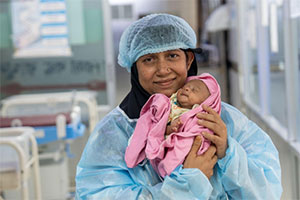 Bangladesh: Sarid, born one month early, receives specialized newborn care and grows stronger every day. Credit: UNICEF/UNI944397/Mojumder
Since the onset of the 2000s, global life expectancy has seen an overall rise, attributed to significant technological and scientific innovations in healthcare. Due to an increased understanding of different conditions as well as a rise in cooperation among healthcare experts around the world, there have been major strides made in ensuring that as few people die from chronic illnesses as possible. Despite the belief that healthcare is a fundamental human right, people from low- or middle-class backgrounds, marginalized groups, and underdeveloped countries have far more limited access to basic healthcare services.
The COVID-19 pandemic showed how marginalized communities are disproportionately affected by health crises, proving that we have much work to do in ensuring that no one dies of terminal conditions. While the global response to the coronavirus saw significant strides in immunization and vaccine development, the global outbreak of mpox in 2022 and its upsurge in parts of Africa in 2024 must remind us to remain vigilant.
Other major disease outbreaks in recent years have been linked to the destruction of infrastructure during warfare. Notably, in 2024, the Gaza Strip witnessed a return of the poliovirus since its eradication in the region 25 years ago. Israel’s blockade on Gaza has resulted in the collapse of the region’s sewage plants and desalination plants, and also destroyed healthcare capacities. The UN stated that this lack of clean water and sanitation would lead to an outbreak of cholera and other deadly infectious diseases. The 2026 OCHA Humanitarian Situation Report confirmed that the over two years of conflict in Gaza has produced a catastrophic health emergency, with millions remaining dependent on relief aid amid tight restrictions and no functioning public health system.
IPS is committed to providing full and comprehensive coverage on healthcare challenges around the world. IPS seeks to address the multifaceted causes of such challenges, including unprecedented pandemics, conflict-driven disease outbreaks, as well as socioeconomic barriers to equal healthcare access. IPS is also dedicated to reporting on innovations in the healthcare industry.

The Week with IPS

NEXT STOP - SDGs
Tracking global progress towards a sustainable world
Tracking global progress towards a sustainable world
