Languages
Friday, October 23, 2026



News and Views from the Global South
Health

Developing Countries Need Monetary Financing
Developing countries have long been told to avoid borrowing from central banks (CBs) to finance government spending. Many have even legislated against CB financing of fiscal expenditure. Central bank fiscal financing Such laws are supposedly needed to curb inflation – below 5%, if not 2% – to accelerate growth. These arrangements have also constrained a potential CB developmental role and government ability to respond better to crises.
A New Digitalisation Effort in Bangladesh Could Change Community Health Globally
The digital transformation of thousands of community health workers in Bangladesh has dramatically enhanced their work, while enabling the creation and tracking of a healthcare database covering 64 million people. The resulting model holds remarkable promise for the health of the world, especially in the context of evolving pandemics.
Macroeconomic Policy Coordination More One-Sided, Ineffective
Widespread adverse reactions to the UK government’s recent ‘mini-budget’ forced new Prime Minister Liz Truss to resign. The episode highlighted problems of macroeconomic policy coordination and the interests involved.
Public Development Banks Can’t Drag Their Feet When It Comes to Building a Sustainable Future
A coalition of civil society organisations is demanding public development banks (PDBs) to take radical and innovative steps to tackle human rights violations and environmental destruction. No project funded by PDBs should come at the expenses of vulnerable groups, the environment and collective liberties, but should instead embody the voices of communities, democratic values and environmental justice.
With Planning Aging Population Could Result in a Silver Dividend
An aging population needn’t be a burden, experts told Parliamentarians at a conference co-hosted by UNFPA Asia Pacific Regional Office and the Asian Population and Development Association (APDA).
Stop Worshiping Central Banks
Preoccupied with enhancing their own ‘credibility’ and reputations, central banks (CBs) are again driving the world economy into recession, financial turmoil and debt crises.
Persons with Disabilities Integral Players in Determining Innovative Solutions to Fully Inclusive Societies
Ten years ago, the Asia-Pacific region came together and designed the world’s first set of disability-specific development goals: the Incheon Strategy to “Make the Right Real” for Persons with Disabilities. This week, we meet again to assess how the governments have delivered on their commitments, to secure those gains and develop the innovative solutions needed to achieve fully inclusive societies.
Reform Needed As Big Business, Not Vulnerable Communities Benefit from Post-Pandemic Support
Governments and international financial institutions must adopt new ways of providing post-pandemic support, say campaigners after a report found that in many poorer countries, big business benefitted most from Covid-19 recovery funds. At the same time, vulnerable communities have been “left behind.”
Development Banks Should Reform Their Lending Practices
In the last week of September, emerging market (EM) bond fund outflows hit $4.2 billion, according to JP Morgan, bringing this year’s total to a record $70 billion. The exodus, set off by a rising U.S. dollar, is heaping pressure on low-income countries.
Africa, The Looted Continent
Africa. The birthplace of “Homo Sapiens.” The land of plenty. The origin of farming. The richest region in terms of natural resources. And human capital. Home to over 1.3 billion humans, continues to be looted.
How to Get on Track to Eradicate Extreme Poverty
As we approach 2030, the Sustainable Development Goals look harder than ever to achieve. Shocks to the global economy caused by climate change, COVID-19, and conflict threaten humanity's survival. For the most vulnerable, trends are moving in the wrong direction with an additional 75 to 95 million people now living in extreme poverty compared to pre-pandemic World Bank projections. By the end of this year more than 657 million people will still be living in extreme poverty substantially more than in 2018.
Education Cannot Wait Interviews Sigrid van Aken, CEO Novamedia/Postcode Lottery Group
Sigrid van Aken is the CEO of Novamedia/Postcode Lottery Group, a private company with a social purpose, that brings together business and ideals. It sets up and operates Postcode Lotteries worldwide to raise funds for charity. With a lucky winning postcode (zipcode), neighbours win together. At the same time, thanks to these player communities, vital funding is raised for charities and good causes (yearly €825 million), making the Postcode Lottery Group the 3rd largest private charity donor in the world after the Bill & Melinda Gates Foundation and the Wellcome Trust.

Some Coronaviruses Kill, While Others Cause a Common Cold. We Are Getting Closer to Knowing Why
It’s hard to imagine a time when “coronavirus” wasn’t a household word. But for a long time, this family of viruses had merited very little attention. Believed to be ubiquitous among animals and avian species, the first coronavirus to infect and cause disease in humans was only isolated and identified in the 1960s.
Ideology and Dogma Ensure Policy Disaster
Central banks (CBs) around the world – led by the US Fed, European Central Bank and Bank of England – are raising interest rates, ostensibly to check inflation. The ensuing race to the bottom is hastening world economic recession.
Deadly Smoke: Feeding Children Kills Cafeteria Staff
During my summer break this year, I read a news article about five school cafeteria workers who had died of lung cancer. Due to these incidents, a union of cafeteria workers, wearing their aprons and holding their lunch trays, held a protest in front of the President’s office on a scorching summer day. And it made us think about the devastating working conditions for the school lunch employees. Isn’t it so disheartening that we eat our school lunch at the expense of their health?
Aged Persons Haunted by Abuse in Zimbabwe
At his house in Mabvuku, a high-density suburb in Harare, the Zimbabwean capital, 86-year-old Tinago Murape claims his grandchildren starve him. Not only that, but Murape, who now walks with the support of a walking stick, said his three grandchildren – grown-up men with their wives and children living in his house, accuse him of bewitching them.
Inflation Phobia Hastens Recessions, Debt Crises
Inflation phobia among central banks (CBs) is dragging economies into recession and debt crises. Their dogmatic beliefs prevent them from doing right. Instead, they take their cues from Washington: the US Fed, Treasury and Bretton Woods institutions (BWIs).
The New Cold War Over Access To Safe Abortion in Kenya
Fatuma is a 24 year old girl from Korogocho, an informal settlement in Nairobi. She died in December 2021, from complications arising from an unsafe abortion. Her friend and a few of her neighbors found her bleeding profusely and unable to move. They rushed her to the hospital. Unfortunately, she died before she could see the doctor.
The Swedish Elections: A Victory for Populism
After general elections on the 12th September, Sweden is on the threshold of a new era. The Sweden Democrats (SD) won almost 21 percent of the votes and thus became the largest in a bloc of right-wing parties that now have a collective majority in the parliament. A nation that for a long time prided itself of being a beacon of tolerance and openness will now experience a historical transformation. The Sweden Democrats was once founded by Nazi sympathisers and for decades shunned by mainstream politicians. However, SD has now tipped the political scale in a country previously known for its stable and predictable politics, and some of the party’s former foes are now willing to co-rule with them.
Answering the Challenges Posed by Antimicrobial Resistance
Staphylococcus aureus is the source of a skin infection that can turn deadly if drug resistant. Estimates regarding the most common resistant variation, methicillin-resistant Staphylococcus aureus (MRSA), exceed 100,000 deaths globally in 2019.
Innovative Financing to Protect Public Health During a Pandemic
Economic recovery since the COVID-19 pandemic has been uneven amidst a cautious loosening of restrictions. But even at the height of the pandemic, it was business as usual for the tobacco industry.« Previous Page — Next Page »





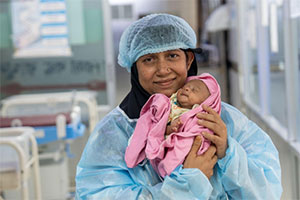 Bangladesh: Sarid, born one month early, receives specialized newborn care and grows stronger every day. Credit: UNICEF/UNI944397/Mojumder
Since the onset of the 2000s, global life expectancy has seen an overall rise, attributed to significant technological and scientific innovations in healthcare. Due to an increased understanding of different conditions as well as a rise in cooperation among healthcare experts around the world, there have been major strides made in ensuring that as few people die from chronic illnesses as possible. Despite the belief that healthcare is a fundamental human right, people from low- or middle-class backgrounds, marginalized groups, and underdeveloped countries have far more limited access to basic healthcare services.
The COVID-19 pandemic showed how marginalized communities are disproportionately affected by health crises, proving that we have much work to do in ensuring that no one dies of terminal conditions. While the global response to the coronavirus saw significant strides in immunization and vaccine development, the global outbreak of mpox in 2022 and its upsurge in parts of Africa in 2024 must remind us to remain vigilant.
Other major disease outbreaks in recent years have been linked to the destruction of infrastructure during warfare. Notably, in 2024, the Gaza Strip witnessed a return of the poliovirus since its eradication in the region 25 years ago. Israel’s blockade on Gaza has resulted in the collapse of the region’s sewage plants and desalination plants, and also destroyed healthcare capacities. The UN stated that this lack of clean water and sanitation would lead to an outbreak of cholera and other deadly infectious diseases. The 2026 OCHA Humanitarian Situation Report confirmed that the over two years of conflict in Gaza has produced a catastrophic health emergency, with millions remaining dependent on relief aid amid tight restrictions and no functioning public health system.
IPS is committed to providing full and comprehensive coverage on healthcare challenges around the world. IPS seeks to address the multifaceted causes of such challenges, including unprecedented pandemics, conflict-driven disease outbreaks, as well as socioeconomic barriers to equal healthcare access. IPS is also dedicated to reporting on innovations in the healthcare industry.

The Week with IPS

NEXT STOP - SDGs
Tracking global progress towards a sustainable world
Tracking global progress towards a sustainable world
