Languages
Tuesday, November 10, 2026



News and Views from the Global South
Health

Education: Act Now, Don’t Wait for the Bill
School reopening doesn’t mean that education is back on course. For a start, schools remain closed in over 50 countries, affecting more than 800 million students. The poorest ones may never make it back to school, driven by poverty into child labour or early marriage. Distance learning has been out of reach for one third of the 1.6 billion students affected worldwide by school closures. They may disengage altogether if school closures continue.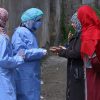
What Developing Countries Can Teach Us About How To Respond To a Pandemic
Nine months into the pandemic, Europe remains one of the regions worst affected by COVID-19. Ten of the 20 countries with the highest death count per million people are European. The other ten are in the Americas. This includes the US, which has the highest number of confirmed cases and deaths in the world.
Is the IMF Encouraging World Financial Leaders to Walk Blindly Towards More Austerity?
This week the world’s Ministers of Finance and Central Bank Governors meet virtually at the 2020 Annual Meetings of the International Monetary Fund and the World Bank and decide on the fate of the world. This year’s gathering is particularly important, given that the world is confronting an unprecedented crisis. Governments are struggling to finance emergency care and urgent socioeconomic support to cope with the COVID19 pandemic.
High Tech, Low Labour?
In the glitzy Dolby Theater in Hollywood Heights, with stars dressed in hundred thousand-dollar garbs, Parasite—a film about inequality, class tension and the fault lines of capitalism—won big. I couldn’t help but recall South Korean director Bong Joon-ho’s earlier 2013 film, Snowpiercer.
Disregarding Rights of Persons with Disabilities
The lack of consistency and a patchy approach undermines the Government of Nepal’s credibility in fulfilling the rights of persons with disabilities. One step forward and several steps back.
Train Faith Leaders to Tackle Africa’s Mental Health Needs
The world is actually in the throes of two pandemics. The first is COVID-19. The second is the wave of stress and anxiety, depression and substance use it has unleashed around the world. Most mental health disorders are treatable.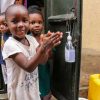
The Urban Poor are Fighting Back Against COVID-19
For those who live in slums and informal settlements, the Covid-19 pandemic has brought to the forefront their greatest vulnerabilities. But they are fighting back; organising, and coming up with creative ways to protect their communities.
COVID’s Impact in Real Time: Finding Balance Amid the Crisis
One enduring lesson from the COVID-19 pandemic is that any lasting economic recovery will depend on resolving the health crisis.
Gendering Agriculture so Women Take the Lead in Feeding Africa
Africa’s hopes of feeding a population projected to double by 2050 amidst a worsening climate crisis rest on huge investments in agriculture, including creating the conditions so that women can empower themselves and lead efforts to transform the continent’s farming landscape.
COVID-19: Examining Theories for Africa’s Low Death Rates
As the threat of a COVID-19 pandemic emerged earlier this year, many felt a sense of apprehension about what would happen when it reached Africa. Concerns over the combination of overstretched and underfunded health systems and the existing load of infectious and non-infectious diseases often led to it being talked about in apocalyptic terms.
Scaling Up SDG4 in Crises
Out of global crises spring opportunities for change. In crisis, change is not an option. It is a necessity. And, as Plato famously noted: “Necessity is the mother of invention.” Education Cannot Wait (ECW) is an invention that sprang out of crisis and was borne of necessity.
Does COVID-19 Imply an End to the Epoch of Science?
Around the 16th century there was a radical shift in the way humans perceived nature. New thinking in physics, chemistry, biology and mathematics heralded a deeper understanding of the world around us. Between the 17th and 18th century this new thinking had resulted in spate of technological inventions such as the steam engine, railways, electricity and the telephone.
With Armed Groups on the Rise, Youth Engagement is More Important than Ever
As governments worldwide struggle to contain COVID-19, recent reports suggesting armed groups like Islamic State are resurging offer a sobering account of the many challenges that the global community now faces.
Forging Resilient Regional Supply Chains and Connectivity
Participation in global and regional supply chains has been one of the most reliable economic growth strategies, especially for developing countries in Asia and the Pacific. Smooth and efficient connectivity in both trade and transport has been indispensable to the region’s pursuit of the 2030 Agenda for Sustainable Development.
Will COVID-19 Change the Global Balance of Power?
Lockdowns, social distancing, face-masks and other restrictions on personal and social behaviour have helped slow the progress of the COVID-19 virus. Enough to allow health systems to start catching their breath, for doctors to work out treatment protocols, and for work to start on a vaccine. There is now a need to take stock of the many other impacts the pandemic is likely to have, particularly at the economic and political level.
Empowering Women in Organic Value Chains
As COVID-19 shapes and re-shapes the “new normal” in the Pacific, organic food and products will be a key to community adaptation and resiliency in the region’s economies and livelihoods, with the opportunity to advance a more inclusive gender and people centred approach.
Teachers Shoulder the Burden: Improving Support in Crisis Contexts
Teachers are at the heart of children and young peoples’ educational experiences. Teachers play multiple roles in their students’ lives by supporting their learning, providing them with inclusive and safe environments to grow and develop, and helping them become more confident as they make their way in the world. As we commemorate World Teachers’ Day on Monday, 5 October and its theme--Teachers: Leading in Crisis, Reimagining the Future--we must recognize the inspiring and transformative role that teachers working in armed conflicts, forced displacement, climate change induced disasters and protracted crises play in their students’ lives.
A Feminist Perspective from Middle East & North Africa on the COVID-19 Pandemic
Since before the COVID-19 pandemic, feminists across the Middle East and North Africa (MENA) have been increasingly shedding light on the global shifts that will shape the Future of Work. From their perspective, those shifts would mainly be driven by the Fourth Industrial Revolution, the impact of climate change and the looming global care crisis.
Covid-19 Deaths: 1 Million and Surging
Covid-19 deaths worldwide have surpassed 1 million. With new cases of coronavirus infections rapidly mounting again, the numbers of Covid-19 deaths are feared to surge in the coming months.
The Triple Humanitarian Crisis and Why Kenya Deserves An A + in its Response
The United Nations Deputy Secretary General, Ms Amina Mohammed recently commended “Kenya’s exemplary role in its response to COVID-19 and in advancing Agenda 2030”.
From Pledges to Policy and Practice: Moving Nature to the Heart of Decision-Making
This week, Heads of State and Government from 64 countries announced one of the strongest pledges yet to reverse the loss of biodiversity and nature’s contributions to people by 2030. Advancing from powerful pledges to concrete policy and action, however, means that nature must be moved to the heart of global, national and local decision-making. It’s time for nature to be reintegrated into everything we do.« Previous Page — Next Page »





 Bangladesh: Sarid, born one month early, receives specialized newborn care and grows stronger every day. Credit: UNICEF/UNI944397/Mojumder
Since the onset of the 2000s, global life expectancy has seen an overall rise, attributed to significant technological and scientific innovations in healthcare. Due to an increased understanding of different conditions as well as a rise in cooperation among healthcare experts around the world, there have been major strides made in ensuring that as few people die from chronic illnesses as possible. Despite the belief that healthcare is a fundamental human right, people from low- or middle-class backgrounds, marginalized groups, and underdeveloped countries have far more limited access to basic healthcare services.
The COVID-19 pandemic showed how marginalized communities are disproportionately affected by health crises, proving that we have much work to do in ensuring that no one dies of terminal conditions. While the global response to the coronavirus saw significant strides in immunization and vaccine development, the global outbreak of mpox in 2022 and its upsurge in parts of Africa in 2024 must remind us to remain vigilant.
Other major disease outbreaks in recent years have been linked to the destruction of infrastructure during warfare. Notably, in 2024, the Gaza Strip witnessed a return of the poliovirus since its eradication in the region 25 years ago. Israel’s blockade on Gaza has resulted in the collapse of the region’s sewage plants and desalination plants, and also destroyed healthcare capacities. The UN stated that this lack of clean water and sanitation would lead to an outbreak of cholera and other deadly infectious diseases. The 2026 OCHA Humanitarian Situation Report confirmed that the over two years of conflict in Gaza has produced a catastrophic health emergency, with millions remaining dependent on relief aid amid tight restrictions and no functioning public health system.
IPS is committed to providing full and comprehensive coverage on healthcare challenges around the world. IPS seeks to address the multifaceted causes of such challenges, including unprecedented pandemics, conflict-driven disease outbreaks, as well as socioeconomic barriers to equal healthcare access. IPS is also dedicated to reporting on innovations in the healthcare industry.

The Week with IPS

NEXT STOP - SDGs
Tracking global progress towards a sustainable world
Tracking global progress towards a sustainable world
