Languages
Wednesday, November 11, 2026



News and Views from the Global South
Health

The Government of Kenya and UN commit to expanding education, training and employment opportunities for young people, on an unprecedented scale
Hon. Joseph Mucheru, Cabinet Secretary for ICT, Innovation and Youth, (CS) and Kenya’s representative in the Generation Unlimited (GenU) Global Board convened today the UN Kenya Country team to identify opportunities on how to swiftly expand education, training and employment opportunities for young people, on an unprecedented scale.
COVID-19 Has Blown Away the Myth About ‘First’ and ‘Third’ World Competence
One of the planet’s – and Africa’s – deepest prejudices is being demolished by the way countries handle COVID-19.
Dr Stuart Minchin, Director-General of SPC: With the crisis, we’re learning new ways of working

A conversation with SPC's Director-General on how the Pacific Community (SPC) helps Pacific countries respond to the COVID-19 crisis.

Without Universal Health Coverage We Are Sitting Ducks When the next Pandemic Strikes
We live in a different world to the one we inhabited six short months ago. With more than 4 million people infected and over 280,000 dead globally by mid May 2020, Covid-19 has ruthlessly exposed the vulnerability of a globalised world to pandemic disease. People are slowly coming to terms with the frightening and heartbreaking death toll, and we are still not out of the danger.
Could BCG, a 100-year-old Vaccine for Tuberculosis, Protect Against Coronavirus?
This week, the Bill and Melinda Gates Foundation announced it will donate A$10 million to help fund an Australian trial testing whether a very old vaccine, BCG, can be used against a new threat, COVID-19. So what is the BCG vaccine and what might its place be in the fight against coronavirus?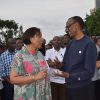
The Commonwealth’s Response to COVID-19
The Coronovirus pandemic has been an unforgiving test of advanced economies. Health systems in the United States, France, Italy, Spain, and the UK have been put under immense pressure, with shortages of doctors, ventilators, personal protective equipment and the capacity to test for the virus. Their economies have been battered and the consequences are spoken of in terms of the Great Depression.
We Cannot Let the Education Gap Widen at the Start of the Decade of Action
Prior to the COVID-19 pandemic, we estimated that 75 million children and youth - of whom 39 million are girls - were not able to access a quality education in countries impacted by armed conflicts, forced displacement, natural disasters and climate change-induced emergencies. The impact of COVID-19 has both globally and exponentially deepened the already existing critical education crisis.
Why Some National Health Care Systems Do Better than Others
In public health discussions, it is generally recognized that the social returns to health care investments are greater than the private returns, and much of such investments should be financed by the state.
Protecting Women’s Reproductive Health During the Pandemic
“When I was 13… I got pregnant from my older brother… He raped me starting when I was 11,” a girl from Guatemala told one of us in 2015. She was one of the 2 million girls under 15 worldwide who give birth each year, often due to sexual violence.
COVID-19: Why We Must Reset Our Thinking
Covid-19 is the most significant event since the Second World War. It changes everything. It brings great sadness to many of us as we lose loved ones, as we see people losing their jobs, and as we see people around the world suffering immensely.
Finding Money for Public Health, Green Economic Recovery & SDGs
The coronavirus pandemic underscores the profound fragility and unsustainability of today’s world. It exposes the chronic underinvestment in human health and well-being and the consequences of a relentless exploitation of biodiversity and the natural environment.
‘Passing the Buck’ Becomes Reckless ‘Conspiracy Blame Game’
Although Wuhan local authorities undoubtedly ostracized local medical whistle-blowers, notably Dr Li Wenliang, who suspected a new virus was responsible for flu-like infections in Wuhan in late 2019, official responses were apparently not delayed, and possibly even expedited, as the novel character of the SARS-CoV-2 virus, responsible for Covid-19 infections, was not immediately self-evident.
COVID-19 and the assault on fundamental rights
A spectre is haunting the conscientious citizens of Bangladesh—the spectre of the Digital Security Act, 2018 (DSA). By now the law has become synonymous with curtailment of freedom of expression and repression. The recent developments of involuntary disappearance, re-appearance and subsequent detention of several commentators and social activists have raised the alarm if indeed we as a nation are shying away from upholding one of the cardinal principles of the Muktijuddher Chetona (the spirit of the Liberation War) to freely express our views.
Africa’s Health Dilemma: Protecting People from COVID-19 While Four Times as Many Could Die of Malaria
Experts across Africa are warning that as hospitals and health facilities focus on COVID-19, less attention is being given to the management of other deadly diseases like HIV/AIDS, tuberculosis and malaria, which affect millions more people.
NGOs – with Local Groups in the Lead – are on COVID-19 Frontlines
NGOs, at the international, national - and most of all local - level are on the frontlines every day. I just heard from Oxfam staff in Bangladesh, that when asked whether they were scared to continue our response with the Rohingya communities in Cox’s Bazar, they replied: “They are now my relatives. I care about them — and this is the time they need us most.’”
VE Day Marks the End of the Second World War-But the World is Still at War
The world commemorated the 75th Anniversary to mark the end of the 2nd World War also called VE Day on 08 May 2020. With her nation, and much of the world still in lockdown due to COVID 19, England’s Queen marked 75 years since the allied victory in Europe with a poignant televised address. From Windsor Castle, Queen Elizabeth said, “the wartime generation knew that the best way to honour those who did not come back from the war, was to ensure that it didn’t happen again”.
Women Taking Charge during COVID-19
As the COVID-19 mayhem carries on in most countries, the role of mothers, daughters, and female caregivers have been affected the most. Besides looking after the household and home schooling children, they are also working on the front lines, actively or passively caring for their respective communities.
The Role of Civil Society in Times of Crisis
The ongoing COVID-19 pandemic has shown us something that most of us haven’t seen in our lifetimes: Large numbers of people unable to have two meals a day.
Religion & its Discontents: Considerations Around COVID-19 & Africa
COVID-19 has spread to many nations around the world, and has been declared a pandemic by the World Health Organization. In the global south, the COVID-19 pandemic has stretched the available medical and health resources, triggered economic shocks, and caused social upheavals and insecurity in many countries and localities.
Black Americans are Bearing the Brunt of Coronavirus Recession – This Should Come as no Surprise
As the COVID-19 pandemic worsened in April, many Americans were shocked by the extent that black Americans were being disproportionately impacted: higher infection rates, more deaths and greater job loss. But many black Americans were not surprised.
COVID-19 & Human Health Risks Linked to Wildlife Trade Practices
At the time of writing, the COVID-19 pandemic is raging worldwide, causing human mortality and socio-economic disruption on a massive scale and it appears highly likely that profound impacts will continue for many years to come.« Previous Page — Next Page »





 Bangladesh: Sarid, born one month early, receives specialized newborn care and grows stronger every day. Credit: UNICEF/UNI944397/Mojumder
Since the onset of the 2000s, global life expectancy has seen an overall rise, attributed to significant technological and scientific innovations in healthcare. Due to an increased understanding of different conditions as well as a rise in cooperation among healthcare experts around the world, there have been major strides made in ensuring that as few people die from chronic illnesses as possible. Despite the belief that healthcare is a fundamental human right, people from low- or middle-class backgrounds, marginalized groups, and underdeveloped countries have far more limited access to basic healthcare services.
The COVID-19 pandemic showed how marginalized communities are disproportionately affected by health crises, proving that we have much work to do in ensuring that no one dies of terminal conditions. While the global response to the coronavirus saw significant strides in immunization and vaccine development, the global outbreak of mpox in 2022 and its upsurge in parts of Africa in 2024 must remind us to remain vigilant.
Other major disease outbreaks in recent years have been linked to the destruction of infrastructure during warfare. Notably, in 2024, the Gaza Strip witnessed a return of the poliovirus since its eradication in the region 25 years ago. Israel’s blockade on Gaza has resulted in the collapse of the region’s sewage plants and desalination plants, and also destroyed healthcare capacities. The UN stated that this lack of clean water and sanitation would lead to an outbreak of cholera and other deadly infectious diseases. The 2026 OCHA Humanitarian Situation Report confirmed that the over two years of conflict in Gaza has produced a catastrophic health emergency, with millions remaining dependent on relief aid amid tight restrictions and no functioning public health system.
IPS is committed to providing full and comprehensive coverage on healthcare challenges around the world. IPS seeks to address the multifaceted causes of such challenges, including unprecedented pandemics, conflict-driven disease outbreaks, as well as socioeconomic barriers to equal healthcare access. IPS is also dedicated to reporting on innovations in the healthcare industry.

The Week with IPS

NEXT STOP - SDGs
Tracking global progress towards a sustainable world
Tracking global progress towards a sustainable world
