Languages
Wednesday, November 11, 2026



News and Views from the Global South
Health

Nepal and Colombia Struggle With Mental Health Burden of Conflict
Children sit in a circle experimenting with different colours on palettes at a shelter in Godavari one morning this week. Some design flowers in bright colours, others draw homes nestled below mountains. Many of the children are survivors of rape or domestic violence, from rural parts of Nepal. The one thing they have in common is mental trauma.
Governments Must Short Circuit Tobacco Industry’s Pervasive Tactics
The tobacco industry’s new rhetoric that smoking is harmful and that its so-called less risky products will reduce the global tobacco epidemic, should see the industry stop opposing or fighting government efforts to reduce tobacco use. However, this is not the case.
World Closer Than Ever to Seeing Polio Disappear for Good
In a “historic achievement for humanity”, two of three wild poliovirus strains have been eliminated worldwide, the World Health Organization (WHO) announced on Thursday, following the conclusion by a group of experts that WPV3, type three of the disease, has been eradicated completely.
Swiftly Ending Tobacco Epidemic Requires Government Action, Not Empty Promises
New information published in the Morbidity and Mortality Weekly Report shows that action taken by just 11 countries – most of them low- or middle-income – has resulted in 20 million fewer adult tobacco users in 2017 compared with 2008. Seventy percent of the world’s tobacco users live in low- and middle-income countries.
Africa’s Investment Drive Gathers Pace
Headwinds are blowing amid IMF warnings of a “synchronised slowdown” in global economic growth, yet Africa’s investment drive is still gathering pace, supported by intense international competition in development finance.
Tuberculosis Infections Declining, But Not Fast Enough Among Poor, Marginalised: UN Health Agency
A staggering 1.5 million people died from tuberculosis (TB) last year, the UN health agency said on Thursday, in an appeal for far greater funding and political support to eradicate the curable and preventable disease.
Let Plants be Thy Medicine – You Are What You Eat
United Nations World Food Day is celebrated around the world on October 16 under the theme: “Our Actions ARE Our Future. Healthy Diets for a Zero Hunger World”. This theme is timely, especially, because across Africa and around the world, there has been a gradual rise in malnutrition and diet-related non communicable diseases, as highlighted in The Lancet study and a United Nations Report published earlier this year.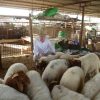
Global Challenges for the ‘NextGen’
Success has many parents – so the saying goes. In the case of the massive successes of international agricultural research, no one person can claim parentage. There are heroes along the way such as Norman Borlaug and his early cereal breeding, and the team that eliminated the cattle disease Rinderpest from the world – smallpox is the only other disease that has been totally eradicated. Another is the founder of The Crawford Fund, Derek Tribe, who was also instrumental in the creation of what is now the International Livestock Research Institute (ILRI), which I chair. However, it would be more correct to highlight the thousands of scientists who have contributed to the world’s greatest feat of feeding an extra three billion people when pundits said it was impossible.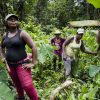
Rural Poverty Is Still a Scar on the Soul of Colombia, but a New Program Supporting Agri-Entrepreneurship Can Help Heal the Wounds
Rural poverty and inequality continue inflicting large swaths of population in Colombia, especially in rural areas. This situation, endemic since at least the beginning of the twentieth century, was at the root of the 50-year long conflict that shattered the country, leaving 220,000 deaths and 5.7 million displaced persons, and devastating a significant part of the rural areas, where government services and infrastructure vanished.
Austerity, the “New Normal”
While this week Ministers of Finance and economists meet in Washington to confront global economic challenges at the IMF and World Bank Annual Meetings, the majority of the world population lives with austerity cuts and see their living standards deteriorating. World leaders must reverse this trend.
Abortion Remains an Unresolved Issue: ICPD25 Meeting next Month
Currently, the topic of abortion as human rights leaves the world bustling. When the state of Alabama1 in the United States enacted a very strict ban on abortion, it shocked the world. This prompted so-called conservative movements, led by female business owners, to make a full-scale advertisement in the New York Times claiming abortion is a human right2 ; hence the global debate between pro-life and pro-choice.
One Billion People Have Preventable Eye Conditions, Increasingly Linked to Lifestyle Choices, According to WHO
A staggering 2.2 billion people already suffer from eye conditions and visual impairment today, but the global need for eye care is set to increase “dramatically”, with lack of exercise a key factor, the UN health agency said on Tuesday, unveiling its first ever report on vision across the world.
Beware High-Fat Diets
Two decades into the 21st century, all too many people still associate being ‘overweight’ with prosperity, health and wellbeing, mainly because being thin has long been associated with being emaciated due to hunger, undernourishment and malnutrition. Overweight and obesity can easily be assessed by anthropometric measures, including the body mass index (BMI) and waist circumference. But BMI thresholds for overweight and obesity may differ by ethnic group or country.
‘Salty’ Concern: Tackling High Salt Consumption in China
China’s almost meteoric transition from a being a low income to a middle income country within a span of four decades is often perceived as a miracle analogous to the post Second World War Japanese economic development experience.
Three Ways to End HIV Stigma and Discrimination
As a Public Health Doctor, I often meet people who experience stigma simply because they live with HIV. One person who still haunts me is a woman who is HIV positive and when she was in labor, a midwife would not help her. Instead she shouted at her to just push out the baby and then she stood far away from the bedside, disgusted by the woman’s HIV status. No one should go through such stigma at a vulnerable situation when they are about to birth life.
Ground-breaking Clean Air Protocol to Guard Human Health and the Planet, Enters into Force
European and North American countries will take a major stride in cleaning up the atmosphere next Monday, 7 October, through the implementation of an amended legally binding treaty to limit the amount of emissions polluting the air.
No to Ageism, Yes to Intergenerational Equality
As we are celebrating the International Day of Older Persons today, we recognize that population ageing is a human success story, a story of longer and often healthier lives of the world’s people. The many faces of older persons that we see in Asia and in the Pacific, and, indeed, all over the world, attest to this fact. Still, however, ageing is considered a threat. There is talk about the “burden of ageing”, exploding healthcare costs, and concerns about plummeting economic growth due to the shrinking labour force. In many cities of Asia-Pacific, we see advertisement for “anti-ageing cosmetics” and surgeries. The current ideal is that we must be young, dynamic and without wrinkles or grey hair, especially older women.
Medical Centres Cover Every Village in Tibet
 Tibetan medicine is one of the world's oldest known traditional medicines, originally developed during the pre-Buddhist era in the kingdom known as Shang Shung. IPS correspondent Crystal Oderson visited one of the major Tibetan health facilities in Lhasa.... and got a glimpse of the age old tradition.

How Slow Moving Asbestos Regulations Compromise Health
Last year, the United States introduced a new asbestos rule that was received both positively and negatively and Canada banned the mineral altogether. Countries like the U.K. and Australia continue to struggle with the health implications of historic asbestos use, despite both having bans for several years. In contrast, nations like Russia and Vietnam continue to manufacture and use the mineral frequently.
UN Welcomes ‘Most Comprehensive Agreement Ever’ on Global Health
Describing it as an “important landmark” on our “journey to health for all”, Secretary-General António Guterres on Monday welcomed the UN Political Declaration on universal health coverage, or UHC, which commits countries to advance towards full coverage for their citizens in four major areas around primary care.
The Social Impact of Economic Inequality
Increasing economic inequality is a defining challenge of our time. In recent years, it has triggered analysis and reflection by many scholars, politicians and others on its causes and consequences on economic growth and efficiency, politics and democracy, human rights, individual behaviors, access to health, social cohesion and environmental degradation. The perception that the top 1% of income earners are gaining at the expense of the other 99% has resulted in widespread public debates in many countries on the social and political repercussions of inequality.« Previous Page — Next Page »





 Bangladesh: Sarid, born one month early, receives specialized newborn care and grows stronger every day. Credit: UNICEF/UNI944397/Mojumder
Since the onset of the 2000s, global life expectancy has seen an overall rise, attributed to significant technological and scientific innovations in healthcare. Due to an increased understanding of different conditions as well as a rise in cooperation among healthcare experts around the world, there have been major strides made in ensuring that as few people die from chronic illnesses as possible. Despite the belief that healthcare is a fundamental human right, people from low- or middle-class backgrounds, marginalized groups, and underdeveloped countries have far more limited access to basic healthcare services.
The COVID-19 pandemic showed how marginalized communities are disproportionately affected by health crises, proving that we have much work to do in ensuring that no one dies of terminal conditions. While the global response to the coronavirus saw significant strides in immunization and vaccine development, the global outbreak of mpox in 2022 and its upsurge in parts of Africa in 2024 must remind us to remain vigilant.
Other major disease outbreaks in recent years have been linked to the destruction of infrastructure during warfare. Notably, in 2024, the Gaza Strip witnessed a return of the poliovirus since its eradication in the region 25 years ago. Israel’s blockade on Gaza has resulted in the collapse of the region’s sewage plants and desalination plants, and also destroyed healthcare capacities. The UN stated that this lack of clean water and sanitation would lead to an outbreak of cholera and other deadly infectious diseases. The 2026 OCHA Humanitarian Situation Report confirmed that the over two years of conflict in Gaza has produced a catastrophic health emergency, with millions remaining dependent on relief aid amid tight restrictions and no functioning public health system.
IPS is committed to providing full and comprehensive coverage on healthcare challenges around the world. IPS seeks to address the multifaceted causes of such challenges, including unprecedented pandemics, conflict-driven disease outbreaks, as well as socioeconomic barriers to equal healthcare access. IPS is also dedicated to reporting on innovations in the healthcare industry.

The Week with IPS

NEXT STOP - SDGs
Tracking global progress towards a sustainable world
Tracking global progress towards a sustainable world
