Languages
Wednesday, November 11, 2026



News and Views from the Global South
Health

As Marshall Islands Integrates Healthcare Services, Experts Offer a Word of Caution
In Jack Niedenthal’s office in Majuro, there is an ominous reminder of the dark history of the Marshall Islands—once the site for dozens of nuclear tests conducted by the United States between 1946 and 1962. But it also provides a strong message about the future of island nation.
Greater Skills Equals Greater Ability to Combat Leprosy
It’s a Friday morning and Dr. Ken Jetton, the only doctor who treats leprosy in Majuro, the capital of the Marshall Islands, is seeing a patient recently cured of the disease.
Freshwater Canada’s Dirty Water Secret
While residents across Prince Rupert, British Columbia are once again able to get safe drinking water from their taps, the boil-water advisory lifted there in late January should not be forgotten. Canada is a freshwater-rich country, but the time for complacency on essential water issues has long passed. Most people living in Canada have access to safe water. But drinking water advisories in the country about unsafe water have been concentrated in First Nation communities.
Increasing Leprosy Cases in Micronesia Points to Better Detection and Awareness
 Elizabeth Keller is one of the most senior health officials in the Federated States of Micronesia (FSM).
She is the current acting chief of Public Health and also the head of the leprosy programme in the island nation’s capital of Pohnpei.

Financial Hurdles to Eliminating Leprosy in Micronesia
Mayleen Ekiek has been working with the Department of Health in the Federated States of Micronesia (FSM) for 12 years now. She is the head of the National Leprosy Programme in the Pacific island nation, which still remains one of three, along with the Marshall Islands and Kiribati, that is yet to eliminate leprosy. 
Bridging the Gaps for the Disabled
People with disabilities are being left behind, and steps must be taken to ensure their inclusion in the world of education and work.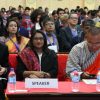
Developing Effective and Sustainable Programmes for Those Living with and Affected by Autism Spectrum Disorder
The Kingdom of Bhutan is a landlocked country surrounded by Bangladesh, India and the Tibetan region of China. It is a country that brought the term Gross National Happiness as a concept by which to measure a country’s progress. In April 2017 it celebrated WAAD by hosting the International Conference on Autism & Neurodevelopmental Disorders (ANDD2017) in Thimphu.
Safe Menstrual Practices Important for Progress
As menstruation continues to be shamed in many communities, one organisation is rising up to the challenge to ensure “safe menstruation for all women of Bangladesh.”
“Don’t Tell My Husband I Have Leprosy”: Social Stigma Silences Marshall Islands’ Women
Meretha Pierson has been a nurse for the past seven years, working in the government-run leprosy clinic in Majuro, the capital of the Marshall Islands. Her patients come in all ages, from different economic backgrounds and different professions. But, aside from their diagnosis, they all have something else in common: everyone wants to keep their illness a secret.
NHIF Reform Critical to Affordable Health For All in Kenya
Consider this. One million Kenyans fall into poverty every year due to catastrophic out of pocket health expenditures. For the almost four in every five Kenyans who lack access to medical insurance, the fear that they are just an accident or serious illness away from destitution.
Q&A: Why Treating Leprosy as a Special Disease Violates the Rights of the Person Affected by It
His multiple awards and degrees aside, Dr. Arturo Cunanan is known as a people’s doctor; one who has profound belief in the human rights of every person affected by Hansen’s disease, commonly known as leprosy.
Depression Is More than a Stigma
Depression is often distinguished from other non-communicable diseases or NCDs (e.g., cancer, diabetes, cardio-vascular diseases, hypertension) because of the stigma attached to it. Among other consequences, those suffering from depression are often denied access to medical care. Indeed, the latter is an outcome of interaction between supply of and demand for medical care. On the provider side, stigmatizing attitudes by service providers are identified as a barrier to access. On the demand side, stigma and low mental health literacy by community members are just as emphatically reported as barriers to accessing care.
VIDEO: World Autism Awareness Day 2019 – Assistive Technologies, Active Participation
Awareness of Austism Spectrum Disorder (ASD) has continued to grow worldwide, in recent years. But the number of diagnoses have continued to increase unabated. 
Climate Change Also Affects Mental Health in Mexico
Minerva Montes lost her home on Holbox Island in 2005 when Hurricane Wilma hit the Yucatan Peninsula in southeastern Mexico. Rebuilding her home was quicker and easier than overcoming the psychological aftermath of the catastrophe.
It’s Simple, but Requires Determination
I am drafting this on International Women’s Day - March 8 - with an eye towards World Water Day on March 22. On International Women’s Day we celebrate progress in gender equality. At the same time, we recognize how much remains to be done: how many women remain excluded from decision-making across many professions. Changing this is urgent. Water – clean and accessible – is getting scarcer at an alarming rate. While working to change this, we cannot afford to exclude women.
VIDEO: “People Affected by Leprosy Suffer Severe Discrimination”
“More than 50 countries in the world have discriminatory laws against people affected by Hansen's disease. There is also a lot of discrimination in the public administration…and in society," Alice Cruz, U.N. Special Rapporteur on the elimination of discrimination against persons affected by leprosy and their family members, said in this interview with IPS (in Spanish, with English subtitles). 
People Affected by Leprosy in Latin America Unite for Their Rights and Their Voice
With the decision to found a regional coalition to promote rights and greater participation in national and international forums and decisions, the First Latin American and Caribbean Assembly of Organisations of People Affected by Hansen's disease, popularly known - and stigmatised - as leprosy, came to an end.
Tobacco Industry Targets Women in Asia
International Women’s Day on 8 March recognized and celebrated the progress women are making globally. The day also acknowledged the risks, exploitation and suffering many continue to endure.
In Latin America, the Term Leprosy Still Carries a Burden from Biblical Times
Known scientifically as Hansen's disease, leprosy carries a symbolic burden from the past that people affected by the disease and experts from around Latin America are fighting, including the terminology used.
People Affected by Leprosy Still Face Stigma in Latin America
The First Latin American and Caribbean Meeting of Organisations of People Affected by Hansen's Disease, more widely known as leprosy, seeks to exorcise stigma and discrimination. The meeting has brought together around a hundred activists in Brazil.
Access to Water Is a Daily Battle in Poor Neighborhoods in Buenos Aires
"Look at this water. Would you drink it?" asks José Pablo Zubieta, as he shows a glass he has just filled from a faucet, where yellow and brown sediment float, in his home in Villa La Cava, a shantytown on the outskirts of Argentina's capital.« Previous Page — Next Page »





 Bangladesh: Sarid, born one month early, receives specialized newborn care and grows stronger every day. Credit: UNICEF/UNI944397/Mojumder
Since the onset of the 2000s, global life expectancy has seen an overall rise, attributed to significant technological and scientific innovations in healthcare. Due to an increased understanding of different conditions as well as a rise in cooperation among healthcare experts around the world, there have been major strides made in ensuring that as few people die from chronic illnesses as possible. Despite the belief that healthcare is a fundamental human right, people from low- or middle-class backgrounds, marginalized groups, and underdeveloped countries have far more limited access to basic healthcare services.
The COVID-19 pandemic showed how marginalized communities are disproportionately affected by health crises, proving that we have much work to do in ensuring that no one dies of terminal conditions. While the global response to the coronavirus saw significant strides in immunization and vaccine development, the global outbreak of mpox in 2022 and its upsurge in parts of Africa in 2024 must remind us to remain vigilant.
Other major disease outbreaks in recent years have been linked to the destruction of infrastructure during warfare. Notably, in 2024, the Gaza Strip witnessed a return of the poliovirus since its eradication in the region 25 years ago. Israel’s blockade on Gaza has resulted in the collapse of the region’s sewage plants and desalination plants, and also destroyed healthcare capacities. The UN stated that this lack of clean water and sanitation would lead to an outbreak of cholera and other deadly infectious diseases. The 2026 OCHA Humanitarian Situation Report confirmed that the over two years of conflict in Gaza has produced a catastrophic health emergency, with millions remaining dependent on relief aid amid tight restrictions and no functioning public health system.
IPS is committed to providing full and comprehensive coverage on healthcare challenges around the world. IPS seeks to address the multifaceted causes of such challenges, including unprecedented pandemics, conflict-driven disease outbreaks, as well as socioeconomic barriers to equal healthcare access. IPS is also dedicated to reporting on innovations in the healthcare industry.

The Week with IPS

NEXT STOP - SDGs
Tracking global progress towards a sustainable world
Tracking global progress towards a sustainable world
