Languages
Friday, September 25, 2026



News and Views from the Global South
International Justice
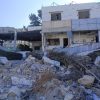
Gaza Counts Costs of Catastrophic Impacts of Israeli Bombardment on Healthcare
With enough steel and concrete, the hospitals that have been smashed to bits in Gaza can be rebuilt. But a construction plan paired with an army of bulldozers will not be enough to reconstruct the entirety of Gaza's health care system, which, after many months of war, has been decimated by the Israeli military forces.
The Impact of US Funding Freeze on Civil Society Around the World
The U.S. administration has the prerogative to review and adjust public expenditure policies, including foreign aid. However, this power must be exercised responsibly, adhering to national and international legal frameworks, including the principles of human rights law.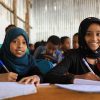
World Day of Social Justice Statement by Education Cannot Wait Director Yasmine Sherif
The central theme of this year’s World Day of Social Justice is to “strengthen a just transition for a sustainable future.” Education is the very foundation for achieving social justice. Without an education we cannot end extreme poverty and advance economic growth. Without an education we cannot empower young girls to become teachers, doctors, nurses, lawyers, engineers, let alone financially self-reliant. Without an education we cannot achieve good governance, the rule of law and peaceful co-existence.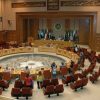
The Arab States Must Stop Trump– and Netanyahu– in Their Tracks
When the Arab states convene an emergency session in Egypt to address Trump’s/Netanyahu’s plans to take over Gaza and exile the Palestinians, they must warn Trump that acting on this plan will usher in a catastrophic conflagration that could engulf the entire Middle East.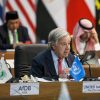
Trump’s War on Global Governance: Lessons from the Past on How to Fight Back
US president Donald Trump’s recent actions seem designed to reassert American power and demonstrate that it is still the dominant global power and is capable of bullying weaker nations into following America’s lead.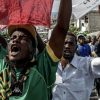
The “Fierce Urgency of Now”– to Reverse Course in Haiti
As we commemorated Dr. Martin Luther King Jr.’s Day on January 20, 2025—a day that also marked America welcoming its newly elected president—we honor the legacy of this civil rights leader by reflecting on his powerful words: “We are confronted with the fierce urgency of now.”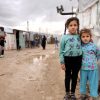
Report Exposes Silent Global Emergency as More Crises-Affected Children Need Urgent Education Support
A report released today on the International Day of Education sounds alarm as the number of school-aged children in crisis worldwide requiring urgent support to access quality education reaches a staggering 234 million—an estimated increase of 35 million over the past three years fueled by intensifying armed conflict, forced displacements, more frequent and severe weather and climatic events, and other crises.
UN Claims to Strengthen Battle Against Racism in Workplace—Amid Reservations
As the United Nations plans to commemorate its 80th anniversary later this year, it is “reflecting on the steps taken to advance implementation of the Secretary-General’s Strategic Action Plan for addressing racism in the UN Secretariat. The UN’s Anti-Racism Office, which was created in 2023, has hosted several online events that reached over 13,500 participants and generated 2,000 comments, and welcomed 2,700 visitors to its iSeek page (accessible only by staffers)—possibly a reflection of the rising complaints and concerns of UN staffers.
The Davos Disconnect
"It was the best of times; it was the worst of times." Charles Dickens is more relevant today than ever. The wealthy and powerful are meeting again this year in glamorous Davos, at an invitation-only event. They arrive in chartered aircraft and private jets to speak about our warming climate, among other global concerns.
Carter’s Virtue Trumps Mendacity
The fireplace in the State Dining Room of the White House that says, “May none but honest and wise men ever rule under this roof.” President John Adams wrote that in a letter to his wife Abigail in 1800.
Remembering Jimmy Carter: a UN Perspective
Former American President Jimmy Carter was a man of peace and principles. He presided over a tumultuous period in American history from 1977 to 1981, working hard to restore trust in government after the Watergate scandal and the divisive era of the Vietnam War. He brokered a landmark peace deal between Israel and Egypt and negotiated a historic treaty to hand over the Panama Canal to Panama.
Camps of Death, Terror: Syrian Survivors Face Long Road To Recovery
Detained without trial for over three years for trial for allegedly treating "terrorists" (as opponents of former Syrian President Bashar al-Assad were deemed), Alaa al-Khalil, a 33-year-old nurse from the Syrian city of Hama, recounts the agony of her time in a prison cell she shared with at least 35 women.
Small Island States Put Faith in International Court’s ‘Wayfinding’ Advisory Opinion
The “crazy, weird and at some point (what seemed like) insurmountable” plan to ask the International Court of Justice for an advisory opinion on the obligations of UN member states regarding climate change was a success, Vishal Prasad, a representative for the. Pacific Islands Students Fighting Climate Change (PISFCC) said at a post-hearing press conference today (December 13).
‘We Will Not Go Quietly Into the Rising Sea,’ Tuvalu Tells International Court of Justice
Rising sea level caused by greenhouse gas emission-fueled climate change is threatening existence in coastal communities and island nations. At the International Court of Justice (ICJ), on Thursday, December 12, 2024, small island states, including Tuvalu and a Pacific-based fisheries agency detailed their ongoing existential threats caused by the climate change-induced sea level rise and impacts on fishery-based livelihood.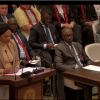
Once Scattered by Colonialism, Today United in Urgent Pursuit of Climate Justice
The Seychelles consider the ongoing public hearings at the International Court of Justice (ICJ) both timely and critical “for the people of the small island developing state in the middle of the Indian Ocean,” Flavien Joubert, Minister for Agriculture, Climate Change and Environment of the Seychelles, told the court today.
No State Is Truly Independent if It Suffers Significant Injury Without Consequence—Palau
After many decades of colonial rule, Palau was the last country to emerge from the UN Trusteeship. Palau celebrated 30 years of independence in October 2024 “and takes seriously the rights and responsibilities of independence. Independence should mean that Palau is free to build its own future and be responsible for the security, safety, and well-being of its own people,” said Gustav N. Aitaro, the Minister of State of the Republic of Palau at the International Court of Justice (ICJ).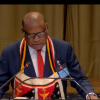
African Union, Nations Lay Bare Climate Vulnerabilities at UN’s Top Court
Kenya agrees with many UN member states testifying before the International Court of Justice (ICJ) that the law of international responsibility should hold countries legally responsible for major damage to the global climate system.
States Individually Accountable For Contributions to Climate Change—Fiji
At The Hague, the United Nation’s highest court heard Fiji, a small island nation, lay out its arguments on the threat posed by climate change and the legal obligations, especially those of developed nations.
Small Island States Urge International Court to Look Beyond Climate Treaties
A few UN member states responsible for the majority of emissions have breached international law, Ralph Regenvanu, a special climate envoy from Vanuatu, told the International Court of Justice in the Hague in his opening address.
Youth-Led Landmark Climate Change Case Starts in The Hague
The intersection of law, diplomacy, and science will come under the spotlight at the International Court of Justice hearings starting today (Monday, December 2, 2024) in The Hague as the court starts its deliberations into the obligations under international law of UN member states to protect people and ecosystems from climate change.
Sustainable Peace in Afghanistan Needs Women on the Frontlines
Women in Afghanistan have continued to advocate for their rights and have called on the international community to not only stand in solidarity but to take decisive action to prevent the erosion of their rights and presence in public space.« Previous Page — Next Page »


The Week with IPS

NEXT STOP - SDGs
Tracking global progress towards a sustainable world
Tracking global progress towards a sustainable world
