Languages
Wednesday, October 7, 2026



News and Views from the Global South
Humanitarian Emergencies

Myanmar: Five Years Since the Coup and No End in Sight To War
Five years of conflict since the military seized power have reduced Myanmar to a failed state and taken a huge toll of lives lost and destroyed. But with all sides seeking total victory, there is no end in sight.
High Seas Treaty Will Transform Our Fragile Ocean for the Better
“The ocean’s health is humanity’s health”, said UN Secretary-General Antonio Guterres, in September 2025. He was commenting after the High Seas Treaty (BBNJ) [1] finally achieved ratification, going on to call for “a swift, full implementation” from all partners. As of January 17, 2026, the treaty has come into force, meaning the time for implementation is now. What is the High Seas Treaty?
Venezuela at a Crossroads
When US special forces seized Nicolás Maduro and his wife from the presidential residence in Caracas on 3 January, killing at least 24 Venezuelan security officers and 32 Cuban intelligence operatives in the process, many in the Venezuelan opposition briefly dared hope.
To Develop a Continent, Africa Must Nourish Its Children
Hunger shadowed Mercy Lung’aho’s childhood, fueling her campaign to promote nutrition as a foundation for Africa’s development.
Do Resources Define the Parameters of Faith-based Engagement and Diplomacy Today?
Several events, meetings, consultations, initiatives, etc. taking place among faith-inspired, ‘faith-based’ and a variety of other similar efforts, over the past year, in the United States especially, concern me.
Business Growth and Innovation Can Boost India’s Productivity
India’s productivity growth over the past two decades has been impressive, reflecting rapid expansion in high-value services, gradual efficiency-enhancing reforms, and scale advantages from a large domestic market.
‘Unfathomable But Avoidable’ Suffering in Gaza Hospitals, Says Volunteer Nurse
“I’d never encountered anything like it before. I had no idea that there could be a place that needed humanitarian aid and that a government entity wouldn’t allow physicians or health workers into [that place],” says Jane.*
Melting Reserves of Power: Mongolia’s Glaciers and the Future of Energy and Food Security
The International Year of Glaciers’ Preservation in 2025 was a timely reminder that the stability of Mongolia’s economy rests on fragile mountain systems that are melting faster than ever recorded. The loss reverberates across the country’s energy and agricultural systems, two development pillars that draw from the same finite resource: water.
Exiled: Myanmar’s Resistance to Junta Rule Flourishes Abroad
From construction and hotel workers to kitchen and restaurant staff—estimates of the numbers of Myanmar migrants living in Thailand range up to six million, with a surge of new arrivals since the 2021 military coup.
Haiti at a Crossroads: Political Uncertainty and Gang Control Push Nation Toward Collapse
As Haiti’s Transitional President Council (TPC) approaches its February 7 expiration date and the country remains without a newly elected president, humanitarian experts warn the nation risks further sliding into insecurity, raising fears of broader collapse.
Binalakshmi Nepram: Engineering Peace, Creating History
It was Christmas eve: some two decades ago. Binalakshmi Nepram was a witness to the killing of a 27-year-old. In utter disbelief, she saw a group of three men dragging the victim from his workshop. Within minutes, he was shot dead.
Systemic Infrastructure Attacks Push Ukraine Into Its Deepest Humanitarian Emergency Yet
Nearly four years into Russia’s full-scale invasion, Ukraine faces another winter marked by widespread humanitarian suffering and continued indiscriminate attacks. The final months of 2025 were particularly volatile, characterized by routine bombardment of densely populated areas and repeated strikes on residential neighborhoods, critical civilian infrastructure, and humanitarian facilities. As hostilities expanded into new territories over the past year, humanitarian needs grew sharply, with many war-torn communities residing in uninhabitable areas.
Steering Nepal’s Economy Amid Global Challenges
Nepal has a unique opportunity for transformation. The recent youth-led protests underscored aspirations for greater transparency, governance and a more equal distribution of economic opportunities and resources. This yearning resonated in Nepal and beyond.
World Enters ‘Era of Global Water Bankruptcy’
The world is already in the state of “water bankruptcy”. In many basins and aquifers, long-term overuse and degradation mean that past hydrological and ecological baselines cannot realistically be restored.
Global Survey Finds Citizens back a World Parliament as Trust in International System Erodes
As democracy faces pressure around the world and confidence in international law drops, a new global survey reveals that citizens in a vast majority of countries support the idea of creating a citizen-elected world parliament to deal with global issues.
Children and Armed Conflict Must be at the Forefront of the Global Agenda
Thirty years ago, the groundbreaking report by Graça Machel, renowned and widely respected global advocate for women's and children's rights, to the United Nations General Assembly laid bare the devastating impact of armed conflict on children and shook the conscience of the world. It led to the historic decision of the General Assembly to create the mandate of the Special Representative of the Secretary-General for Children and Armed Conflict (SRSG-CAAC).
Jailed by the Generals She Defended as ICJ Opens Genocide Case Against Myanmar
Held incommunicado in grim prison conditions for nearly five years, Aung San Suu Kyi quite possibly does not even know that this week the International Court of Justice (ICJ) opened a landmark case charging Myanmar with committing genocide against its Rohingya minority a decade ago.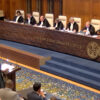
ICJ Begins Proceedings for Rohingya Genocide Allegations Case Against Myanmar
On January 12, the International Court of Justice (ICJ), opened landmark hearings in a case brought by the Republic of The Gambia, alleging that Myanmar’s military committed acts of brutal genocide against the Rohingya minority during its 2017 crackdown. Described by the United Nations (UN) as a case “years in the making,” the ICJ will spend the next three weeks reviewing evidence and testimony from both sides to determine whether the Myanmar military violated the Genocide Convention.
The Iranian Military Is the Only Institution Capable of Catalyzing the Downfall of the Regime
Unlike ever before, Iran’s Islamic regime is facing a revolt led by a generation that has lost its fear. Young and old, men and women, students and workers, are flooding the streets across the country.
What Next? United States Exits Key Entities, Vital Climate Treaties in Major Retreat from Global Cooperation
President Donald Trump has escalated efforts to further distance the United States from international organizations and entities focused on climate, the environment, and energy. This strategy is in step with his administration’s established approach to undermine and redirect funds and international cooperation away from climate and clean energy programs.
Gaza: Physicians Call For Unimpeded Aid To Restore Reproductive Healthcare
Israel must lift all restrictions on medicine, food and aid coming into Gaza, rights groups have demanded, as two reports released today (Jan 14) document how maternal and reproductive healthcare have been all but destroyed in the country.« Previous Page — Next Page »





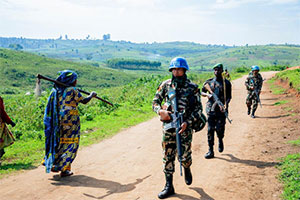 MONUSCO Peacekeepers and FARDC Soldiers Patrol Fataki Area. Credit: UN Photo/Jorkim Jotham Pituwa
Conflict, human rights violations, natural disasters, and famine have been at the forefront of concerns for humanitarian organizations. The escalation of humanitarian crises has led to over 239 million people in need of humanitarian assistance at the start of 2026, as estimated by OCHA’s Global Humanitarian Overview. The 2025 humanitarian appeal received only $12 billion, the lowest funding in over a decade, which has left 24 million fewer people reached in comparison to 2024. Conflict has remained the primary driver of crisis.
Humanitarian emergencies massively impact progress towards the Sustainable Development Goals (SDGs), adversely affecting economic development, inequality, education, planetary well-being, and poverty. Millions of people are faced with reduced access to essential services, including shelter, food, healthcare, and access to clean drinking water. UN Organizations such as UNHCR and the United Nations Children’s Fund (UNICEF) are committed to providing direct relief to affected communities when state governments cannot.
The United Nations 2024 Summit of the Future discussed measures that will be taken to reduce global inequality and promote peacekeeping efforts around the world. The recent UN Climate Change Conference (COP30) in Belém, Brazil, agreed to mobilize $1.3 trillion annually for climate action by 2035, operationalize the loss and damage fund, and triple adaptation finance. However, a fossil fuel transition commitment was not secured, despite climate change and the greenhouse effect being major contributors to humanitarian crises worldwide.
Countries across the world have also rallied to end humanitarian crises, as witnessed in conflicts such as Palestine and Ukraine. IPS is committed to providing relevant and in-depth reports of humanitarian emergencies around the world and their implications.

The Week with IPS

NEXT STOP - SDGs
Tracking global progress towards a sustainable world
Tracking global progress towards a sustainable world