Languages
Sunday, November 8, 2026



News and Views from the Global South
Humanitarian Emergencies
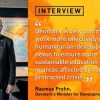
The Power of Education in Emergencies: Interview with Denmark’s Minister of Development Cooperation Rasmus Prehn
Denmark is Education Cannot Wait’s (ECW) third largest donor, with US$79.1 million in contributions to date. In this insightful interview with Denmark’s Minister for Development Cooperation, Rasmus Prehn, we explore the importance of girls’ education and gender equality, the humanitarian-development nexus, expanded engagement with the private sector, education in emergency response to the COVID-19 pandemic and more. A former high school teacher, with a master’s degree in social science, Minister Prehn has been a member of Danish Parliament since 2005, and was named Minister for Development Cooperation on June 27, 2019. Minister Prehn is the former chairman of the Danish Research, Education and Further Education Committee, a tireless advocate for education in emergencies, and a true champion for achievement of the Sustainable Development Goals, especially SDG4: inclusive and equitable, quality education for all.
Global Impact of New Corona Virus and Population Issues
The new coronavirus (COVID-19) continues to wreak havoc across the world, as the number of infections and deaths rapidly rise. It has the potential to infect anybody regardless of age or gender. There are grave concerns that the economic fallout from COVID-19 may be comparable to that of the Great Depression. According to Johns Hopkins Coronavirus Resource Center, there are 2,064,668 confirmed cases of COVID-19 and 137,124 deaths due to SARS-CoV-2 (the virus causing COVID-19). In Japan as of noon April 15, there were 8,100 cases of COVID-19 , 119 deaths, and 901 patients discharged from hospitals.
Financial Scams Rise as Coronavirus Hits Developing Countries
In the Philippines, Peru, India, Kenya, South Africa and many other developing countries, poor people who are already struggling with the health impact of the coronavirus pandemic have been targeted by online fraudsters trying to take unfair advantage of them.
Argentina Responds Boldly to Coronavirus Crisis
Like much of the West, Argentina did not take many early precautionary actions after the Covid-19 epidemic was confirmed in January, but became the first Latin American country to act decisively with a 12 March public health emergency declaration. The presidential decree came a day after the World Health Organization (WHO) declared a global pandemic, just over a week after the first case was detected in the republic on 3 March.
New Normal? Better Normal!
In these times of Covid-19, the big challenge for most of us is how to protect ourselves and our families from the virus and how to hold on to our jobs. For policymakers, that translates into beating the pandemic without doing irreversible damage to the economy in the process.
Impact of COVID-19 on Tourism in Small Island Developing States
The COVID-19 pandemic and the measures put in place to contain its diffusion are taking a heavy toll on the tourism sector. According to the United Nations World Tourism Organization (UNWTO), the COVID-19 pandemic will result in a contraction of the tourism sector by 20% to 30% in 2020.
The COVID-19 Pandemic and the Reinvention of the Spirit of Solidarity and Cooperation
An invisible adversary has thrown the world – Global South and Global North alike – into disarray. The psychosocial and economic consequences of the COVID-19 crisis will remain with us long after it has been overcome. There will be no anti-viral return to the pre-coronavirus status quo, nor can we afford to idly wait for a viral transformation of our world. The future is not inevitable, abstract promise – it will depend on our collective readiness to forge it, or to be forged by it.
Public Health and Epidemics
For some time Wuhan in China and Lombardy in Italy were epicentres of the COVID-19 virus, something that has changed when the contagion is spreading fast in the US. A Lombardy in the grip of a deadly epidemic might among several Italians give rise to memories of their school days. For almost a century, Alessando Manzoni’s massive novel The Betrothed (I promessi sposi) from 1842 has been obligatory reading for all Italians during their last primary school year. A quite impressive endeavour considering that the novel is more than 700 pages long.
Only Sustainable Investment & Global Cooperation Can Counter COVID’s Blow to SDGs
We are today in a time of crisis—a time when our shared choices will shape the way history tells our story and the paradigm shift it has so forcefully provoked.
Press Freedom Needs Protection from Pandemic too
Wearing an orange jacket and face mask, Li Zehua, a Chinese freelance journalist, can be seen filming himself in a car. He is sure that state security agents have been pursuing him since he began documenting events in Hubei’s capital Wuhan, the first epicentre of the COVID-19 pandemic. A second YouTube video, circulating widely since he launched his appeal, ends abruptly when two men knock at his apartment. He has just reappeared online after two months, saying police interrogated him and put him in quarantine and that he was well looked after during this period.
Amid Covid-19 Hunger Fear Mounts in Bangladesh
 The world is at risk of widespread famines resulting from lockdowns to contain the spread of the coronavirus pandemic. The devastating economic impact of Covid-19 is seeing a huge rise in the number of hungry people.

Argentina’s Debt Restructuring “Groundhog Day”… or Maybe Not? Three Key Points
On April 17, the Alberto Ángel Fernández administration in Argentina officially unveiled its offer for debt restructuring on USD 66 billion foreign currency-denominated bonds. Starting on that date, the offer is valid for 20 days, a period during which difficult negotiations with bondholders are expected to take place. Based on the first reactions from some of creditor groups, one could well get the sense that the offer is “dead on arrival.”
Pandemic Lays Bare Africa’s Deficits, but Youth Will Grow the Future
Africa’s frailties have been brutally exposed by the coronavirus pandemic. The virus has reached nearly every country on this continent of 1.3 billion people and the World Health Organization warns there could be 10 million cases within six months. Ten countries have no ventilators at all.
World Press Freedom Day: The Assault on Media Freedom in Asia Worsens During COVID-19 Pandemic
May 3rd marks World Press Freedom Day around the world. During this COVID-19 pandemic, a robust media environment is critical: access to life-saving information is key in the fight against the virus. As governments impose a range of restrictions in attempts to curb the pandemic, journalists help hold authorities to account by providing analysis, engaging in debate about government actions, and creating a space for dialogue about the future we all hope to see.
WORLD PRESS FREEDOM DAY: Journalism Without Fear or Favour
 MEDIA WORLDWIDE is facing crises on multiple fronts, exacerbated by the COVID19 pandemic. Reporters without Borders released its 2020 World Press Freedom Index on April 21st, noting that the Coronavirus is being used by authoritarian governments to implement “shock doctrine” measures that would be impossible in normal times.

Understanding the Hunger Surge Caused by the COVID-19 Recession to Mitigate It Before It Is Too Late
Many uncertainties haunt the world’s campaign to counter the COVID-19 pandemic, but one thing is now sure: Global economic activity will suffer greatly, with large-scale consequences for the incomes and welfare of all, but especially for the most vulnerable food import-dependent countries.Staring at a Human Security Catastrophe
The defining images of South Asia’s battle against Covid-19 are hundreds of thousands of migrants, many with children on their shoulders, trudging from New Delhi, Kathmandu or Dhaka to their far-flung villages. They are daily wage earners engaged in construction, small enterprises, plying rickshaws or street selling in the informal sector. With lockdowns and economic activity shut down to combat the virus, these migrants lost their low-paying jobs and were forced to flee to their rural homes. Those who remained in these cities face food insecurity, rising joblessness and risk falling deeper into poverty.
All-of-Government, Whole-of-Society Involvement Needed to Fight Virus
The Covid-19 pandemic is now widely considered more threatening than any other recent viral epidemic. Most believe that many more have been infected or even died than officially confirmed.
Why Reproductive Rights Must Be a Critical Part of Our Arsenal to Fight Pandemics
Sexual and reproductive health and pandemics might seem to be unrelated topics, but large and dense populations are drivers of the high velocity transmission of COVID-19, and there are lessons to be learned for the future.
COVID-19 Stimulus Measures Must Save Lives, Protect Livelihoods, and Safeguard Nature to Reduce the Risk of Future Pandemics
There is a single species that is responsible for the COVID-19 pandemic - us. As with the climate and biodiversity crises, recent pandemics are a direct consequence of human activity – particularly our global financial and economic systems, based on a limited paradigm that prizes economic growth at any cost. We have a small window of opportunity, in overcoming the challenges of the current crisis, to avoid sowing the seeds of future ones.
SDGs: the Challenge to Improve Lives After the COVID-19 Crisis
The SDGs, with their universal scope, interlinked nature and focus on leaving no one behind will be more essential than ever during and after this crisis.« Previous Page — Next Page »





 MONUSCO Peacekeepers and FARDC Soldiers Patrol Fataki Area. Credit: UN Photo/Jorkim Jotham Pituwa
Conflict, human rights violations, natural disasters, and famine have been at the forefront of concerns for humanitarian organizations. The escalation of humanitarian crises has led to over 239 million people in need of humanitarian assistance at the start of 2026, as estimated by OCHA’s Global Humanitarian Overview. The 2025 humanitarian appeal received only $12 billion, the lowest funding in over a decade, which has left 24 million fewer people reached in comparison to 2024. Conflict has remained the primary driver of crisis.
Humanitarian emergencies massively impact progress towards the Sustainable Development Goals (SDGs), adversely affecting economic development, inequality, education, planetary well-being, and poverty. Millions of people are faced with reduced access to essential services, including shelter, food, healthcare, and access to clean drinking water. UN Organizations such as UNHCR and the United Nations Children’s Fund (UNICEF) are committed to providing direct relief to affected communities when state governments cannot.
The United Nations 2024 Summit of the Future discussed measures that will be taken to reduce global inequality and promote peacekeeping efforts around the world. The recent UN Climate Change Conference (COP30) in Belém, Brazil, agreed to mobilize $1.3 trillion annually for climate action by 2035, operationalize the loss and damage fund, and triple adaptation finance. However, a fossil fuel transition commitment was not secured, despite climate change and the greenhouse effect being major contributors to humanitarian crises worldwide.
Countries across the world have also rallied to end humanitarian crises, as witnessed in conflicts such as Palestine and Ukraine. IPS is committed to providing relevant and in-depth reports of humanitarian emergencies around the world and their implications.

The Week with IPS

NEXT STOP - SDGs
Tracking global progress towards a sustainable world
Tracking global progress towards a sustainable world

