Languages
Sunday, November 8, 2026



News and Views from the Global South
Humanitarian Emergencies

Cyclone Amphan – ‘We Didn’t Expect Devastation of Such a Scale’
Amid the social distancing measures posed by the COVID-19 pandemic, coastal communities in Bangladesh and India face a double threat as the record-breaking Cyclone Amphan made landfall yesterday (May 20).
COVID-19 – China Tells World Health Assembly They Did their Best
This week’s 73rd World Health Assembly had member states adopt a resolution to review the global response to the coronavirus pandemic. The World Health Organisation (WHO) will also undergo an evaluation for its response to the outbreak.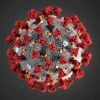
EXCLUSIVE: In the Face of the COVID-19 Pandemic We Are Only as Strong as the Weakest of Us
When the COVID-19 virus travelled from Wuhan, China halfway across the world through Europe, the Americas and beyond in the space of a few weeks, it gave us proof, if one was ever needed, of how tightly interconnected we all are. Not only are our globalized economies interdepended, but also we ourselves are one with the environment around us, and with one another. We are one humankind sharing one planet. And yet, all too often we seem to forget it, as we carelessly revert to misguiding differences between “us” and “them.” Take, for example, the distinction between rich and poor countries, or as economists put it, between advanced economies and least developed countries. In the face of COVID-19, the only difference that matters is if we are sick or healthy. Other than that, we are all the same, regardless of economic status or geographic location.
Covid-19 Straw Breaks Free Trade Camel’s Back
Economic growth is supposed to be the tide that lifts all boats. According to the conventional wisdom until recently, growth in China, India and East Asian countries took off thanks to opening up to international trade and investment.
The Hotting-Up of the Sino-American Spat: Most Dangerous Side-Effect of Covid-19?
When the United States and China signed the First-Phase of their Trade Agreement in January this year, President Donald Trump called it a “momentous step”, and the world believed they had stepped back from a dangerous brink. But, alas, to cite an idiom that is so current today, it was but a ‘false positive’. As the globe reels from the surgoing COVID-19 pandemic, it is possible that the rapid deterioration of US-China relationship can become one of the worst side-effects of this raging virus.
Dr Stuart Minchin, Director-General of SPC: With the crisis, we’re learning new ways of working

A conversation with SPC's Director-General on how the Pacific Community (SPC) helps Pacific countries respond to the COVID-19 crisis.

Without Universal Health Coverage We Are Sitting Ducks When the next Pandemic Strikes
We live in a different world to the one we inhabited six short months ago. With more than 4 million people infected and over 280,000 dead globally by mid May 2020, Covid-19 has ruthlessly exposed the vulnerability of a globalised world to pandemic disease. People are slowly coming to terms with the frightening and heartbreaking death toll, and we are still not out of the danger.
The Commonwealth’s Response to COVID-19
The Coronovirus pandemic has been an unforgiving test of advanced economies. Health systems in the United States, France, Italy, Spain, and the UK have been put under immense pressure, with shortages of doctors, ventilators, personal protective equipment and the capacity to test for the virus. Their economies have been battered and the consequences are spoken of in terms of the Great Depression.
We Cannot Let the Education Gap Widen at the Start of the Decade of Action
Prior to the COVID-19 pandemic, we estimated that 75 million children and youth - of whom 39 million are girls - were not able to access a quality education in countries impacted by armed conflicts, forced displacement, natural disasters and climate change-induced emergencies. The impact of COVID-19 has both globally and exponentially deepened the already existing critical education crisis.
Why Some National Health Care Systems Do Better than Others
In public health discussions, it is generally recognized that the social returns to health care investments are greater than the private returns, and much of such investments should be financed by the state.
COVID-19: Zimbabwe’s Smallholder Farmers Step into the Food Supply Gap
Bulawayo, Zimbabwe' second city of some 700,000 people, has experienced a shortage of vegetables this year, with major producers citing a range of challenges from poor rains to the inability to access to bank loans to finance their operations. But this shortage has created a market gap that Zimbabwe smallholders — some 1.5 million people according to government figures — have an opportunity to fill.
COVID-19: Why We Must Reset Our Thinking
Covid-19 is the most significant event since the Second World War. It changes everything. It brings great sadness to many of us as we lose loved ones, as we see people losing their jobs, and as we see people around the world suffering immensely.
‘Passing the Buck’ Becomes Reckless ‘Conspiracy Blame Game’
Although Wuhan local authorities undoubtedly ostracized local medical whistle-blowers, notably Dr Li Wenliang, who suspected a new virus was responsible for flu-like infections in Wuhan in late 2019, official responses were apparently not delayed, and possibly even expedited, as the novel character of the SARS-CoV-2 virus, responsible for Covid-19 infections, was not immediately self-evident.
COVID-19 and the assault on fundamental rights
A spectre is haunting the conscientious citizens of Bangladesh—the spectre of the Digital Security Act, 2018 (DSA). By now the law has become synonymous with curtailment of freedom of expression and repression. The recent developments of involuntary disappearance, re-appearance and subsequent detention of several commentators and social activists have raised the alarm if indeed we as a nation are shying away from upholding one of the cardinal principles of the Muktijuddher Chetona (the spirit of the Liberation War) to freely express our views.
NGOs – with Local Groups in the Lead – are on COVID-19 Frontlines
NGOs, at the international, national - and most of all local - level are on the frontlines every day. I just heard from Oxfam staff in Bangladesh, that when asked whether they were scared to continue our response with the Rohingya communities in Cox’s Bazar, they replied: “They are now my relatives. I care about them — and this is the time they need us most.’”
VE Day Marks the End of the Second World War-But the World is Still at War
The world commemorated the 75th Anniversary to mark the end of the 2nd World War also called VE Day on 08 May 2020. With her nation, and much of the world still in lockdown due to COVID 19, England’s Queen marked 75 years since the allied victory in Europe with a poignant televised address. From Windsor Castle, Queen Elizabeth said, “the wartime generation knew that the best way to honour those who did not come back from the war, was to ensure that it didn’t happen again”.
Women Taking Charge during COVID-19
As the COVID-19 mayhem carries on in most countries, the role of mothers, daughters, and female caregivers have been affected the most. Besides looking after the household and home schooling children, they are also working on the front lines, actively or passively caring for their respective communities.
Religion & its Discontents: Considerations Around COVID-19 & Africa
COVID-19 has spread to many nations around the world, and has been declared a pandemic by the World Health Organization. In the global south, the COVID-19 pandemic has stretched the available medical and health resources, triggered economic shocks, and caused social upheavals and insecurity in many countries and localities.
COVID-19 & Human Health Risks Linked to Wildlife Trade Practices
At the time of writing, the COVID-19 pandemic is raging worldwide, causing human mortality and socio-economic disruption on a massive scale and it appears highly likely that profound impacts will continue for many years to come.Time for the World Bank and IMF to Be the Solution, Not the Problem
The World Bank and the International Monetary Fund (IMF) have a historic opportunity to help stabilize a world reeling from COVID-19. Doing so will require the institutions to change course and aggressively support poor countries’ ability to invest broadly in the government services their populations need.
World’s Poor Hit by Double Jeopardy: a Deadly Virus & a Devastating Debt Burden
The world’s poorer nations, reeling under an unrelenting attack on their fragile economies by the COVID-19 pandemic, have suffered an equally deadly body blow: being buried under heavy debt burdens.« Previous Page — Next Page »





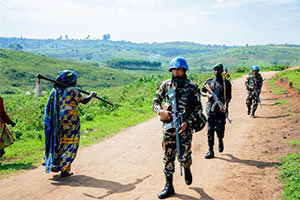 MONUSCO Peacekeepers and FARDC Soldiers Patrol Fataki Area. Credit: UN Photo/Jorkim Jotham Pituwa
Conflict, human rights violations, natural disasters, and famine have been at the forefront of concerns for humanitarian organizations. The escalation of humanitarian crises has led to over 239 million people in need of humanitarian assistance at the start of 2026, as estimated by OCHA’s Global Humanitarian Overview. The 2025 humanitarian appeal received only $12 billion, the lowest funding in over a decade, which has left 24 million fewer people reached in comparison to 2024. Conflict has remained the primary driver of crisis.
Humanitarian emergencies massively impact progress towards the Sustainable Development Goals (SDGs), adversely affecting economic development, inequality, education, planetary well-being, and poverty. Millions of people are faced with reduced access to essential services, including shelter, food, healthcare, and access to clean drinking water. UN Organizations such as UNHCR and the United Nations Children’s Fund (UNICEF) are committed to providing direct relief to affected communities when state governments cannot.
The United Nations 2024 Summit of the Future discussed measures that will be taken to reduce global inequality and promote peacekeeping efforts around the world. The recent UN Climate Change Conference (COP30) in Belém, Brazil, agreed to mobilize $1.3 trillion annually for climate action by 2035, operationalize the loss and damage fund, and triple adaptation finance. However, a fossil fuel transition commitment was not secured, despite climate change and the greenhouse effect being major contributors to humanitarian crises worldwide.
Countries across the world have also rallied to end humanitarian crises, as witnessed in conflicts such as Palestine and Ukraine. IPS is committed to providing relevant and in-depth reports of humanitarian emergencies around the world and their implications.

The Week with IPS

NEXT STOP - SDGs
Tracking global progress towards a sustainable world
Tracking global progress towards a sustainable world