Languages
Saturday, October 3, 2026



News and Views from the Global South
Development & Aid
Africa’s Fourth Industrial Decade: From Political Mandate to Industrial Transformation
Amid shifting geopolitical, economic, and technological landscapes, it reflects growing international recognition that Africa’s sustainable industrial transformation is vital - not only for the continent’s future, but also for global prosperity.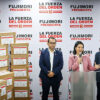
Peru’s Gridlock a Licence for Autocracy?
Right-wing candidate Keiko Fujimori has won Peru’s presidential runoff, narrowly defeating leftist Roberto Sánchez to become the country’s ninth president in a decade. She inherits a system so engineered for dysfunction that rather than making compromises, she may decide the concentration of power is her only means of survival. The constitution that created this trap was written by her father.
Discounting Demographic Realities
Demographic realities are well documented, and governments have long been aware of the profound demographic changes now underway. Nevertheless, many policymakers continue to discount or ignore these demographic trends.
Dry Monsoon in South Asia: Looming Fears of Agricultural Loss, Extreme Heat, and Disaster
Monsoon season in South Asia, including Nepal, is a period of frequent rainfall, extreme heat, and a busy time of the year for farmers. Most farmers in Nepal depend on monsoon rain to plant paddey, the main source of food.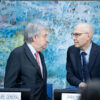
UN Senior Members Urge Universal Abolition of Death Penalty
While the movement for the universal abolition of the death penalty advances, this progress “cannot be taken for granted,” said UN Secretary-General António Guterres as he greeted the 9th World Congress Against the Death Penalty.
Abu Dhabi’s Coral Promise to the Future
In just the first half of this year, Abu Dhabi’s Environment Agency has cultivated 302,415 new coral colonies, bringing the total under the Abu Dhabi Coral Gardens Project to around 1.8 million – a scale of restoration that demands global attention.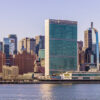
Beyond the United Nations — Reclaiming Integrity and Purpose in Global Governance
At the Annual General Meeting of the United Nations Asia Network for Diversity and Inclusion (www.UN-ANDI.org) on 21 May 2026, I was invited to share my reflections on both the pre and post separation phases of my UN journey. This provided me with a valuable opportunity to critically examine my decision to leave the UN service after many years at the ICSC.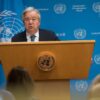
UN Artificial Intelligence Panel Launches Report Ahead of Global Conference
The acceleration of artificial intelligence (AI) and its capabilities is far outpacing governments’ capacities to effectively regulate it. Without scientific evidence to inform their policies, countries will be left at a greater disadvantage, according to the UN’s independent panel on AI.
U.S. Aid Withdrawal for HIV ‘Devastating’
A U.S. decision to cut off funding for HIV projects in South Africa has been condemned amid warnings it could be “catastrophic” for efforts to control the disease in the country.
Why Cities Are the Starting Point for Tackling the Global Cancer Crisis
Anyone whose life has been touched by cancer knows that care is highly complex. From first symptoms through diagnosis and treatment, patients may need multiple diagnostic tests, combinations of surgery, systemic therapy and radiotherapy, and input from several specialists, alongside support services such as financial counselling, psychological support and palliative care.
MEXICO: ‘The World Cup Is an Opportunity to Raise Global Awareness of the Crisis of Enforced Disappearances’
CIVICUS discusses Mexico’s enforced disappearance crisis with Angélica Orozco, a member of Fuerzas Unidas por Nuestros Desaparecidos en Nuevo León (FUNDENL), a collective of relatives of disappeared people and people who support them. Since 2012, FUNDENL has been searching for the disappeared and documenting the human rights crisis.

UNCTAD: Governments Turn to Trade Policy to Secure Critical Mineral Supplies
Demand for critical energy transition minerals (CETMs) is expected to surge over the coming decades as countries expand clean technology capacity, develop electric vehicles, create battery storage, implement renewable energy systems, and introduce digital infrastructure according to UNCTADs latest report, The Shifting Dynamics of Critical Minerals Trade.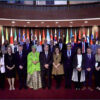
Will Changes to the UN Resident Coordinator System Damage the Development Pillar & Downgrade its Assistance to Middle-Income Nations?
A letter to staff unions from economists working in the resident coordinator system, blows the whistle on a restructuring that could damage the development pillar and downgrade support to middle income countries.
Middle East Conflict Fallout Pushes Countries toward US$1 Trillion Fossil Fuel Subsidy Bill, warns UN Development Programme
Developing countries’ efforts to tackle the ongoing effects of conflict in the Middle East carry a high price that leaves little room for critical investments in education, health and other development priorities, according to a new report by the UN Development Programme (UNDP) released today.
UN Peacebuilding Week: Military Expenditure Soars as Funding for Civilian Protection and Prevention Collapses
From June 22 to 26, the United Nations (UN) commemorated its first annual Peacebuilding Week, marking the 20th anniversary of the UN Peacebuilding Commission’s inaugural session. Featuring discussions among world leaders, policymakers, civil society, and advocates, the event explored how collaboration among governments, international organizations, and the private sector can enhance the visibility and effectiveness of peacebuilding efforts worldwide.
Agency Cannot Be Decreed
India's new education policy asks a great deal of its teachers. The National Education Policy of 2020 and its NISHTHA (National Initiative for School Heads' and Teachers' Holistic Advancement) training scheme, want teachers to be more than deliverers of syllabus. They are to be empowered professionals, agents of change who shape the future of children and, the policy says, of the nation itself. It is a generous and welcome ambition.
Tunisia: Civil Society Criminalised
In May, Tunisian lawyer and journalist Sonia Dahmani was handed her second conviction of the year. Her latest sentence, a two-year jail term, came in reaction to her criticism of poor prison conditions. She previously received an 18-month sentence for calling out the government’s anti-migrant policies. Dahmani faces five more charges under a 2022 cybercrime law that criminalises the spreading of what it calls ‘false information’.
The UN Climate Talks in Bonn Just Failed. Why?
With progress stalled on many issues, this year’s June talks in Bonn—which are supposed to smooth the way towards COP 31 in Antalya at year’s end—were widely judged a failure. What happened? And what does it mean for Antalya?
Smart Farming Is Not the Future. It Is Already Here
Farmers today are producing food under pressures that would have been unimaginable to previous generations. Input costs are rising and supply chains are unreliable. Water is scarcer. Weather is less predictable. And for a growing number of farmers — in Sudan, in Ukraine, in Myanmar, in Gaza — the challenge is producing food at all, in the middle of active conflict. These are not marginal conditions. They describe the reality facing hundreds of millions of people who grow the food the world depends on.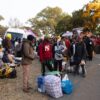
Xenophobia Won’t Bring Wealth – Only Misery – To South Africans Too
Usually, the fiesta to celebrate St Antony at the church with the same name in Crown Mines, Johannesburg, is a lively affair. The church is usually packed with congregants from the Portuguese community, including recent migrants from Mozambique and Angola.
Universities Join Hands to Enhance Agroforestry Research for Mitigating Climate Change
A team of universities, led by Addis Ababa University, has joined forces to implement a four-year Intra-Africa academic mobility project aimed at strengthening agroforestry research and education for climate change mitigation.« Previous Page — Next Page »


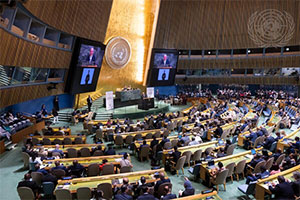 2026 High-level Political Forum on Sustainable Development. Credit: UN Photo/Eskinder Debebe
In 2015, the United Nations and its Member States adopted the Sustainable Development Goals (SDGs) in an effort to make the world a more sustainable and peaceful place for future generations. Progress on the 17 SDGs has been uneven, and inequality persists across the globe. 10 years after adoption, the 2025 UN SDGs Report revealed that only 35% of the SDG targets are on track, with more than half moving too slowly, and 18% moving backwards from the 2015 baseline. Poverty remains one of the world’s most pressing issues, with hunger, violence, and inequality impeding the opportunities for all people to achieve success. In September 2024, the United Nations Summit of the Future introduced a new goal: to eradicate global poverty by 2030, ensure universal rights to basic services, and increase the overall standard of living in terms of industrialization, economic well-being, citizen health, and literacy. Furthermore, recent shifts in United States foreign aid policy – notably, major budget cuts to USAID and the termination of thousands of development programmes– have severely threatened vital lifelines of financial aid to impoverished communities around the world. Additionally, the United States’ withdrawal from the Paris Climate Agreement has undercut international efforts at sustainable development. With the upcoming 2030 deadline, the UN Secretary-General has called for urgent multilateralism across six priority areas: food systems, energy, digital connectivity, education, jobs and social protection, and climate and biodiversity. IPS sheds light on marginalized communities that struggle on a daily basis to survive and have their stories heard and respected.
Updated by Yilan Batista and Shuli Wong August 2026

The Week with IPS

NEXT STOP - SDGs
Tracking global progress towards a sustainable world
Tracking global progress towards a sustainable world
