Languages
Monday, October 5, 2026



News and Views from the Global South
Development & Aid
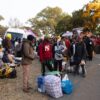
Xenophobia Won’t Bring Wealth – Only Misery – To South Africans Too
Usually, the fiesta to celebrate St Antony at the church with the same name in Crown Mines, Johannesburg, is a lively affair. The church is usually packed with congregants from the Portuguese community, including recent migrants from Mozambique and Angola.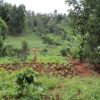
Universities Join Hands to Enhance Agroforestry Research for Mitigating Climate Change
A team of universities, led by Addis Ababa University, has joined forces to implement a four-year Intra-Africa academic mobility project aimed at strengthening agroforestry research and education for climate change mitigation.
GHANA: ‘This Is Bigger than Lgbtqi+ Rights – It’s about the Kind of Society We Want to Be’
CIVICUS discusses Ghana’s anti-LGBTQI+ law with Leila Lariba, Executive Director of One Love Sisters Ghana, a community-driven organisation that advances human rights, social inclusion and wellbeing for Muslim LGBTQI+ people in Ghana.
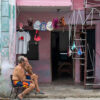
Cuba’s Last Hand
Ever since the Berlin Wall fell 37 years ago and the communist Eastern Bloc collapsed, Cuba has been debating economic reforms to its socialist system. Essentially, the discussion always revolves around the same issues: less state planning, more personal responsibility. In other words, a strong dose of capitalism as an antidote to inefficient and corrupt state bureaucracy.
The Silent Metamorphosis
There is a question that is never asked plainly enough in reports on Haiti: why, despite decades of analysis, billions in international aid, and an abundance of national strategies, does the potential of Haitian youth remain so consistently underutilized? This report, The Silent Transformation, is an attempt at an honest answer.
The Forgotten Triumph of Rinderpest Eradication, and the Cost of Ignoring Its Lesson
Animal disease is no longer a distant concern for farmers and veterinarians alone. It is increasingly visible in household budgets: global egg prices surged more than 60% during recent bird flu outbreaks. In South Africa, foot-and-mouth disease pushed beef prices up by 34%. These are not isolated fluctuations in price. They are reminders that when prevention falls short, families, farmers and food systems all pay the price.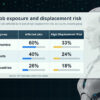
AI Will Destabilize Jobs, the Middle Class and the Welfare State Unless We Act in Time
Artificial intelligence (AI) promises remarkable gains in productivity, science, medicine and education. But it is also poised to wipe out millions of jobs, hollow out the middle class, and drain the tax revenues that pay for hospitals, schools and pensions. The process has already begun, and the time to act is running out.
War, Heatwaves and Energy Shocks Fuel Push for Clean Energy
The 30 COP gatherings may not have done what three months of US-Israeli war against Iran did: expose the world's vulnerability to fossil fuels.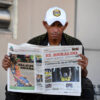
Colombia’s next President: A Reckoning for Peace, Climate and Human Rights
On 21 June Colombians made their choice. By the narrowest of margins, Abelardo de la Espriella, a far-right criminal lawyer who’s never held elected office, became president-elect. Climate activists, human rights defenders, Indigenous communities and peace advocates have the most to lose from the incoming government’s agenda.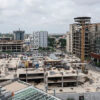
Aid Is Falling Fast. What Can African Countries Do?
For decades, official development assistance has been a central pillar of financing in sub-Saharan Africa. That pillar is now weakening—quickly and broadly.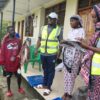
From Nets to Numbers: How Kenya’s Small-Scale Fishers Use Data to Save Their Ocean
As the afternoon sun casts a golden glow over Mukwiro village on Wasini Island on Kenya’s Indian Ocean South Coast, Mwanasiti Mwalola, 26 and Mzungu Mohammed Dhossa, 45, stand at the community fish landing site, carefully receiving baskets of freshly caught fish from returning fishers. A weighing scale hangs before them, with a pen and notebook in their hands; the two have one duty: to collect data on the stock being delivered by artisanal fishers.
In a Post-Aid World, Investing in Sustainable Livestock Farming Is an Investment in Global Stability
Smallholder farmers in Africa and Asia are likely to still be reeling from the fuel and fertilizer crisis caused by conflict in the Middle East when what forecasters expect to be a “super” El Niño arrives later this year.
Should BRICS+ Lead the Global South?
Leadership of the Global South has gradually declined since the 1980s. Many hope BRICS+ will fill the vacuum, but its purpose and membership suggest such hopes may be misplaced. A repurposed Non-Aligned Movement (NAM) offers the best way forward.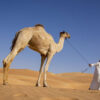
UNCTAD: A Shift of Risk, Geopolitical Tension Weighs on Global Markets Heavier than Trade Policy
Amidst increased geopolitical tensions, the risk of volatile energy markets, trade corridors, and regional stability in the Middle East has garnered more attention than trade policy in terms of its power to alter the global economy, according to new findings from the United Nations Conference on Trade and Development (UNCTAD).
The Overlooked Impact of Flooding on Crops, Soils and Food Systems
Across the United States, record-breaking extreme weather events have already occurred, including severe storms and Tornadoes in the State of Illinois to flooding in Texas, southern Wisconsin and the South. Throughout the summer and the remainder of the growing season, additional severe weather events will come through, including several hurricanes and tropical storms beginning with Tropical Storm Arthur.
From Rotten Tomatoes to AI: Ugandan Commonwealth Youth Award Winner Takes Aim at Hunger Across Africa
Before anyone called her an innovator, before artificial intelligence entered the conversation, before solar-powered cold rooms, before the language of sustainable development, Shifra Ainomugisha knew food loss in its painful form.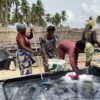
In West Africa’s Benin, Women Make Centuries-Old Salt Production Methods Sustainable
It is barely noon, and a group of women sit near the beach on the outskirts of Djégbadji village, in West Africa’s Benin, sifting through mounds of salt harvested from the Gulf of Guinea’s ocean.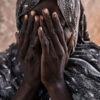
Beyond Commemoration: Why Conflict-Related Sexual Violence Demands Urgent Global Attention
Three years ago, during a mission to the Central African Republic from United Nations Headquarters, I met a woman whose story has remained with me ever since. She had survived rape during the conflict. Yet what stayed with her most was not only the violence she had suffered, but the stigma that followed it. When she returned home, her family refused to take her back. In a society where survivors of sexual violence are too often burdened with shame that rightfully belongs to perpetrators, she found herself isolated and struggling to rebuild her life. In that moment, it became painfully clear that for survivors, the violence does not end when the assault ends, it continues through stigma, exclusion, and the resulting silence for most.
Social Business – It’s Time
June 27-28 is the 16th Social Business Day, observed in Savar (Dhaka) Bangladesh. In June 2024 at the Western Sydney University’s graduation ceremony where I was conferred Emeritus Professor status, I urged the new business graduates to:- • purge the world of the… obnoxious Friedmanite idea that is destroying our planet and tearing our communities apart;
• look instead to the “Social Business Model” of Bangladesh’s Nobel Laureate Muhammad Yunus; and
• work on the right side of history; stand up for justice and liberation; spread the “moral violence” for peace; and put people and the planet before profit.
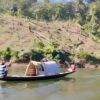
New GEF Project Raises Hope for Change in India’s Indigenous Lake Community
At dawn, when the waters of Dumboor Lake lie still under a pale grey sky, Santo Chakma, 63, nudges his narrow wooden boat into a reservoir that swallowed his childhood.
WORLD CUP: ‘FIFA Has Placed Itself on the Side of the Polluters, Not the Rest of the Planet’
CIVICUS speaks about the climate impacts of the 2026 World Cup with Frank Huisingh, founder of Fossil Free Football, a fan-led group that campaigns to end fossil fuel sponsorship in football and make the game more sustainable.
« Previous Page — Next Page »


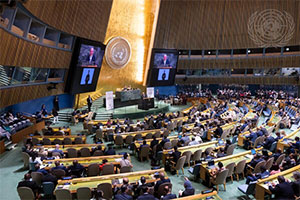 2026 High-level Political Forum on Sustainable Development. Credit: UN Photo/Eskinder Debebe
In 2015, the United Nations and its Member States adopted the Sustainable Development Goals (SDGs) in an effort to make the world a more sustainable and peaceful place for future generations. Progress on the 17 SDGs has been uneven, and inequality persists across the globe. 10 years after adoption, the 2025 UN SDGs Report revealed that only 35% of the SDG targets are on track, with more than half moving too slowly, and 18% moving backwards from the 2015 baseline. Poverty remains one of the world’s most pressing issues, with hunger, violence, and inequality impeding the opportunities for all people to achieve success. In September 2024, the United Nations Summit of the Future introduced a new goal: to eradicate global poverty by 2030, ensure universal rights to basic services, and increase the overall standard of living in terms of industrialization, economic well-being, citizen health, and literacy. Furthermore, recent shifts in United States foreign aid policy – notably, major budget cuts to USAID and the termination of thousands of development programmes– have severely threatened vital lifelines of financial aid to impoverished communities around the world. Additionally, the United States’ withdrawal from the Paris Climate Agreement has undercut international efforts at sustainable development. With the upcoming 2030 deadline, the UN Secretary-General has called for urgent multilateralism across six priority areas: food systems, energy, digital connectivity, education, jobs and social protection, and climate and biodiversity. IPS sheds light on marginalized communities that struggle on a daily basis to survive and have their stories heard and respected.
Updated by Yilan Batista and Shuli Wong August 2026

The Week with IPS

NEXT STOP - SDGs
Tracking global progress towards a sustainable world
Tracking global progress towards a sustainable world
