Languages
Thursday, November 12, 2026



News and Views from the Global South
Development & Aid

Atoll Nation of Tuvalu Adopts ‘Cubes’ to Step Up Nutritious Food Production
Tuvalu, a small atoll island nation in the Central Pacific Ocean, is one of few countries in the world to have so far evaded the pandemic. But, while it has achieved a milestone with no recorded cases of COVID-19, its population of about 11,931 continues to battle food uncertainties and poor nutrition. These challenges, present long before the pandemic emerged, have been exacerbated by lockdown restrictions and economic hardships during the past year and a half.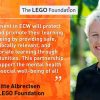
Education Cannot Wait Interviews the LEGO Foundation’s New CEO Anne-Birgitte Albrectsen
Anne-Birgitte Albrectsen is the CEO of The LEGO Foundation. Ms. Albrectsen has spent almost 30 years in fields of international development, human rights and diplomacy, most recently holding the position of Global CEO at Plan International since September 2015.
World Food Day: Climate Change is Exacerbating Hunger & Conflict—it’s Time to Break the Cycle
Hunger, violent conflict and the visible impacts of climate change are all on the rise. World Food Day, October 16, is a reminder that we need to talk about the intricate ways that these challenges are connected—and how to tackle them together.
Disparities in Poverty Between Ethnic Groups & Across Genders Show Why We Need to Dig Deeper into Poverty Data
During the pandemic, we learnt a new word – at least I did: comorbidity. It means that one or more additional conditions co-occur (all happen at the same time for a person) alongside a primary condition – in this case the virus.
Better Late than Never, but Act Now
The world should now be more aware of likely COVID-19 devastation unless urgently checked. Last week, the World Health Organization (WHO) announced an US$8 billion plan to quickly vaccinate many more people to expedite ending the pandemic.
Mental Health at a Cost, Inequality
World Mental Health Day was on October 10, 2021. The theme for this year was "Mental Health in an unequal World". This is an appropriate focus given the extreme inequities to access to mental health services that exist in our society.
Day of the Girl Child: A Digital Generation Where Every Girl Counts
The theme of this year’s annual International Day of the Girl Child, on October 11, “Digital generation. Our generation.”, recognizes the digital transformation brought about by the COVID-19 pandemic. But while the pandemic accelerated the transition to online learning, working and networking, it also accelerated women and girl's risk of being left behind.
China and the UN at 50- What We Can Achieve Together
China was one of the architects of the United Nations and was the first signatory of the UN Charter in San Francisco in 1945. But it was only in October 1971, with the Chinese delegation led by Mr. Qiao Guanhua, that China’s representation at the UN resumed. Since that time, the UN has had the great privilege of witnessing and supporting China in achieving one of the greatest periods of socio-economic progress in world history.
When Girls Have Access to Technologies, A True Digital Revolution Will Be In Sight
This year’s International Day of the Girl theme, Digital Generation, Our Generation, celebrates the potential of digital technologies while calling for the inclusion of all girls in accessing technology. The digital revolution will not be realized if girls without access to digital solutions are left behind. For years, advocates of technology for development have been repeating the mantra that technology is not a panacea. Yet in racing to connect, catch up, and create greater access, we ignore at our own peril the inconsistent or non-existent household- and community-level access girls have to technologies. While digital solutions are available and evolving all the time, they should be accompanied by hybrid methods which include new ways to use analog technologies, so that existing local resources are reimagined and redistributed in ways that support more girls learning.
UN Chief, in an Unprecedented War of Words, Battles it out with a Member State
A growing diplomatic battle is being played out at the United Nations between Secretary-General Antonio Guterres and one of the world body’s member states: the politically-troubled Ethiopia which is desperately in need of international humanitarian assistance.
Pandemic Highlights Urgent Need to Improve Sanitation in Brazil
Basic sanitation, a sector that is undervalued because, according to politicians, it does not bring in votes, has gained relevance in Brazil due to the pandemic that has hit the poor especially hard and the drought that threatens millions of people.
Rural Communities in El Salvador United to Supply Water for Themselves – VIDEO
 As the saying goes, united we stand, divided we fall, hundreds of families in rural communities in El Salvador are standing together to gain access to drinking water.

Mounting Scramble for Coronavirus Vaccines in Zimbabwe
More than a month ago, she lost her parents, brother, and wife, to the coronavirus. Then her fiancé battled COVID-19, but 27-year-old Melinda Gavi said she had not contracted the disease.
Build Forward Fairer in the Wake of the COVID-19 Pandemic
Cities have been epicentres of the COVID-19 pandemic since 2020. City authorities have been the frontlines responders—from running testing stations, to managing food distribution, to disposing of corpses. Yet they are often under-resourced, and their critical role in policy implementation is often overlooked.
Mangrove Blue Carbon for Climate Change Mitigation
Smelly, boggy, and full of bugs, mangroves’ superpowers are well hidden. However, there is rising confidence that mangroves are the silver bullet to combat the effects of climate change.
The CDC Turns Its Back on Migrants and Science
Last month, asylum-seeking families at the U.S.-Mexico border appeared to have won a victory, however temporary, in their last-ditch bid for safety in the United States. It was also a victory for evidence-based public health policy.
Where on Earth is a Water-Secure World?
It is not uncommon for a water-centric research, policy or development organization or network to declare its long-term vision of the “water-secure world”. It reads nicely and feels great.
Will Taliban Honour UN Treaties Signed by Afghanistan Over the Last 20 Years?
When the Islamic Emirate of Afghanistan receives the political blessings of the 193-member General Assembly-- and eventually inherits its seat at the United Nations-- it will have to ultimately prove its credentials as a member of good standing by adhering to the UN Charter and the Universal Declaration of Human Rights (UDHR) – as all member states do.
New Education Cannot Wait Annual Results Report Highlights Multiplying Education Challenges for Children & Adolescents Living in Emergencies & Protracted Crises amid Covid-19
On this World Teachers’ Day, Education Cannot Wait (ECW), the United Nations global fund for education in emergencies and protracted crises, announced it has reached more than 4.6 million children and adolescents (48% of whom are girls) with quality education in more than 30 of the worst humanitarian crises around the world.
Afghan Women – The Emerging Narrative and Why it is Wrong
The USA and its allies have repeatedly stated that promoting women’s rights was one of the key reasons they were in Afghanistan. The US military top brass, in a letter to marines stated that they were in Afghanistan “for the liberty of young Afghan girls, women, boys, and men who want the same individual freedoms we enjoy as Americans”.
Education Cannot Wait Annual Results Reveals the Devastating Impact of COVID-19 on Learning for Children in Emergencies and Protracted Crises
The COVID-19 pandemic has changed the face of education globally, but for children in emergencies and protracted crises, its blow has been particularly devastating.« Previous Page — Next Page »





 2026 High-level Political Forum on Sustainable Development. Credit: UN Photo/Eskinder Debebe
In 2015, the United Nations and its Member States adopted the Sustainable Development Goals (SDGs) in an effort to make the world a more sustainable and peaceful place for future generations. Progress on the 17 SDGs has been uneven, and inequality persists across the globe. 10 years after adoption, the 2025 UN SDGs Report revealed that only 35% of the SDG targets are on track, with more than half moving too slowly, and 18% moving backwards from the 2015 baseline. Poverty remains one of the world’s most pressing issues, with hunger, violence, and inequality impeding the opportunities for all people to achieve success. In September 2024, the United Nations Summit of the Future introduced a new goal: to eradicate global poverty by 2030, ensure universal rights to basic services, and increase the overall standard of living in terms of industrialization, economic well-being, citizen health, and literacy. Furthermore, recent shifts in United States foreign aid policy – notably, major budget cuts to USAID and the termination of thousands of development programmes– have severely threatened vital lifelines of financial aid to impoverished communities around the world. Additionally, the United States’ withdrawal from the Paris Climate Agreement has undercut international efforts at sustainable development. With the upcoming 2030 deadline, the UN Secretary-General has called for urgent multilateralism across six priority areas: food systems, energy, digital connectivity, education, jobs and social protection, and climate and biodiversity. IPS sheds light on marginalized communities that struggle on a daily basis to survive and have their stories heard and respected.
Updated by Yilan Batista and Shuli Wong August 2026

The Week with IPS

NEXT STOP - SDGs
Tracking global progress towards a sustainable world
Tracking global progress towards a sustainable world
